
How Social Media Algorithms Decide What You See
Every scroll is shaped by a system working behind the scenes. Social media algorithms study your activity to decide which posts, videos and accounts appear on your feed.
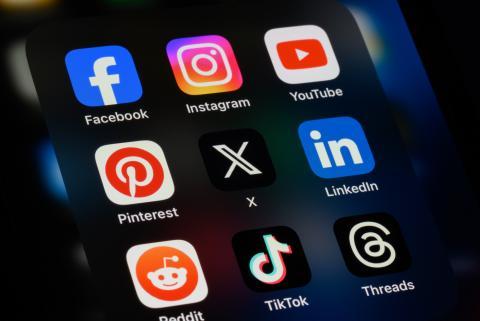
Open Instagram, TikTok or Facebook and you will immediately see a feed filled with content. It may feel like a simple stream of posts from people and accounts you follow, but there is a lot happening behind the scenes.
Millions of posts are uploaded to social media platforms every day. Showing users all of that content is impossible, so platforms use algorithms to decide what appears first, what gets recommended and what remains less visible.
These systems study signals such as what users watch, like, share, search for and comment on. They then use that information to estimate what content a person may be interested in.
That is why two people using the same platform can open the app and see completely different feeds.
What is a social media algorithm?
A social media algorithm is a set of computer systems and rules used to determine which content users see, the order in which it appears and, in some cases, what gets recommended to them.
Instead of simply showing posts in the order they were published, platforms can rank content based on signals they consider relevant to each user.
Imagine you regularly watch football videos on TikTok and interact with some of them. The platform can use those actions as signals that football interests you. The next time you open the app, you may see more football videos, match updates or content from football creators.
The more the platform learns about your activity, the more personalized your feed can become.
How do algorithms choose content?
The process starts with your activity on the platform.
Algorithms can look at the videos you watch, posts you like, comments you make, accounts you follow and searches you carry out. These signals help the platform estimate what you might want to see next.
For example, someone who regularly watches technology videos may begin seeing more technology-related content.
This does not necessarily mean the person has deliberately asked for more of it. Their previous activity provides a signal that the platform can use when ranking future content.
From chronological feeds to personalized feeds
Social media feeds were not always this personalized.
Earlier platforms largely relied on chronological feeds, where users saw the newest posts from the accounts they followed. As social networks grew and the amount of content increased, users could easily miss posts simply because too much new material was being published.
Platforms began using algorithms to organize this growing amount of content around what they believed individual users would find relevant.
Today, feeds can be tailored to a person's interests, interactions and viewing habits rather than simply showing everything in the order it was posted.
What signals do algorithms use?
The exact systems differ between platforms, but several types of signals can influence what appears in a feed.
1. Interests and relevance
Algorithms can learn from the content users search for, watch, like and interact with. Someone who frequently engages with cooking content, for example, may receive more cooking-related posts.
2. Engagement
Likes, comments, shares and saves can provide signals about how people respond to content. Posts receiving significant interaction may be recommended to more users.
3. Relationships
Content from friends, family members or accounts a user frequently interacts with may receive more attention because the platform recognizes an existing connection.
4. Watch time
For video content, the amount of time a person spends watching can be another signal. Videos that hold viewers' attention or are replayed may be recommended more widely.
5. Freshness
Newer content can receive attention because platforms need to keep feeds updated with recent posts and events.
Why does this matter?
For users, personalization can make social media easier to navigate. Instead of searching through an enormous amount of content, people can discover posts that match their interests.
But there is another side to that convenience.
If an algorithm repeatedly recommends similar content, users may encounter less variety in what they see. Their feed can gradually become shaped by their previous activity.
This also matters to businesses and content creators.
The way a platform ranks content can affect how many people see a post, video or advertisement. A change in how an algorithm evaluates content can therefore affect the reach and engagement that businesses and creators receive.
Algorithms also affect how information spreads
Social media algorithms do more than recommend entertainment.
They also influence how information moves across online communities. Content that attracts a lot of likes, comments or shares can spread quickly, even when the information itself is inaccurate.
That creates a challenge for users. Seeing a post repeatedly or seeing that thousands of people have interacted with it does not automatically make the information true.
Users still need to consider where information came from and check important claims before accepting or sharing them.
Algorithms can also help determine which topics gain attention. When a subject receives significant engagement, it can become more visible and reach a much larger audience.
In this way, recommendation systems can influence not only what individuals see, but also which conversations become prominent online.
What comes next?
As artificial intelligence becomes more involved in digital platforms, social media algorithms are likely to become more sophisticated.
They may become better at personalizing content while also being used to identify harmful material and misinformation.
At the same time, questions around privacy and transparency are likely to remain important. Users may increasingly want more control over the data used to personalize their feeds and over the types of content they are shown.
For now, the important thing to understand is simple: your social media feed is not a random collection of posts.
Every like, search, comment, share and viewing habit can provide information that helps a platform decide what to show you next.
Understanding that process does not mean avoiding social media. It simply makes it easier to recognize that what appears on your screen is being shaped by systems designed to predict what you are most likely to engage with.