
Mao's Meme, Mbappé and Millions on the Line
A joke about an internet meme has triggered a backlash in China, costing the French football star major sponsorship partnerships and exposing the commercial risks of navigating cultural sensitivities in a powerful global market.
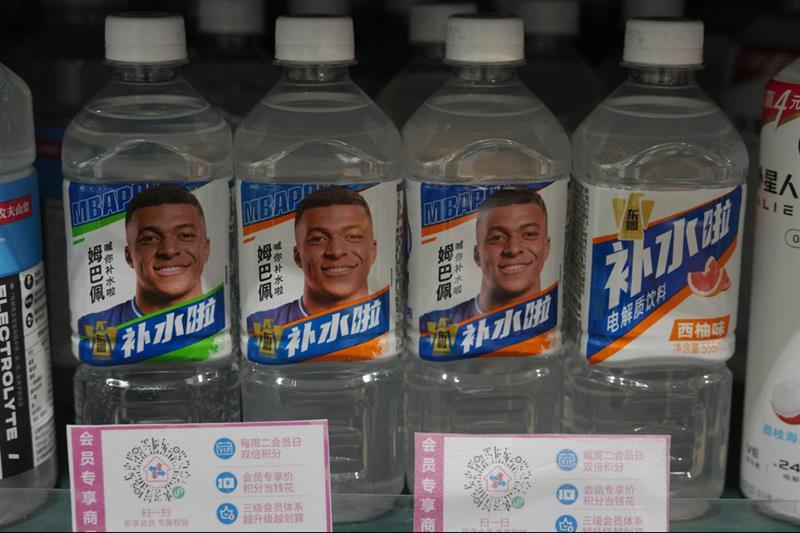
A joke about an internet meme has become an expensive public relations problem for Kylian Mbappé, after comments about former Chinese leader Mao Zedong triggered a backlash that has affected the footballer's commercial partnerships and the broadcasting of Spanish football in China.
The controversy began with an appearance by the Real Madrid forward on The Bridge, a French football podcast, earlier in 2026. Asked about his favourite internet meme, Mbappé recalled one showing his face digitally placed over the image of a Chinese leader.
"The one where I laughed the hardest was when they put up a video of some guy. I think it was a Chinese dictator," he said.
The remark appeared to refer to Mao Zedong, the revolutionary leader who helped establish the Chinese Communist Party and founded the People's Republic of China in 1949. Mao led the country until his death in 1976.
The clip circulated widely online in late October, attracting criticism from Chinese social media users and prompting several companies to distance themselves from the footballer.
The backlash came shortly after Mbappé finished behind England striker Harry Kane in the Ballon d'Or voting, adding another difficult development to a week that had already attracted considerable attention around the French international.
Why Mao remains a sensitive subject in China
Mao Zedong occupies a complicated place in Chinese history.
He is widely regarded as a central figure in the country's modern founding and is still revered by many Chinese people. However, his rule also involved political campaigns, repression and catastrophic policies, including the Great Leap Forward and the Cultural Revolution, which caused widespread suffering and millions of deaths.
Despite this complicated historical record, public criticism and satire involving Mao remain particularly sensitive in China.
Mbappé's comment was made while discussing a football meme rather than delivering a political statement about China. Nevertheless, the reference to Mao was interpreted by many Chinese social media users as disrespectful.
Chinese Foreign Ministry spokesperson Guo Jiakun addressed the controversy at a press briefing, saying that remarks and actions that hurt the feelings of the Chinese people would naturally face opposition from different sectors of society.
Brands cut ties as the backlash grows
The commercial consequences became apparent on October 27, when Chinese companies began announcing the termination of their partnerships with Mbappé.
Dongpeng Beverage, a major Chinese drinks company, announced that it was ending its cooperation with the footballer, citing its opposition to conduct that offended national sentiments.
Mengniu, one of China's largest dairy producers, also announced that it was terminating its partnership with him. Dairy and food company Milkground was among the other businesses reported to have ended their association with the French star.
The decisions represented a significant setback for a footballer who had built a substantial commercial presence in China, appearing in advertising campaigns for products ranging from beverages to dairy goods.
Although reports have circulated about the potential financial cost of the lost partnerships, a reliable figure for Mbappé's total losses has not been established.
The controversy also affected his presence on Chinese social media. His accounts on Weibo and Xiaohongshu were restricted from gaining new followers, according to reports.
The controversy reaches Spanish football
The repercussions extended beyond Mbappé's individual sponsorship agreements.
China Media Group, the organisation overseeing state broadcaster CCTV, announced that it would suspend broadcasts of LaLiga matches following the controversy.
The decision raised concerns for the Spanish league, which has a substantial international audience and commercial interests in China.
LaLiga responded by issuing an apology to Chinese fans. Its president, Javier Tebas, also apologised personally and reaffirmed the organisation's commitment to its relationship with Chinese audiences.
Real Madrid subsequently issued an apology to the Chinese people, distancing the club from the player's personal remarks while expressing regret for the offence caused.
The impact on broadcasting remained visible on November 1, when CCTV did not air Real Madrid's match against Racing Santander. However, the situation was not a complete blackout of Spanish football across every platform, as some other LaLiga matches remained available through Migu, a streaming service owned by China Mobile.
Mbappé apologises
On October 27, Mbappé issued an apology through his company, Interconnected Ventures, in a statement shared on his X account.
"My comment was ill-judged, and I now understand that it hurt many people in China and in Chinese communities around the world," he said.
"I apologise to everyone my words have upset. This was absolutely not my intention. I have deep respect for the Chinese people and their history and I am sincerely sorry."
The apology was published in French, Chinese and English.
China's Foreign Ministry later said it took the apology seriously, although the response did not immediately end the wider controversy.
On October 31, Real Madrid manager José Mourinho defended the way the player and club had responded, while warning about the risks public figures face when making comments in an increasingly sensitive media environment.
"These are the dangers of today's world, where often the best thing you can do is keep your mouth shut, because there's danger in so many things you say or comment on," Mourinho said.
He added that Mbappé had handled the situation responsibly and that, from the club's perspective, the matter had been addressed.
The commercial power of China's market
The incident illustrates how a seemingly casual remark can become a major commercial issue when a global celebrity operates in markets with different cultural and political sensitivities.
China is an important market for international sports, entertainment and consumer brands. Its large audience gives companies access to millions of potential customers, making partnerships with globally recognised athletes commercially attractive.
But that opportunity also comes with reputational risks. Brands operating in China must navigate public expectations and sensitivities that may differ from those in Europe or North America.
For international athletes, the challenge extends beyond their performances on the pitch. Their public statements, social media activity and commercial associations can affect relationships with sponsors, broadcasters and fans across different countries.
Mbappé's experience demonstrates how quickly those relationships can come under pressure. A joke about a football meme has become a dispute involving major companies, a leading European football league and one of the world's most commercially influential markets.
Whether his apology will restore the partnerships and audience relationships affected by the controversy remains to be seen.
Read our editorial standards and corrections policy.