
Nollywood Then and Now: Has Better Production Meant Better Storytelling?
Nollywood gained polished productions, bigger platforms and global recognition but did its pursuit of excellence come at the cost of the raw storytelling that made it special?
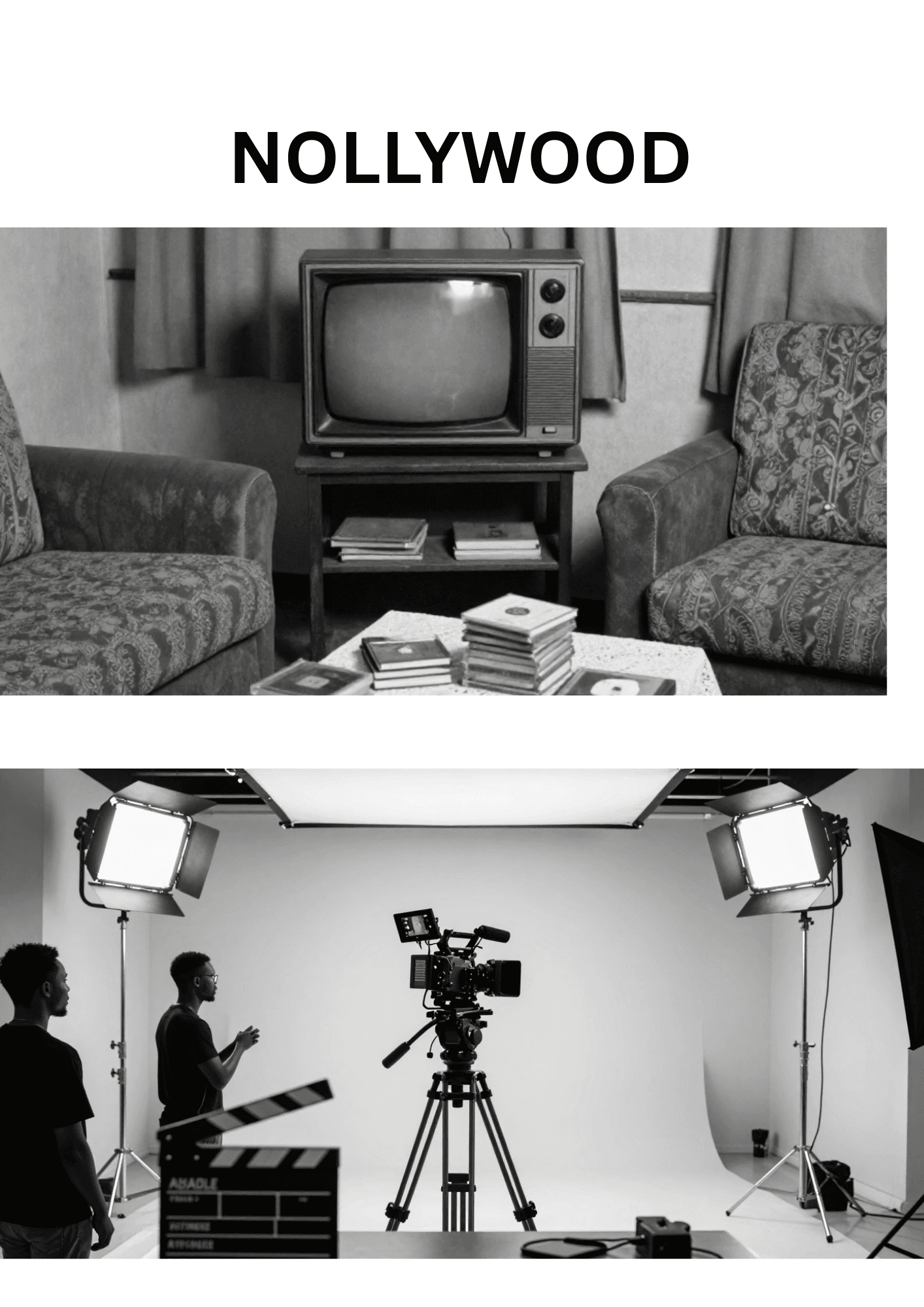
WHAT CHANGED?
There was a time when Nollywood movies captured the essence of Nigeria. The stories and characters were relatable to the average Nigerian. Movies told stories of life as it was, sometimes dramatic, sometimes exaggerated, but still familiar.
Although these movies were technically flawed in areas such as cinematography, lighting and sound design, they had something that connected them to the people watching. As Nollywood began embracing technology and becoming more professional, it started to lose some of that essence and became something different.
Now, being different is not necessarily bad. But what happens when difference begins to take away originality?
New Nollywood has gained enormously in technology, money, professionalism and global reach. Nigerian movies are finally receiving some of the recognition they deserve. Technology and globalisation have taken filmmaking and cinematography to greater heights, putting Nigeria on the radar of international audiences. However, somewhere in this evolution, we seem to have lost some of the intimacy, cultural specificity and storytelling character that made Old Nollywood so memorable.
THE FLAWS OF OLD NOLLYWOOD
Old Nollywood had its problems.
There was poor picture quality, the absence of HD and its likes, terrible sound quality, and sound and special effects that were sometimes a cry for help. Because technology and resources were still developing, filmmakers had limited resources to work with.
There was also exaggerated acting. Characters that were supposed to be funny were sometimes made to look less like real people and more like caricatures of themselves. Unrealistic dialogue, repetitive plots and predictable endings were common. Sometimes, you could predict what a character would say next or how the movie would end from the second scene. There were also gender stereotypes and problematic portrayals. Male and female characters were often limited to specific types of roles, many of these stereotypes reflecting the expectations and constructs of Nigerian society at the time.
BUT THERE WAS A BEAUTY IN IMPERFECTION
Despite all these flaws, there was something about Old Nollywood that made the movies feel real. The movies were not perfect, but they felt personal. The characters were memorable, larger than life and, most importantly, familiar. You could watch a movie and recognise someone you knew in the characters. The strict Nigerian father who believes his children must follow his rules because, “I am your father.” The mother who knows everything happening in the house and somehow manages to know what her daughter is doing even when she is not at home. The troublesome neighbour who knows everybody's business. The auntie who attends every family gathering and somehow manages to ask the unmarried woman when she is getting married before she has even finished greeting her. These were characters Nigerians could relate to because these were experiences Nigerians had lived.
Old Nollywood told stories about family, marriage, betrayal, poverty, wealth, friendship, religion, traditional beliefs and the struggle to make something out of life.
Even when the stories were exaggerated, there was usually something familiar about them. A young girl from a poor family falling in love with a rich man's son was not just a love story. It reflected the reality of class differences. A woman being pressured to remain in an unhappy marriage was not just a plot point. It reflected the expectations placed on women by society. A young man leaving his village for Lagos in search of success was not just a character journey. It was something many Nigerians could understand. The stories felt distinctly Nigerian. You could hear the language, recognise the environment, understand the mannerisms and sometimes even recognise the type of people being portrayed. There was a certain rawness and intimacy to these movies. They were accessible to almost everybody. You didn't need to live in a mansion or understand the lifestyle of the rich to understand what was happening on screen. The films weren't polished, but they often felt personal. And maybe that was the beauty in the imperfection.
THEN CAME GLOBALIZATION.
With the rise of globalisation came a massive change in the way Nollywood movies were produced. Producers began embracing technology, and this became evident in the quality of movies being made. We saw better cinematography, better sound, better editing and stronger production design. Movie productions began operating with bigger budgets that could support better equipment, larger crews and more specialised production processes. The new era also brought streaming platforms, making the distribution of movies easier and more accessible both nationally and internationally. A Nigerian movie can now be watched by someone in Lagos, London, New York or Johannesburg.
Nigerian actors and filmmakers are no longer limited to Nigerian audiences. Nigerian stories are reaching people who may never have encountered Nollywood before.
Globalisation also brought greater access to education, training and international standards of filmmaking. This contributed to more structure and professionalism within the industry and gave Nigerian actors, producers, directors, writers and other creatives opportunities to gain recognition beyond Nigeria.
This is something we cannot ignore.
Nollywood has grown. The industry has become more professional. Filmmakers have access to better equipment, better training and bigger budgets. We now have movies that can compete visually with films from other parts of the world.
But while we were learning how to make our movies better, did we also begin to forget what made them ours?
WHAT DID WE LOSE?
Everything good can have a disadvantage.
As globalisation and the emergence of new technology gave Nollywood a new identity, they also changed the kind of stories being told and the way Nigerian life is represented on screen. Some movies have become less culturally specific. There are productions where aesthetics and commercial appeal seem to take priority over the story and its impact on the audience. Characters can feel less memorable because they are less relatable. Some movies have lost the rawness that made older films feel uniquely Nigerian.
Today, we see more movies where characters live in beautiful houses, drive expensive cars, wear designer clothes and live lifestyles that are far removed from the average Nigerian experience. Again, there is nothing wrong with telling stories about wealthy Nigerians. They exist. But when this becomes the dominant picture of Nigerian life on screen, we begin to lose the diversity of our stories.
What about the Nigerian university student struggling with school fees? What about the graduate who has been applying for jobs for three years? What about the young woman whose mother is constantly asking her when she is getting married? What about the young man working multiple jobs because he cannot afford to depend on one source of income?
What about the family where everyone contributes money to send one child abroad? What about the Nigerian who wants to leave the country because they believe there is no future here, and the Nigerian who wants to stay because they believe there is? These are Nigerian stories too.
Sometimes, it feels like we are more interested in making Nigeria look good than telling stories about what it actually feels like to live here. The problem is not that New Nollywood movies are beautiful. The problem is when beauty becomes more important than the story. A beautiful location cannot replace a good story. A high budget cannot make an uninteresting character memorable. Good cinematography cannot make an audience care about a character they cannot relate to.
There are movies you watch today and admire while watching them, but by the time the credits roll, you cannot remember what the movie was actually about.
Old Nollywood had movies that could make you laugh at how dramatic they were, but you remembered them. You remembered the characters, the dialogue, the family drama, the betrayal and sometimes even the ridiculous soundtrack.
The problem is not that New Nollywood looks different.
The problem is when different begins to mean unfamiliar.
WHAT DID WE GAIN?
But we also have to acknowledge what New Nollywood has given us. We gained technical excellence. We gained better cinematography, better sound, better editing, better production design and stronger visual storytelling. We gained more diverse genres and more complex stories. We gained filmmakers who are able to experiment with different styles of storytelling. We have also seen better representation of women in some films. Female characters are no longer always restricted to being wives, mothers, love interests or villains. We are seeing women as ambitious professionals, business owners, leaders and women dealing with complex personal and social issues. We gained the professionalisation of the industry.
There is more structure in production, more specialised roles and more opportunities for people working behind the scenes. Actors, directors, producers, writers, cinematographers and other Nigerian creatives now have opportunities to build careers that extend beyond Nigeria. We also gained international audiences. Nigerian movies can now travel further than they ever could before. A film made here can introduce Nigerian culture, language, fashion, music and stories to people who have never experienced them before. And that is something worth celebrating.
The solution is not to return to poor production quality. It is not to bring back the terrible sound effects, blurry pictures or predictable storylines.
It is about asking: Can Nollywood have the technical excellence of New Nollywood without losing the storytelling soul of Old Nollywood? Can we make movies that look global but still feel Nigerian? Perhaps the answer is not choosing one era over the other. It is taking the best of both. Preserving the authenticity of the old while embracing the technology of the new.
Nollywood did not necessarily become worse. It evolved. But evolution can involve losing things as well as gaining them. The future of Nollywood is not about choosing between old and new. It is about remembering what made Nigerian stories worth telling in the first place.