
Pune Building Collapse Death Toll Rises to 8: Search Operation Intensifies
The Pune building collapse death toll has tragically risen to 8 after a massive mound of legacy waste crashed onto an administrative building in Moshi during heavy monsoon rains.
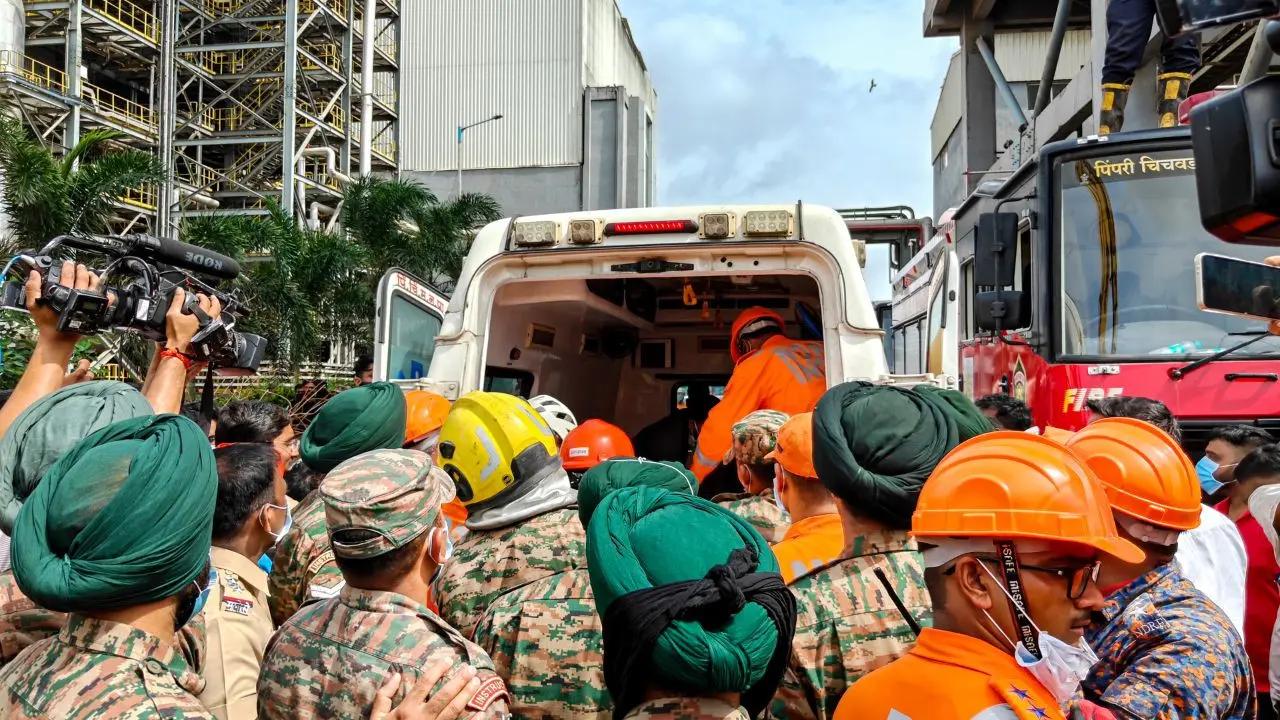
The Pune building collapse death toll has risen to 8 as rescue operations at the Moshi waste-to-energy plant enter a critical 72-hour mark. Emergency teams, including the National Disaster Response Force (NDRF) and the Indian Army, are working against time to clear tons of debris and locate individuals still missing beneath the rubble. The tragedy unfolded on Wednesday afternoon when an enormous mound of legacy garbage, destabilized by relentless monsoon rains, shifted violently like an alpine landslide, crushing a three-story administrative building operated by a private renewable energy firm.
Initially, a total of 23 people were reported to be inside or around the facility when the collapse occurred. While 5 individuals miraculously managed to escape on their own in the opening minutes, and 9 others were pulled out alive during an intense overnight rescue effort, the recovery of more bodies from the compressed wreckage has pushed the Pune building collapse death toll to its current figure. One worker remains unaccounted for, keeping emergency services locked in a grueling, hazardous search operation.
The Science of a 'Cantilever Collapse'
Disaster experts and structural engineers note that the nature of the destruction has severely hindered rescue speeds. Pimpri Chinchwad Municipal Corporation (PCMC) Commissioner Vijay Suryawanshi explained that the building suffered what is technically classified as a cantilever fall.
Unlike a standard "pancake collapse"—where floor slabs drop cleanly flat onto one another—a cantilever failure occurs when one side of a floor slab breaks away while the opposing end remains structurally anchored. This creates overlapping, severely unstable angles where front slabs stack diagonally on top of each other.
While this unique structural failure initially left tiny, hollow pockets of oxygen known as "white spaces"—which allowed the first 9 survivors to be heard and extracted—it has left the remaining pile of concrete and steel highly sensitive to movement. Using heavy earth-moving machinery recklessly threatens to trigger secondary collapses on top of trapped victims and rescue teams alike.
Rescuers Battle Toxic Methane and Shifting Debris
Beyond the complex physics of the crushed concrete slabs, the location of the accident presents unprecedented environmental hazards. Because the structure was directly buried by a massive slide of legacy landfill waste, rescue conditions have deteriorated rapidly:
Toxic Gas Accumulation: Rescuers are encountering high, dangerous concentrations of methane gas and sulfur byproducts venting from the disturbed, decomposing organic matter.
Diminishing Oxygen Levels: The tight, unventilated cavities beneath the weight of nearly 70 feet of garbage have seen oxygen levels plummet, making manual tunneling operations highly dangerous without breathing apparatuses.
Structural Tilting: Fire department officials confirmed that the massive impact lifted the back side of the building entirely off its foundation, forcing engineers to cut highly precise, triangular ducts through the concrete to establish alternative points of entry.
The Scale of the Response & Government Action
Over 15 advanced excavators, including two highly specialized, newly deployed demolition machines, are systematically grinding down the upper slabs. To ensure the safety of those still buried, the final layers of debris must be carefully picked apart by hand.
The administrative structure belonged to Antony Lara Renewable Energy Private Limited, which operates the 14-MW waste-to-energy plant under a public-private partnership with the local municipal corporation. In light of allegations raised by grieving local families that the lower levels of the building were built without proper code compliance, PCMC leadership has promised that a full, transparent investigation into potential unauthorized construction will begin immediately after the site is cleared.
Maharashtra state authorities have directed local administrative bodies to expedite the recovery process while ensuring comprehensive emotional and medical support is provided directly to the families waiting at the perimeter.
Read our editorial standards and corrections policy.