The Trust Tax: What Distrust Quietly Costs Your Business Everyday
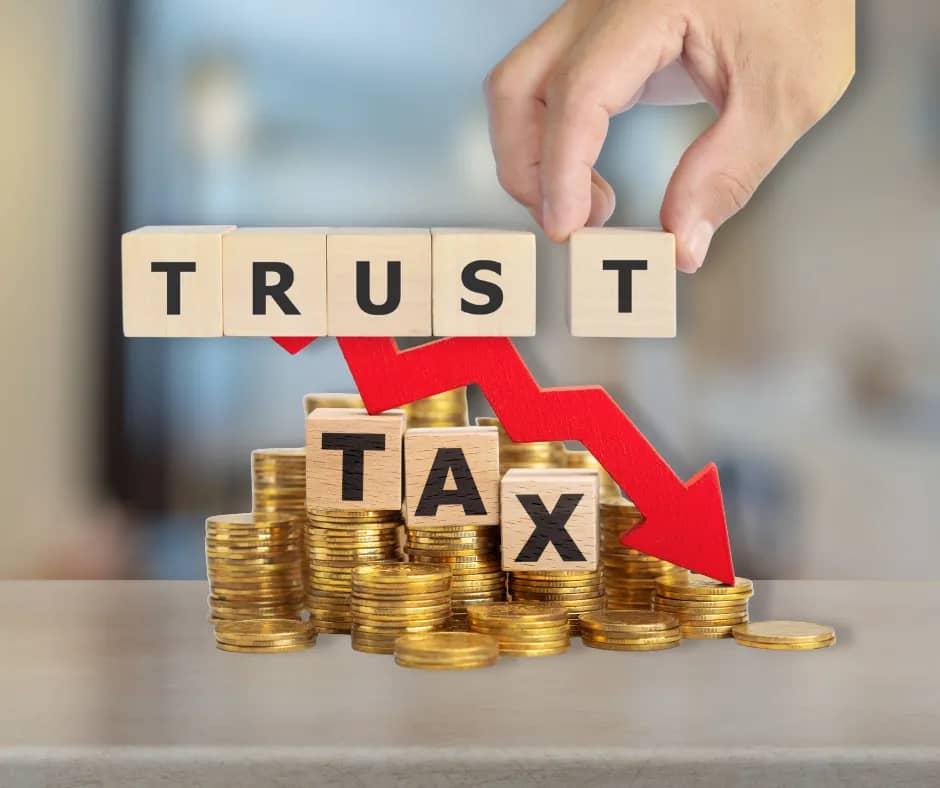
Businesses can lose money without making a single bad investment. Every unnecessary approval, repeated verification, delayed payment and extra layer of supervision carries a cost. Economists call it the trust tax, and many firms pay it daily without knowing how much it takes from their bottom line.
Picture a company where an employee needs three approvals to buy a box of printer paper. A supplier submits the same documents for the third time before a payment is released. A manager reviews a report that two other departments have already checked. A customer waits days for a decision that should have taken hours.
Nothing looks seriously wrong. People are busy, transactions are going through, and everyone is following the required procedures. But the slowdown may have less to do with a shortage of resources or capable staff than with a shortage of trust.
Most of these checks were introduced for good reasons, including preventing mistakes and fraud. Some remain essential. But when controls accumulate without regular review, they can become repetitive, poorly designed or disproportionate to the risks they are supposed to address.
The result is a business that spends too much time supervising its own operations instead of moving them forward. That is where the trust tax begins.
What Exactly Is the Trust Tax?
The trust tax is the additional cost a business bears when its employees, processes, partners or information cannot be relied upon without excessive verification and supervision.
It rarely appears as a single line in financial statements. Instead, it is spread across staff hours, duplicated tasks, rework, delayed transactions and missed opportunities.
A routine expense that requires four signatures costs more than the time spent signing the document. It also involves chasing approvals, the management hours devoted to a small request and the work left waiting while the process runs its course.
There is a human cost as well. Employees who are constantly second-guessed may gradually stop exercising their judgement. They wait for permission, protect themselves with paperwork and become less willing to take responsibility. The organisation pays for their experience and capabilities but receives little more than compliance.
Customers feel the effects too. Someone repeatedly asked to verify their identity or wait while several departments confirm a straightforward transaction may eventually take their business elsewhere. The company might not record that departure as a cost of distrust. It will simply appear as a lost customer or sale.
Where Does the Trust Tax Come From?
Not every check is unnecessary. Understanding the difference between legitimate safeguards and excessive controls is the first step towards reducing the trust tax.
Most controls can be considered in three broad categories.
Protective controls guard against genuine risks, including regulatory breaches, financial losses and security threats. These are necessary safeguards and should be maintained or strengthened where appropriate.
Inherited controls were introduced after a past problem but never reviewed. The incident may have been resolved or the circumstances may have changed, yet the additional approval or verification remains. Over time, nobody may remember why it is still required.
Fear-driven controls exist because individuals are reluctant to take responsibility for decisions that could go wrong. They often protect people from blame rather than protect the organisation from meaningful risks. By pushing decisions upwards, they slow routine work and make accountability less clear.
The trust tax is most likely to accumulate in the second and third categories. Identifying it requires businesses to examine why each process exists, what risk it addresses and whether its current cost is justified.
How Much Is Distrust Costing Your Business?
Although the trust tax does not appear directly in company accounts, businesses can develop an estimate of its financial impact using a proposed measure called the Trust Tax Rate:
Trust Tax Rate = (Annual cost of trust-related friction ÷ Annual operating costs) × 100
Trust-related friction may include:
Excessive checks: Staff time spent on repetitive approvals, documentation and verification.
Duplicated work: Reviewing, reconciling or repeating tasks that have already been completed.
Unnecessary supervision: Management hours devoted to routine monitoring that clearer accountability could replace.
Delays: The measurable cost of decisions, projects and payments held up by avoidable approval steps.
Lost business: Customers and revenue lost because the company is slow or difficult to deal with.
Consider a hypothetical company with annual operating costs of ₦500 million. After reviewing its processes, it estimates that ₦30 million is spent each year on trust-related friction.
₦30 million ÷ ₦500 million × 100 = 6%
That means an estimated 6 per cent of its operating costs goes towards activities that could potentially be reduced through better processes and clearer accountability.
The money could otherwise support technology investments, staff development, customer experience or business expansion. The question therefore changes from "Can we afford to loosen these controls?" to "Can we afford to keep them as they are?"
Businesses can begin estimating their own figures by examining processes such as supplier payments, customer onboarding and expense approvals. They can count the steps involved, the employees required, the time taken and how often each check has identified a genuine problem.
The next step is to estimate the staff hours and financial costs associated with unnecessary steps, then repeat the exercise across other processes. Even a conservative estimate can reveal where the biggest inefficiencies exist.
This is a management tool, not an accounting standard, and its accuracy depends on the quality of the estimates. It must also distinguish between unnecessary friction and legitimate regulatory, financial or security requirements. The objective is to remove costs that add little value, not to weaken accountability.
Control Is Not the Same as Accountability
High-trust organisations do not abandon approvals, compliance or supervision. Instead, they build systems that make excessive intervention less necessary.
Employees are given authority to make decisions within clearly defined limits. Suppliers are assessed consistently. Departments work with accurate, shared information. Automated workflows and transparent records reduce the need for repeated checks.
This principle applies even in heavily regulated industries.
A bank, for example, cannot abandon customer verification simply to process transactions faster. However, it can avoid repeatedly requesting information it already holds, eliminate duplicate checks between departments and use technology to make necessary verification quicker and less intrusive.
The control remains. The unnecessary friction disappears.
Trust and accountability must work together. Trust gives employees the authority to act, while accountability ensures their decisions remain aligned with organisational goals. Without trust, every decision requires permission. Without accountability, nobody takes ownership of the outcome.
The strongest organisations understand that neither can function effectively without the other.
Building a Business That Pays Less Trust Tax
Reducing the trust tax begins with asking some honest, and sometimes uncomfortable, questions:
Why does a routine decision require so many approvals?
Why are employees repeatedly submitting information the organisation already has?
Which controls genuinely protect the business, and which have simply become habits?
How much time do managers spend supervising routine tasks that employees could handle independently?
Once these questions are answered, businesses can begin making practical changes.
Start with one high-friction process. Map it from beginning to end, focusing on how it actually operates rather than how the policy says it should.
Consult the people closest to the work. Employees who handle the process every day often know where the delays occur. Their input can help identify unnecessary steps, provided the exercise is treated as an opportunity to improve the system rather than assign blame.
Remove or combine unnecessary steps. Eliminate procedures that add delay without providing meaningful protection, while retaining controls that address genuine risks.
Establish clear decision-making authority. Employees should understand which decisions they can make independently, the limits of that authority and when escalation is necessary.
Measure the results. Track how long routine decisions take, how often work is repeated and how much staff time goes towards administration rather than productive activities.
Leadership is particularly important in this process. Employees pay attention to how managers respond to mistakes and independent decisions. If every honest error results in a public reprimand, or every independent decision is met with "Why didn't you check with me?", staff quickly learn to avoid making decisions.
Nobody wants to be responsible for a box of printer paper that required three signatures to purchase.
Trust grows through consistency, fairness and competence. It also requires leaders to hold people accountable without treating everyone as a potential problem. When something goes wrong, organisations should examine what the system allowed to happen, not simply search for someone to blame.
Before introducing another control, managers should ask what risk it addresses and whether that risk justifies the additional cost imposed on employees, customers and the business.
The relationship works both ways. Employees given authority must be transparent about how they use it. Leaders who expect that transparency must also create an environment where people can act without unnecessary interference.
The Bottom Line
The trust tax is costly partly because businesses can mistake it for the normal cost of doing business. It does not appear on financial statements as "distrust". Instead, it shows up in slower operations, frustrated employees, delayed payments, duplicated work and customers who take their business elsewhere.
Trust will not eliminate every risk, and it should never replace proper controls. But when employees, partners and processes can be relied upon, organisations spend less time protecting themselves from one another and more time creating value for their customers, their teams and their communities.
Read our editorial standards and corrections policy.