
US Targets Chinese Robots in Latest Escalation of Tech Rivalry
Washington's fight with Beijing over advanced technology has moved from chips to machines that walk. On Tuesday, the FCC added foreign-made humanoid and quadruped robots, along with connected power inverters, to its national security Covered List, blocking new imports on the grounds that the devices pose unacceptable risks to US critical infrastructure.
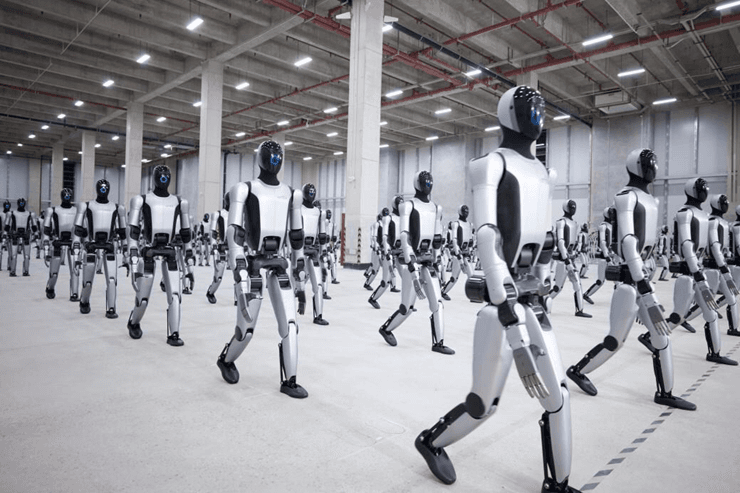
The Trump administration has announced a ban on new Chinese-made humanoid and quadruped robots, arguing that the machines could pose national security risks as artificial intelligence becomes more deeply embedded in the US economy.
The restrictions, unveiled by the Federal Communications Commission (FCC), also cover Chinese-made power inverters used in renewable energy systems and data centers. Existing products already in use are not affected, though regulators could review previous approvals later.
From AI Chips to AI Machines
The action followed a national security determination made a day earlier by a White House-convened interagency body, which found that internet-connected robots and power inverters create supply chain and cybersecurity vulnerabilities. The FCC then added both categories to its Covered List, which blocks new device models from getting import, marketing or sale authorization in the US.
FCC Chairman Brendan Carr framed the move as part of an effort to secure America's supply chains. The order does not touch robots or inverters already deployed, previously authorized models, or anything the federal government buys directly. It is a gate on new imports, not a recall, though its effect grows over time as newer models are frozen out while older approved ones stay on the market.
The FCC used the same staged approach last December when it banned new imports of Chinese-made drones, effectively cutting DJI out of the US market. This marks the second major FCC action against Chinese hardware categories in under a year.
Why Unitree Is at the Center
Unitree controls close to a fifth of the global humanoid robot market and has increasingly been treated by Washington as a strategic concern rather than just a commercial player, having recently been added to the Pentagon's list of alleged Chinese military-linked companies. The company also has a partnership with Nvidia, using its Blackwell chip to power a Unitree robot, though Nvidia has said the resulting data stays within the US and that Unitree's largest customers are American academic and research institutions.
China dominates the humanoid robot category more broadly. Six of the world's top ten humanoid robot startups by patent strength are Chinese, according to a recent LexisNexis analysis, and the industry now includes more than 140 domestic manufacturers.
Beijing's Response
China's government rejected the move. Foreign Ministry spokesperson Mao Ning said Beijing consistently opposes what it sees as Washington abusing national security as a pretext to suppress Chinese companies, and said China would take necessary measures to protect its firms' interests.
China's Commerce Ministry separately pointed to trade figures to push back on the broader narrative, noting that AI-related exports have become a defining part of the country's foreign trade, with industrial robot exports up 18.6 percent and 3D printer exports up over 109 percent in the first half of 2026 alone.
The Bigger Picture
The ban extends a rivalry that started with semiconductors and AI chips into physical machines built to operate inside factories, labs and eventually critical infrastructure. With humanoid robots moving quickly from research demonstrations into real deployments, both governments are now treating them as strategic assets in their own right, not just as another category of consumer hardware.
Read our editorial standards and corrections policy.