
When Selling the Movie Becomes the Show: How Viral Stunts Took Over Hollywood Publicity.
Hollywood’s new publicity playbook prioritises viral stunts over traditional interviews. From Tom Holland’s Hot Ones meltdown to subway chats and challenge videos, studios are turning movie promotion into shareable entertainment.
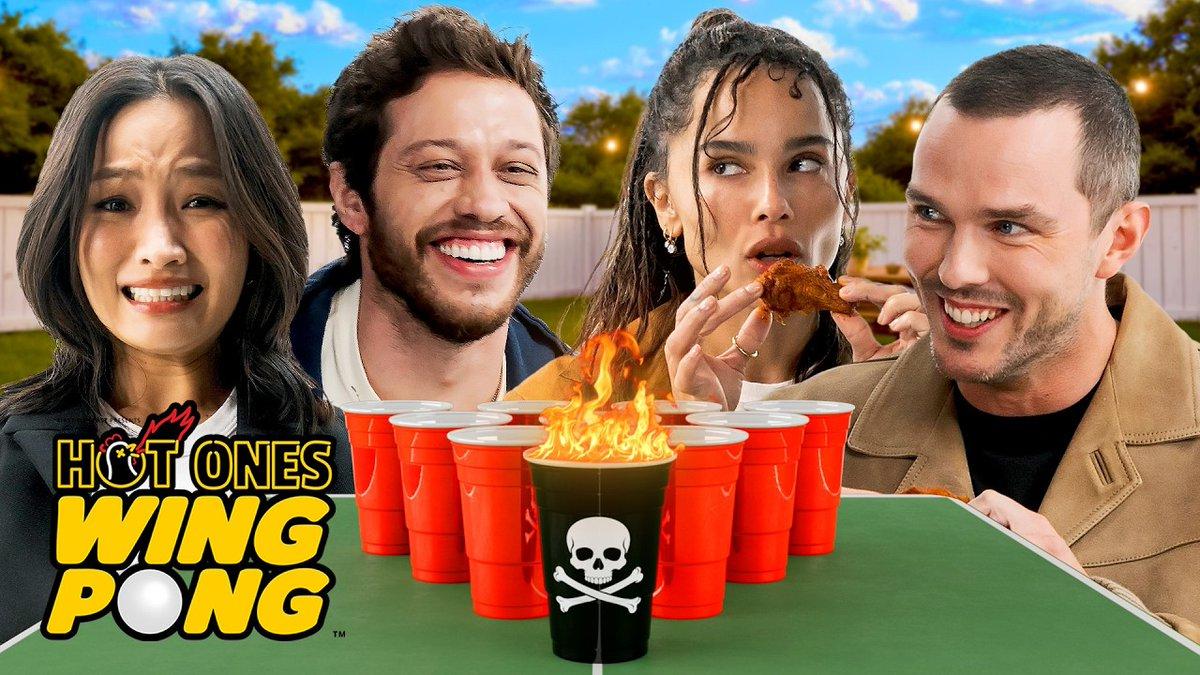
Tom Holland is bent over behind a table, laughing so hard he is crying. He had just finished the whole gauntlet of spicy wings on Hot Ones, and then he threw up while the outro was being filmed. Jon Bernthal, standing next to him, is cheering. Holland had become the first guest in the show’s 11-year run to puke on set. This is not a late-night interview. This is the new face of movie publicity.
A Trend Hiding in Plain Sight
It has been everywhere this year. Penélope Cruz went through the same wings on Hot Ones to promote The Invite. Jennifer Lopez did a “Subway Takes” interview aboard the F train to promote Office Romance, and her claim that you must be born in New York to be a New Yorker went viral. The interview is no longer the point. The stunt is the point. Entertainment is the new marketing.
Why the Stunt Works
The media landscape now moves at the speed of short-form video. A single well-timed clip can travel farther than a trailer or a press junket, and studios have noticed. Interviews and promotional stunts are increasingly treated as content first and publicity second.
Audiences, meanwhile, have lost patience with polished red-carpet soundbites. They want to see the person behind the character. When a star nearly breaks down over a chicken wing or answers questions on a crowded train, viewers feel they are seeing the real person instead of a carefully managed brand. That sense of authenticity makes the cast feel more relatable, and audiences more invested by the time the film opens.
It may look like a casual chat, but it is a deliberate strategy. Publicists are increasingly borrowing the playbook of content creators rather than relying on classic Hollywood promotion. The more unpolished and human the moment looks, the better it tends to perform. A perfect soundbite on a late-night couch still has value, but it rarely travels the way a star looking genuinely uncomfortable, surprised or amused does. The result is a press tour designed first for the algorithm and only second for traditional media.
Did It Work?
So did it work? The Holland and Bernthal episode aired July 23, eight days before Spider-Man: Brand New Day opened. The film then debuted with a record $360 million domestic opening and $927 million worldwide, and passed $2 billion globally after three weekends. Nolan’s The Odyssey, which Holland and Bernthal also star in, had earned nearly $400 million in North America by early August.
It would be easy to credit the wings. It would also be incomplete. Spider-Man is one of the most bankable franchises in cinema and would have drawn crowds with or without a viral moment. The stunts are better read as an amplifier than an engine. They keep a film in the conversation, but they cannot make people buy tickets for a film they don’t already want to see.
The Risks
There are real risks too. When every major star is doing the same spicy wings, subway interviews and guessing games, what once felt surprising starts to feel like a formula. There is a cost for performers as well, who are expected to be endlessly entertaining while promoting their work. At some point you have to ask whether the film is still being sold, or whether the algorithm is just being fed.
What Comes Next
For now, studios will keep chasing whatever cuts through the noise, and right now that usually means something a little messy, a little human and very easy to share. But Holland’s collapse worked because it looked unplanned. The stunts that follow will be planned, and audiences are usually quick to tell the difference.
Read our editorial standards and corrections policy.