
Technology Predictions from 2010: What Came True and What Didn't?
From smartphones becoming essential everyday tools to flying cars that remain largely out of reach, some technology predictions made in 2010 have become reality, while others are still waiting for their moment.
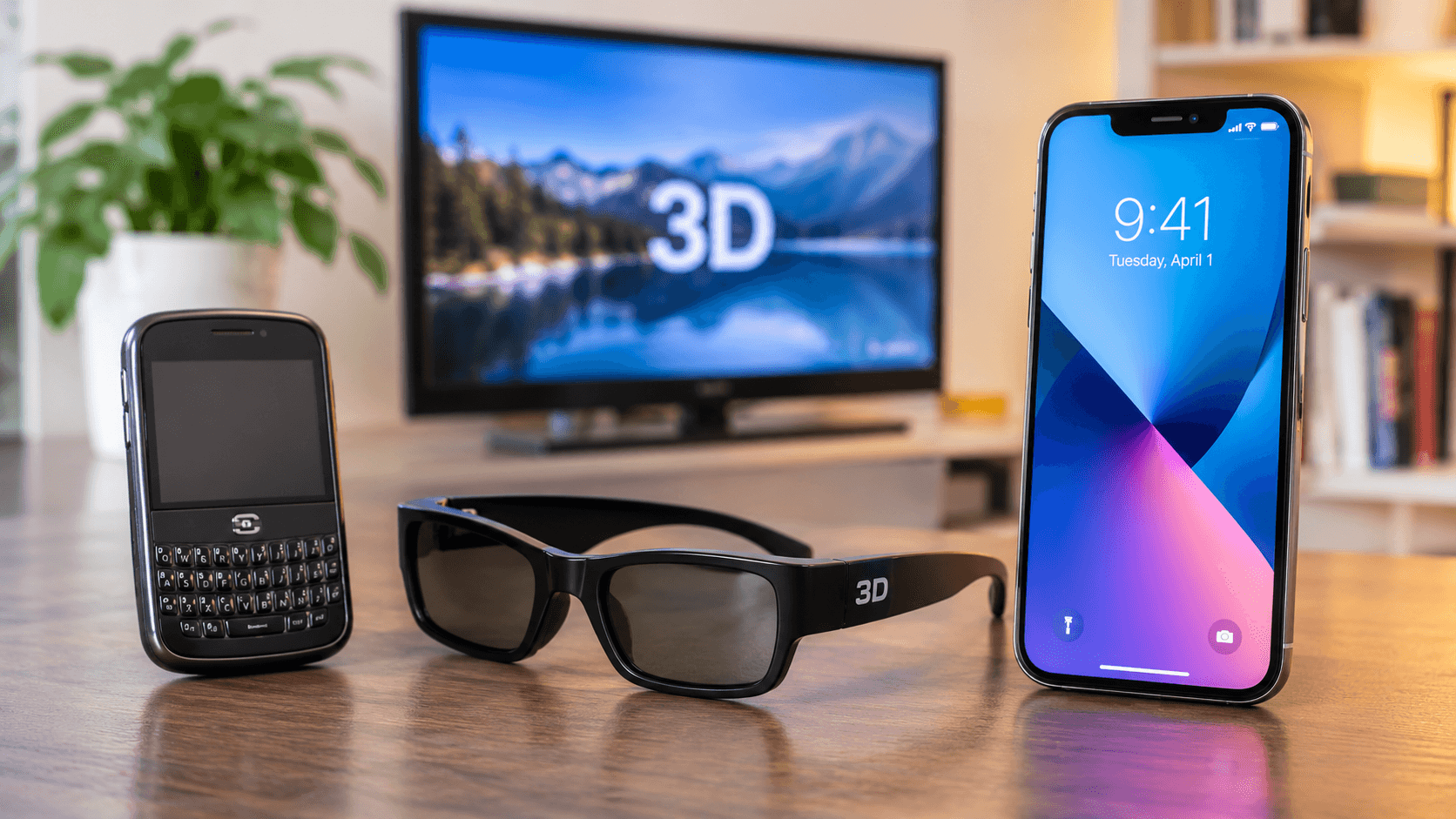
Back in 2010, the future of technology looked exciting. Smartphones were becoming more popular, social media was changing how people communicated, and technology companies were exploring ideas that sounded as though they belonged in science fiction.
There was plenty of speculation about what the coming years would bring. Some imagined a world where cars could drive themselves, televisions could deliver 3D entertainment into every living room and people could access almost everything through their mobile phones.
Now, in 2026, some of those expectations look remarkably accurate. Others remind us that even the most exciting technological ideas do not always work out as planned.
Looking back is not just about identifying which predictions came true. It is also an opportunity to understand why some technologies became part of everyday life while others struggled to gain widespread acceptance.
The Predictions That Got It Right
Smartphones would become part of almost everything
This is one prediction that turned out to be more accurate than many people could have imagined.
In 2010, smartphones were growing in popularity, but they had not yet taken over everyday activities in the way they have today. Phones were mainly seen as communication devices, even though their wider potential was already becoming clear.
Today, a smartphone can serve as a bank, camera, office, classroom, shopping centre and entertainment device. People use them to attend meetings, run businesses, make payments, learn new skills and communicate across the world.
The prediction was not simply that phones would become more popular. It was that they would fundamentally change how people interact with technology. That has certainly happened.
The internet would make information accessible from almost anywhere
The idea of accessing information without depending on a single computer or physical storage device was already gaining attention.
Cloud computing helped make this possible. Instead of keeping every document, photograph or work file on one device, people could store information online and access it from different locations.
Services such as Google Drive, Dropbox and Microsoft OneDrive have made this a normal part of everyday life. Businesses also depend on cloud platforms to store data, run applications and support remote work.
The prediction that computing would become more connected and accessible was right. What has changed is how much people now depend on it.
Video calls would become an ordinary way to communicate
Video calling existed before 2010, but it was not yet as deeply woven into everyday life as it is now.
Faster internet connections and better mobile devices made it easier for people to communicate face-to-face without being in the same location.
The COVID-19 pandemic accelerated this development. Schools, businesses and organisations had to find ways to continue their activities remotely, making platforms such as Zoom, Google Meet and Microsoft Teams familiar to millions of people.
Video calls are now used for everything from job interviews and lectures to family conversations. What once felt like a special feature has become an ordinary way of staying connected.
Artificial intelligence would transform everyday activities
Artificial intelligence was not a new idea in 2010. Researchers and technology companies had been exploring AI for decades.
However, its development and public accessibility have exceeded what many ordinary technology users might have anticipated.
AI tools can now help people write, create images, analyse information, translate languages and generate computer code. Businesses are also exploring ways to use AI in customer service, healthcare, education and other industries.
Tools such as ChatGPT have brought conversations about artificial intelligence into everyday life. People who may never have followed developments in the field are now using AI for work, education and personal projects.
The broad prediction that computers would become more capable was not new. What has surprised many people is how quickly powerful AI tools have become accessible to the public.
The Predictions That Did Not Turn Out as Expected
3D television would change home entertainment
For a while, 3D television looked like the next big thing in entertainment.
Television manufacturers invested in the technology, and the idea of watching films with images that appeared to have depth attracted considerable attention. It seemed possible that 3D viewing would become a normal feature in people's homes.
But the excitement did not last.
Many viewers were uncomfortable wearing special glasses, while the amount of available 3D content was limited. Some also felt that the experience did not offer enough improvement to justify buying a new television.
Over time, manufacturers moved away from the technology. Today, 3D television is not the standard home entertainment experience many expected it to become.
It is an example of how an exciting idea can attract attention without necessarily becoming something people want to use regularly.
Self-driving cars would arrive much sooner
Self-driving cars have been discussed for years, and progress in the field is real. Technology companies and car manufacturers have invested in systems that use cameras, sensors and artificial intelligence to help vehicles understand their surroundings.
The expectation, however, was that autonomous vehicles would become common much sooner.
Some companies now operate autonomous vehicle services in selected locations, while many modern cars have driver-assistance features. But fully autonomous vehicles are still not an everyday option for most people.
Road conditions can be unpredictable, and questions about safety, regulation, cost and responsibility remain important.
The idea itself has not failed. The timeline was simply more optimistic than reality allowed.
Flying cars would become a normal way to travel
The idea of flying cars has been around for decades, and it continued to feature in discussions about the future of transportation around 2010.
The vision was easy to imagine: instead of sitting in traffic, people would travel above it.
There has been progress towards that possibility. Companies are developing electric aircraft designed to take off and land vertically, with the potential to support short journeys and air taxi services.
However, these developments do not mean ordinary flying cars are ready for everyday use. The technology still faces challenges involving safety, cost, regulation and the infrastructure required to operate it.
For now, the flying-car future remains more of a developing idea than a normal part of transportation.
What the Past Can Teach Us About the Future
Looking back at technology predictions from 2010 shows that predicting the future is not simply about imagining what a new invention could do.
Some technologies succeed because they solve problems people already have. Smartphones made communication and access to information easier. Cloud computing gave people more flexible ways to store and retrieve their files. Video calls helped people communicate across distances without being physically present.
Other technologies struggle because being impressive is not always enough. 3D television attracted attention, but many people did not find it convenient enough to keep using. Self-driving cars and flying aircraft demonstrate that even promising ideas can take much longer to develop than expected.
There is also a difference between a technology being possible and being ready for everyday use. An invention may work in a controlled environment but still require years of improvement before it becomes affordable, safe and practical for the public.
Artificial intelligence offers another important lesson. Its progress was built on decades of research, but improvements in computing power, data availability and software helped bring its capabilities to a much wider audience.
The next big technology prediction may sound exciting today. It could involve smarter robots, fully autonomous transportation or technologies we have not yet imagined.
But as the past 16 years have shown, the real test is not how impressive an invention sounds when it is announced. It is whether people can use it, afford it and find a meaningful place for it in their everyday lives.
Read our editorial standards and corrections policy.