
GTA VI: What did Rockstar do with this?
From its proprietary game engine and remarkably detailed open world to its ambitious artificial intelligence systems, Grand Theft Auto VI demonstrates how far Rockstar Games has pushed the technical possibilities of modern console gaming.
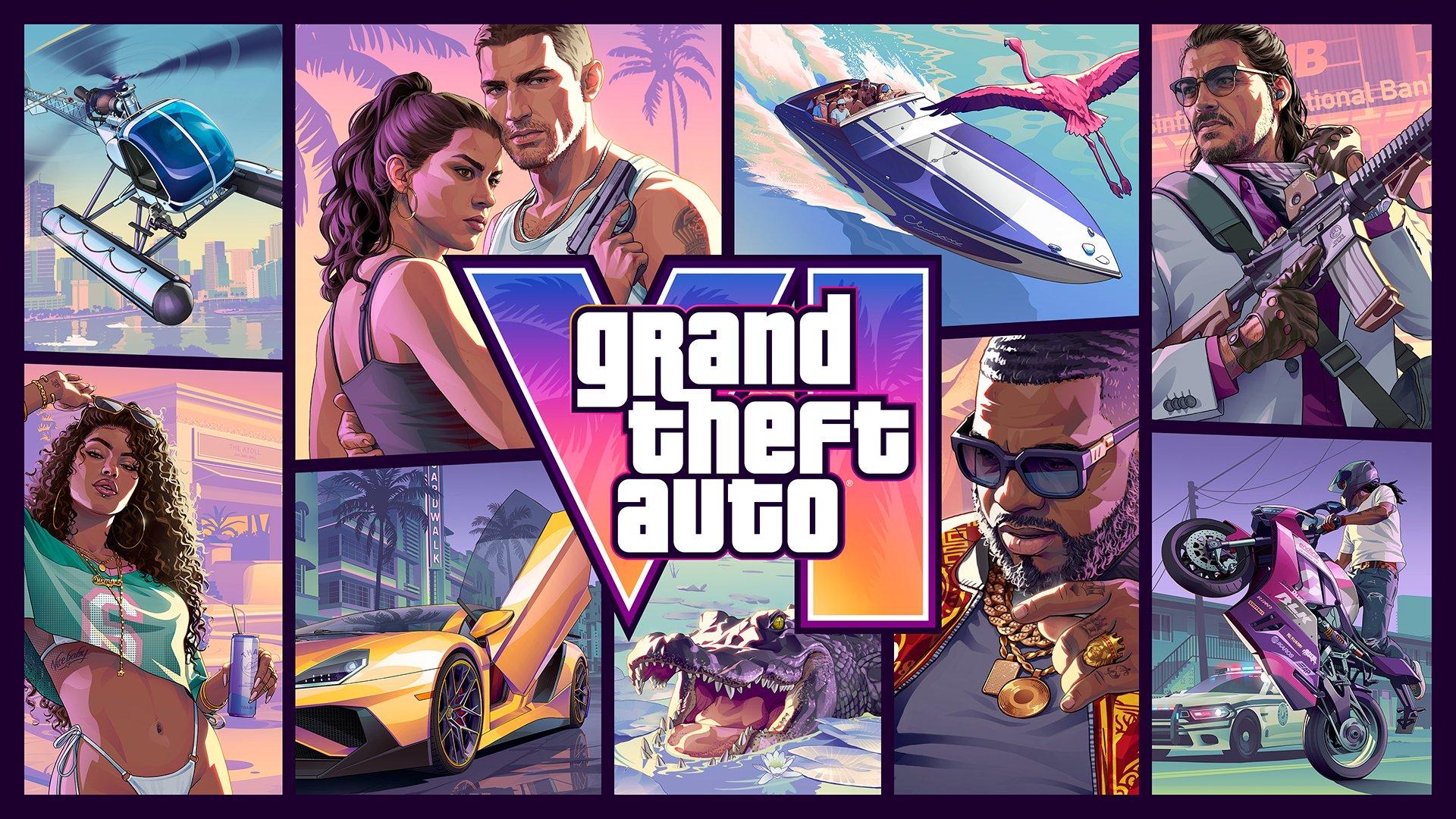
Few video game releases attract the level of anticipation surrounding Grand Theft Auto VI. More than a decade after the franchise's previous main instalment, Rockstar Games has returned with an enormous open-world experience set in Leonida, a fictional state inspired by Florida.
But beyond the scale of the map, the characters and the criminal storyline, one question stands out: what exactly has Rockstar achieved with GTA VI?
The answer lies in years of technological development, detailed world-building and the challenge of making an increasingly complex virtual world run on existing console hardware.
Built on Rockstar's Own Technology
At the centre of GTA VI is the Rockstar Advanced Game Engine, commonly known as RAGE.
Unlike studios that rely on commercially available game engines, Rockstar has developed and maintained its own technology. The engine dates back to the development of Grand Theft Auto IV and has continued to evolve through subsequent releases.
Owning its technology gives Rockstar greater control over how its games are built. The studio can develop systems for vehicle handling, character movement, environmental interactions, physics and world streaming around the specific demands of its projects.
That level of control is particularly important for a game as ambitious as GTA VI. Rather than adapting its vision to the limitations of an external engine, Rockstar can develop and refine the technology around the experience it wants to create.
The result is an environment where visual detail, character behaviour and the surrounding world are designed to work together.
Leonida: Building a World That Feels Alive
GTA VI's fictional state of Leonida draws heavily from South Florida, with Vice City serving as its central location.
The world extends beyond the familiar city environment, encompassing locations such as the Leonida Keys, the Grassrivers and Ambrosia. Its design combines urban neighbourhoods, coastal environments, waterways and other landscapes to create a varied setting.
Rockstar's attention to detail is central to the experience. Weathered buildings, overgrown yards, faded vehicle stickers, puddles and other environmental features help make the world feel lived-in rather than like a collection of locations designed simply for missions.
The same ambition extends to its population.
Instead of treating pedestrians as background decoration, Rockstar has developed more complex character behaviours and interactions. The supplied technical details describe a system involving hundreds of thousands of bespoke animations and individual character traits.
This allows non-player characters to respond to events around them in more varied ways. Some may notice the player's behaviour, record incidents on their phones, contact the police or react directly to what happens nearby.
These interactions contribute to the sense that the world continues to operate beyond the player's immediate actions.
The Challenge of Running It on Console Hardware
Creating a detailed open world is one challenge. Making it run smoothly on existing hardware is another.
GTA VI is designed for the PlayStation 5 and Xbox Series X|S generation, meaning Rockstar has had to balance its visual ambitions with the processing limitations of those consoles.
The game's lighting, reflections, environmental effects, traffic, crowds, animals and physics systems all compete for computing resources.
The challenge becomes clearer when considering the number of things happening simultaneously. The game must maintain its large environment, respond to the player's actions, manage artificial intelligence systems and process the surrounding world without constantly interrupting the experience with loading screens.
The supplied performance figures indicate a 30-frames-per-second target, including on the PS5 Pro. This raises an important distinction in modern gaming: visual quality and frame rate are not the same thing.
A game can offer highly detailed graphics and complex world simulation without necessarily delivering 60 frames per second. The processor must also handle the activity taking place throughout the world, not just the images appearing on the screen.
GTA VI's technical ambition therefore involves more than producing impressive visuals. It is about managing a large number of interconnected systems within the processing limits of current-generation consoles.
The Small Details That Make a Difference
Some of GTA VI's most interesting features are not necessarily the largest or most visually impressive.
The game incorporates an in-world smartphone, complete with applications and customisation options. Players can also use headphones while walking around, while the vehicle experience includes additional interactive features.
The police system is another important development. Rather than treating every encounter as an isolated event, the new approach reportedly allows law enforcement to retain information about a player's appearance, clothing and vehicle.
This creates a more persistent relationship between the player's actions and the surrounding world. Changing clothes or vehicles could become more important when trying to avoid recognition.
The game also expands its wildlife, with the supplied figures placing the number of animal species above 170, compared with approximately 15 in GTA V at launch.
Individually, these features may appear relatively small. Together, they contribute to a world that feels more responsive and less predictable.
A Development Journey More Than a Decade in the Making
GTA VI's development has been a lengthy process.
Early ideas reportedly emerged around 2014, although full-scale development gathered momentum after the release of Red Dead Redemption 2 in 2018.
The journey also involved significant delays. The game was initially expected in 2025 before its release was pushed back, eventually arriving at its November 2026 launch date.
Such a long development period reflects the scale of the project and the pressure on Rockstar to deliver an experience that meets expectations built over several years.
The studio also had to contend with a major security breach in 2022, when hackers leaked numerous videos and development materials from the game. The incident exposed early footage and became one of the most widely discussed leaks in video game history.
The subsequent marketing campaign was therefore another important part of the release process, with Rockstar maintaining tight control over what audiences could see before launch.
Did the Wait Pay Off?
The commercial and critical reception of GTA VI will ultimately be measured through reviews, player engagement and sales performance.
The supplied figures point to an exceptionally strong launch, including a reported Metacritic score of 99 and millions of copies sold within the first few days. If independently confirmed, those numbers would underline the extraordinary demand surrounding the franchise.
However, commercial success alone does not establish whether a game represents a generational leap. That judgement also depends on how well its technical features translate into the actual playing experience.
For GTA VI, the central achievement is the combination of visual fidelity, environmental detail, character behaviour and the scale of its open world.
The franchise has always been associated with freedom and exploration. Rockstar's latest approach appears designed to make that freedom feel more convincing by giving the surrounding world more ways to respond.
Should You Play GTA VI?
For players who enjoy expansive open-world games, GTA VI offers an experience built around exploration, interaction and a detailed fictional environment.
Its appeal extends beyond the main storyline. The attraction is also in discovering how the world behaves, exploring different locations and experiencing the smaller interactions that make Leonida feel alive.
However, the game may not appeal equally to everyone. Players who prioritise a consistent 60fps experience may be disappointed by a 30fps cap, while PC-only gamers may prefer to wait for a version suited to their platform.
Those who found the slower pace of Red Dead Redemption 2 difficult may also want to consider whether GTA VI's approach to storytelling and exploration matches their preferences.
Ultimately, Rockstar's achievement is not simply that it has created a bigger map or improved its graphics. It is the attempt to make an enormous virtual world operate with greater depth, detail and responsiveness.
That is what makes GTA VI such an important moment for console gaming.
Read our editorial standards and corrections policy.