
Motorola Signature 27: Can the Smartphone Veteran Challenge Apple and Samsung Again?
With Qualcomm's latest flagship processor, a 7,000mAh battery, advanced AI features and a $1,599 price tag, Motorola is making an ambitious return to the premium smartphone market.
If you have followed the smartphone industry since its early days, you probably know Motorola. The company, known for introducing the first handheld mobile phone and popularising the iconic Razr flip phone, helped shape the mobile industry long before Apple and Samsung became its dominant players.
Today, however, Motorola occupies a different position in the global smartphone market. It has become more of a niche competitor, with a stronger presence in the United States and Latin America, while Apple and Samsung dominate premium smartphone sales.
Yet the company has not abandoned its reputation for innovation. Its latest attempt to make a statement is the Motorola Signature 27, a premium smartphone that combines Qualcomm's next-generation processor with an ambitious camera system, a large battery and a renewed focus on artificial intelligence.
At $1,599.99, it is also the most expensive smartphone Motorola has ever produced. The question is whether its features justify the price.
Motorola's Return to the Premium Smartphone Market
The smartphone industry has reached a point where most flagship devices offer more processing power and features than the average user needs. Apple and Samsung have also built strong ecosystems that encourage customers to remain within their respective platforms.
For manufacturers outside these dominant ecosystems, standing out requires more than incremental improvements.
Motorola's Signature range represents its attempt to compete in this premium segment. The original Signature, introduced earlier in 2026, established the series with flagship specifications, IP68/IP69 durability and a seven-year software update commitment.
The Signature 27 takes that ambition further. It is the first device in the series to launch directly in the United States and comes with a substantial price increase.
Pre-orders open on November 19, with sales beginning November 26 through Motorola's website, Amazon and Best Buy. The device will initially be available unlocked, with no carrier deals announced.
Design and Display: A Different Look
Motorola has placed considerable emphasis on the Signature 27's appearance.
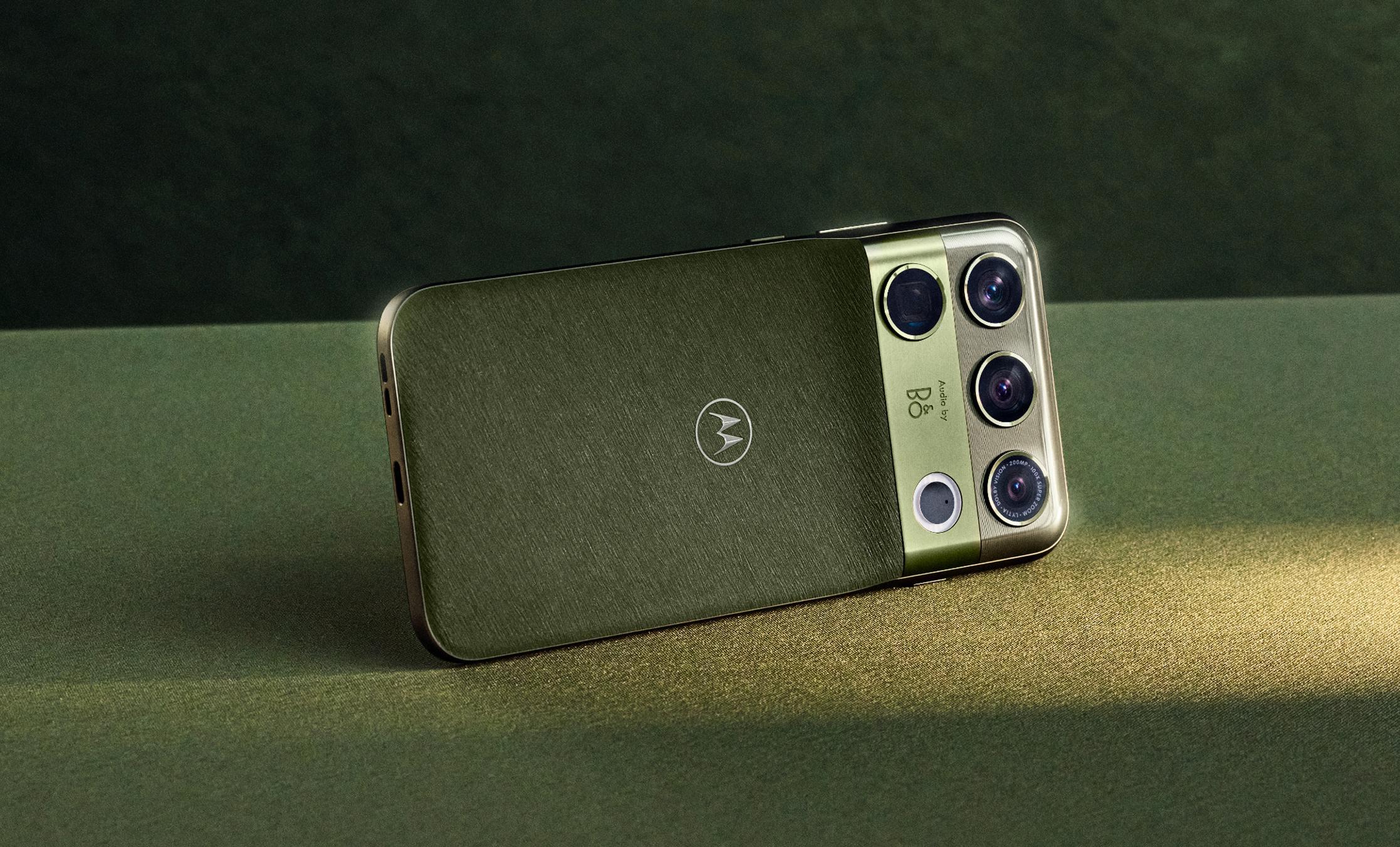
The rear panel rises gradually towards the camera housing, creating a smooth transition that allows the lenses to sit almost flush with the back. It is available in two Pantone colours, Coal Smoke and Capulet Olive, with an aluminium frame and Gorilla Glass Ceramic 3 protecting the front.
At 7.99mm thick and weighing 227g, it is slightly thicker and heavier than the original Signature. However, the overall design gives it a distinctive appearance, helping it stand apart from the familiar designs of competing flagship devices.
The front features a 6.8-inch Tandem OLED display, marketed by Motorola as Extreme AMOLED Duo. It supports a 120Hz refresh rate and offers a quoted peak HDR brightness of up to 12,000 nits.
Bang & Olufsen-tuned stereo speakers complete the multimedia experience, making the device particularly appealing to users who consume considerable amounts of video and other media on their phones.
Performance: Qualcomm's Next-Generation Power
One of the Signature 27's biggest selling points is its processor.
It is among the first smartphones to feature Qualcomm's Snapdragon 8 Elite Extreme Gen 6, a flagship chip built on a 2nm manufacturing process and capable of reaching CPU clock speeds of up to 5GHz.
Qualcomm claims the processor delivers 13% faster CPU performance and 44% faster GPU performance compared with the previous generation's Snapdragon 8 Elite Gen 5.
The chip also supports on-device artificial intelligence models with up to 30 billion parameters, providing additional capacity for increasingly demanding AI applications.
Motorola pairs the processor with 12GB of LPDDR5X RAM and 512GB of UFS 4.1 storage in the US configuration.
For demanding applications, multitasking and mobile gaming, the specifications provide substantial performance headroom. Motorola has also introduced its ArcticMesh cooling system, combining diamond-infused thermal gel with a vapour chamber that is 40% larger than the previous generation's.
The cooling system is designed to manage the additional heat generated during intensive tasks, helping maintain performance during extended gaming sessions.
Battery: A Major Advantage
Battery capacity is another area where Motorola has gone beyond the specifications of several competing flagships.
The Signature 27 houses a 7,000mAh silicon-carbon battery, considerably larger than the 5,000mAh battery found in Samsung's Galaxy S26 Ultra.
Motorola estimates that the device can last up to two days under light to moderate usage, while heavier users should still get a full day.
Charging supports 90W wired and 50W wireless speeds. According to Motorola, a 12-minute charge can provide approximately 12 hours of use.
If these figures translate into everyday performance, the battery could become one of the phone's strongest selling points.
AI, Software and Seven Years of Updates
Motorola has traditionally maintained a relatively clean Android experience through its Moto UI. With the Signature 27, however, the company is placing greater emphasis on artificial intelligence.
The phone combines Google's Gemini Intelligence features with Motorola's own Qira platform, introducing several tools designed to make everyday smartphone interactions easier.
One of the more interesting additions is Create My Widget, which allows users to describe a widget in ordinary language and have Gemini generate it. The feature can draw information from applications such as Gmail and Calendar.
Another addition, Device Help, allows users to describe a setting or action they want to perform, with the AI guiding them through the process.
There is also Rambler, a speech-to-text feature integrated into Gboard that removes filler words and improves formatting, making voice dictation more useful for messages and note-taking.
Perhaps the most important commitment, however, is Motorola's promise of seven years of operating system and security updates. Extended software support has become an important consideration for premium smartphone buyers, and this brings the Signature 27 closer to the long-term support offered by its major competitors.
The phone is also expected to support GrapheneOS, a privacy-focused Android operating system. However, it will not ship with the software preinstalled, and the project currently points towards a 2027 release.
Camera: Impressive Specifications, Some Limitations
Motorola has equipped the Signature 27 with an extensive camera system.
The rear setup consists of a 50MP Sony LYTIA 910 main sensor, a 50MP ultrawide camera and a 200MP periscope telephoto lens offering 3x optical zoom and up to 100x total zoom.
The company has also introduced a dedicated EVS action sensor, which it describes as a smartphone first. The technology detects changes in light at pixel level to help capture fast-moving subjects, working alongside Motorola's Action Shot mode.
On the front is a 50MP selfie camera with autofocus. Video recording supports up to 8K resolution, alongside 4K Dolby Vision on the rear cameras.
In practical use, the camera system delivers attractive photographs, particularly in high-contrast and HDR conditions, with natural-looking colour reproduction. Video stabilisation is another strength, while audio recording remains clear even in windy conditions.
However, the experience is not without shortcomings. Capturing moving subjects, particularly children and pets, can be challenging, with the camera sometimes struggling to maintain focus even when using its dedicated action mode.
The 200MP telephoto camera also performs reasonably well at medium distances but loses detail beyond 10x zoom. In softer lighting conditions, images can become grainy.
DXOMARK awarded the camera system 173 points, a strong result, although the real-world limitations suggest that Motorola still has some ground to cover before matching the very best flagship camera systems.
Verdict: Who Should Buy the Signature 27?
The Motorola Signature 27 is not necessarily a phone for the average smartphone buyer. At $1,599.99, it is aimed at consumers willing to pay a premium for distinctive hardware, powerful specifications and an alternative to the established Apple and Samsung experience.
Its strengths include the next-generation Snapdragon processor, substantial battery capacity, distinctive design, AI features and seven years of software support.
Its camera performance, particularly when photographing moving subjects and using higher zoom levels, leaves room for improvement. Its price also places it in direct competition with some of the most established premium smartphones.
Ultimately, the Signature 27 represents Motorola's attempt to demonstrate that it can still compete at the highest end of the smartphone market. Whether it succeeds commercially will depend on how consumers respond to its combination of design, performance and price.
For a company that helped define the mobile phone industry, the ambition is familiar. The challenge now is convincing a new generation of smartphone buyers that Motorola deserves another place at the top.
Read our editorial standards and corrections policy.