
Apple Vision Pro and Meta Smart Glasses: Could Wearable Technology Change the Future of Work?
Smart glasses and mixed-reality headsets are expanding how people interact with digital information at work. From virtual displays to hands-free assistance, the technology offers new possibilities, but questions about cost, privacy and practical use remain.
For years, remote work has largely relied on familiar tools: laptops, desktop monitors, smartphones and video conferencing platforms. Employees could work from almost anywhere, but their digital workspace remained tied to a physical screen.
A new generation of wearable technology is beginning to challenge that arrangement. Companies such as Apple and Meta are developing devices that bring digital information closer to the user, allowing people to interact with applications, communicate with colleagues and access AI assistance without constantly looking at a computer screen.
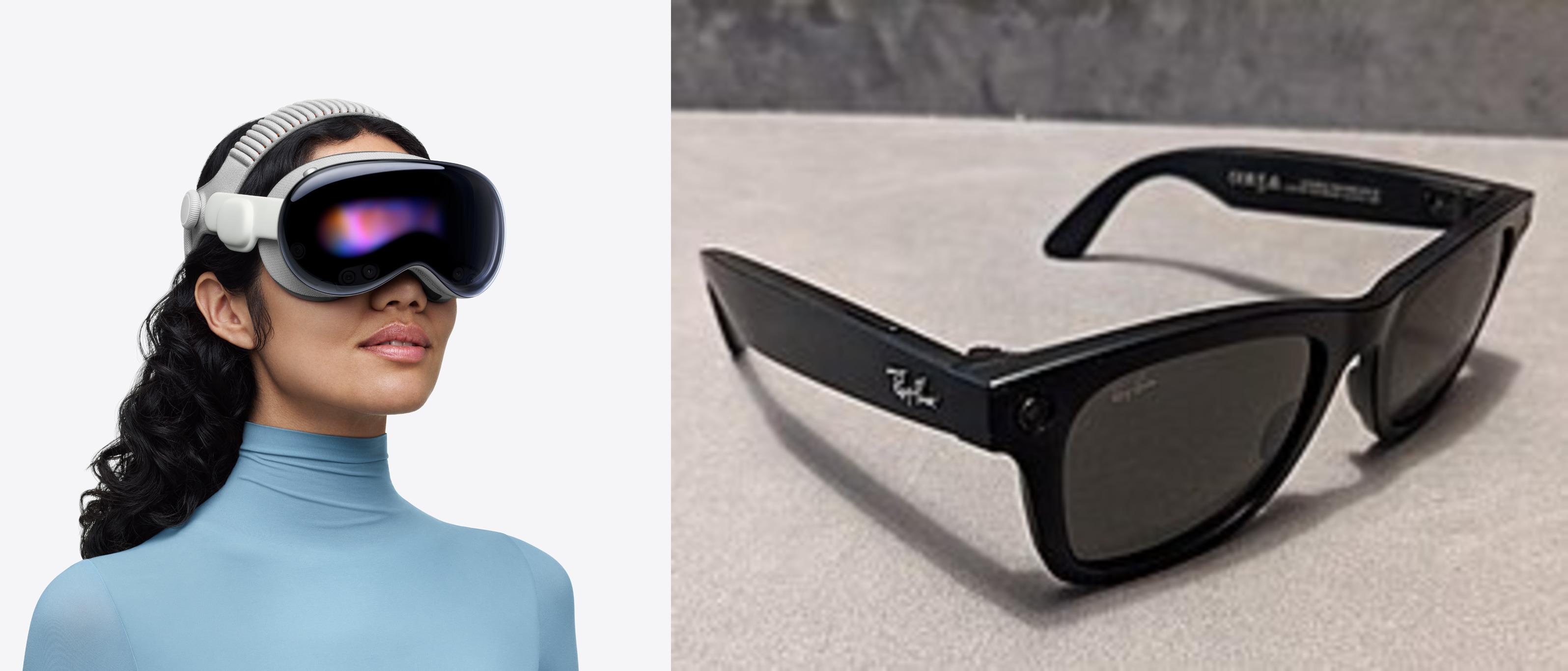
Two products illustrate different approaches to this shift: Apple's Vision Pro and Meta's Ray-Ban smart glasses.
Although both are worn on the face, they serve different purposes. The Vision Pro is a spatial-computing headset designed to place digital displays and applications in the user's surroundings. Meta's standard Ray-Ban smart glasses focus on cameras, audio and artificial intelligence, allowing users to access digital assistance while moving around.
Together, they offer a glimpse of how technology could reshape remote work and certain physical jobs.
Apple Vision Pro: A Computer in Your Surroundings
The Apple Vision Pro resembles a pair of large, high-tech goggles. Unlike ordinary glasses, it covers the user's eyes and uses cameras and internal displays to create a view that combines the physical environment with digital content.
Apple describes it as a spatial computer. Instead of being restricted to a conventional monitor, users can position application windows around their surroundings and interact with them using their eyes, hands and voice.
The headset can also connect to a compatible Mac, allowing its display to appear as a large virtual screen. Users can resize and reposition the display, including choosing an ultrawide format.
This makes the device potentially useful for people who work with multiple applications, documents or visual materials at the same time.
Meta Smart Glasses: Everyday Glasses With AI
Meta's Ray-Ban smart glasses take a different approach. They look much like conventional sunglasses, with cameras, microphones, speakers and AI features built into the frames.
Most standard Ray-Ban Meta models do not have displays inside their lenses. Instead, they allow users to take photographs, record videos, listen to audio, make calls and interact with Meta AI through voice commands.
Some models also support live translation and the ability to ask the AI assistant questions about objects or surroundings.
Meta has also introduced a separate display-equipped model, the Meta Ray-Ban Display. This distinction matters because not all of the company's smart glasses offer the same features.
How the Vision Pro Could Change Remote Work
One of the biggest attractions of the Vision Pro is its ability to create a digital workspace without requiring several physical monitors.
Multiple virtual displays
Imagine working from a small apartment without enough room for a large desk or multiple monitors. With the Vision Pro, users can place several application windows around their virtual workspace.
They could keep an email application open on one side, a spreadsheet in front of them and a video meeting on another window.
Through Mac Virtual Display, users can also bring their Mac screen into the headset and expand it into an ultrawide virtual display.
Controlling applications without a mouse
The Vision Pro uses eye tracking, hand gestures and voice commands to navigate its interface.
A user can look at an application or button to select it, then bring their thumb and index finger together to perform a click. Voice commands provide another way to interact with the system.
However, this does not mean that keyboards and mice have become unnecessary. People who write extensively, manage spreadsheets or perform detailed computer tasks may still prefer conventional input devices.
A different kind of virtual meeting
Video conferencing is another area where spatial computing could make a difference.
Apple's FaceTime experience on Vision Pro supports digital representations known as Personas. These can appear in a user's virtual environment, allowing participants to interact while sharing applications and other content.
This offers a different experience from looking at a grid of faces on a laptop. However, it is not the same as having a fully realistic, life-sized three-dimensional colleague physically present in the room.
How Meta Smart Glasses Could Support Workers
While the Vision Pro is designed primarily for immersive digital experiences, Meta's glasses are more suited to people who need to move around while staying connected.
Hands-free assistance
Consider a technician repairing industrial equipment at a factory. If the worker encounters a problem, they could use the glasses' camera to share what they are seeing with a colleague or supervisor elsewhere.
The colleague could then provide instructions without requiring the technician to hold a smartphone or interrupt the task.
This type of first-person video sharing could be useful in equipment maintenance, inspections, technical support and field operations. Its effectiveness would depend on the available connectivity, compatible applications and workplace safety requirements.
AI assistance and communication
Meta's glasses also provide access to an AI assistant through voice commands.
Workers can ask questions about their surroundings, access information and use supported communication features without constantly reaching for their phones.
For example, a worker handling materials could use voice commands to request information or dictate a message. The glasses can provide audio responses through their built-in speakers.
Breaking language barriers
Live translation is another potential workplace application.
Meta's smart glasses support translation features that can help people communicate across selected languages. This could be useful for international teams, travellers and workers dealing with customers or colleagues who speak different languages.
However, translation availability depends on the device, software version and supported languages. It should not be assumed that every conversation can be translated perfectly or that the glasses will automatically deliver every translation in the user's preferred format.
The Cost of Working With Wearable Technology
Despite their potential, the price of these devices remains a major obstacle.
Apple's Vision Pro is a premium product. In Germany, the M5 version starts at €3,699, putting it beyond the budget of many ordinary consumers and small businesses.
Meta's standard smart glasses are considerably cheaper. Their prices vary by model, but they are generally positioned closer to premium conventional eyewear than to expensive computing equipment.
This creates two different markets. The Vision Pro is aimed at people and organisations willing to invest in immersive computing, while Meta's glasses offer a more accessible entry point into wearable AI.
For employers, however, the purchase price is only part of the calculation. They must also consider software compatibility, employee training, maintenance, security and whether the technology actually improves productivity.
The Risks and Limitations
Wearable technology could make some tasks easier, but it also introduces challenges that businesses and workers will need to address.
Privacy and workplace monitoring
Cameras built into ordinary-looking glasses raise questions about recording and consent.
A person interacting with someone wearing smart glasses may not immediately know whether they are being recorded. Meta includes a visible capture light that signals when its glasses are recording, but privacy concerns remain, particularly in workplaces, hospitals and other sensitive environments.
Employers will need clear rules governing when cameras can be used, how recordings are stored and who can access them.
Distraction and safety
Digital notifications and voice assistants can be useful, but they can also distract users.
Workers operating machinery, driving vehicles or performing tasks that require concentration should not be encouraged to interact with digital interfaces while doing something potentially dangerous.
Comfort and battery life
The Vision Pro is considerably heavier than ordinary glasses. Apple's current technical specifications list its weight at approximately 750–800 grams, excluding its separate battery, with up to 2.5 hours of general use.
That makes it difficult to imagine many employees wearing it comfortably throughout a conventional eight-hour working day.
Meta's glasses are lighter and designed for everyday use, but their smaller frames also limit the amount of computing hardware and battery capacity they can accommodate.
The risk of greater isolation
Remote work already raises questions about loneliness and reduced social interaction. Although virtual meetings and wearable devices may improve communication, they cannot completely replace the benefits of face-to-face relationships.
If organisations rely too heavily on digital interactions, employees could become even more disconnected from colleagues and their physical surroundings.
What Does This Mean for the Future of Work?
Wearable technology is still developing, and it is too early to conclude that traditional offices, laptops or computer monitors will disappear.
The more immediate possibility is that these devices will complement existing tools rather than replace them.
The Vision Pro could find uses in specialised design, training, collaboration and tasks that benefit from large virtual displays. Meta's smart glasses could prove useful in field operations, technical support, inspections and hands-free communication.
Their adoption will depend on whether businesses can demonstrate practical benefits that justify the cost and address concerns about privacy, safety and employee comfort.
The transition from paper documents to computers and then smartphones changed how people communicate and perform their jobs. Wearable computing represents another stage in that evolution.
But the future of work will not be determined by how impressive these devices look. It will depend on whether they solve real workplace problems better than the tools people already use.
Read our editorial standards and corrections policy.