
Jensen Huang Scandal: How an Alleged Spy Operation Put Nvidia Under Pressure
Nvidia is investigating reports that CEO Jensen Huang was targeted in a foreign intelligence operation after he acknowledged an extramarital relationship with a woman suspected by US officials of working for China. The controversy has triggered congressional scrutiny and a sharp sell-off in the chipmaker’s shares.
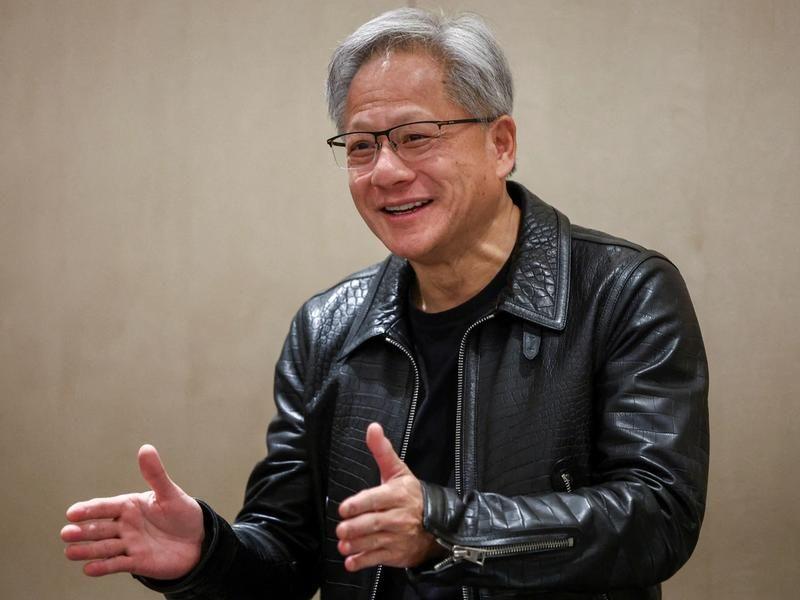
Nvidia, the world's leading supplier of artificial intelligence chips, is facing an unusual crisis after its chief executive, Jensen Huang, acknowledged an extramarital relationship with a woman reportedly suspected by US intelligence officials of working for China.
The disclosure has turned what might otherwise have remained a personal matter into a corporate and national-security concern. Nvidia's board has announced an independent investigation, US lawmakers are seeking answers, and the company's shares fell sharply as investors assessed the possible implications.
The controversy centres on Alice Huang, an executive associated with Megaspeed, a Singapore-based data centre company. Reports have linked her to an alleged Chinese intelligence operation targeting Jensen Huang, although the espionage claims have not been independently established.
Huang Acknowledges the Affair
In a draft message to Nvidia employees obtained by Axios, Jensen Huang admitted that he had been unfaithful to his wife and apologised to his family, employees and shareholders.
He accepted responsibility for his actions and said he remained committed to leading Nvidia.
The company's board subsequently announced that an independent committee, supported by external legal counsel, would examine reports that Huang had been targeted by a foreign intelligence effort.
Nvidia said it had no reason to believe that national security or company secrets had been compromised. However, the board said its inquiry would examine all available information.
The company also indicated that Huang would remain in his position while the investigation proceeds.
Why the Relationship Has Raised Security Concerns
The allegations extend beyond Huang's personal relationship.
Alice Huang has been linked to Megaspeed, a Singapore-based data centre business that purchases Nvidia processors and reportedly rents computing capacity to Alibaba and other Chinese businesses.
The company has faced scrutiny over allegations that advanced Nvidia chips were being diverted to China in violation of US export restrictions. Such restrictions are intended to limit China's access to powerful computing technology that could support advanced artificial intelligence and military applications.
The Guardian reported that Megaspeed had previously been investigated over suspected chip smuggling. Nvidia also conducted an internal inquiry into the allegations but reportedly found no evidence of wrongdoing.
US intelligence officials are alleged to have suspected Alice Huang of gathering information for Beijing. Reports have also suggested that she could have used her relationship with the Nvidia chief to gain access to sensitive information.
However, there is no publicly established evidence in the reports that she obtained confidential company information or that US national-security secrets were compromised.
China has rejected the espionage allegations. Foreign Ministry spokesperson Guo Jiakun described the claims as baseless vilification and an attempt to smear the country.
Questions Over Nvidia's Government Relations
The controversy has also drawn attention to Nvidia's relationship with the US government.
Jensen Huang has been a prominent voice in Washington's debate over restrictions on advanced chip exports to China. He has argued that maintaining access to the Chinese market would help American companies remain competitive and discourage China from developing its own alternatives.
That position has placed him at the centre of a sensitive policy debate between Washington and Beijing.
The Guardian also reported that Nvidia's general counsel, Tim Teter, contacted US Commerce Department investigators seeking information about a probe into Megaspeed. According to reporting by The New York Times cited by the Guardian, the investigation was later halted after the intervention, raising questions about whether government procedures had been followed.
The case was subsequently transferred to the US Justice Department, which was reported to be conducting a criminal inquiry into Megaspeed.
These developments have added another layer to the controversy. Investigators will need to establish whether any improper influence occurred, what information may have been shared and whether Nvidia's dealings with government officials affected the handling of the earlier inquiry.
Congress Seeks Answers as Nvidia Shares Fall
The scandal has attracted attention from US lawmakers, particularly because Nvidia occupies a central position in the country's artificial intelligence industry.
Republican lawmakers have requested a closed-door briefing from Huang before the House foreign affairs and intelligence committees. They want information about Nvidia's security procedures and the chief executive's relationship with Alice Huang.
House Democratic leader Hakeem Jeffries has also called for more information, saying there are concerns that need to be addressed. He has separately supported restrictions on chip sales to China.
US President Donald Trump has publicly expressed support for Huang, describing him as an honourable person and saying he believed the Nvidia chief should remain in his role.
Meanwhile, investors have reacted to the uncertainty. Nvidia shares fell by more than 5% during Monday's trading, with the company's market value dropping by hundreds of billions of dollars. The Guardian reported that the losses reached approximately $330 billion at one point, taking the stock to a seven-month low.
The decline reflects concerns about more than the immediate reputational damage. Nvidia's valuation is closely tied to expectations of continued growth in AI infrastructure spending, while Huang's leadership has become closely associated with the company's position in the global semiconductor industry.
What Happens Next?
The independent board investigation will be central to determining the consequences for Nvidia and its chief executive.
Its findings could clarify whether the reported relationship created security vulnerabilities, whether company information was exposed and whether any internal procedures were compromised.
The controversy also comes at a sensitive moment in US-China technology relations. Restrictions on advanced AI chips remain a major point of tension, and any evidence of intelligence activity involving a leading semiconductor executive could intensify pressure on Washington to tighten controls.
For Nvidia, the immediate challenge is to reassure investors, employees, customers and government partners that its operations and security arrangements remain reliable.
The company has maintained that it has no reason to believe its secrets or national security information were compromised. But until the investigation establishes what happened, the questions surrounding its chief executive will remain an unwelcome distraction for a company at the centre of the global AI boom.
Read our editorial standards and corrections policy.