
Africa's Quiet AI Revolution
Africa's AI revolution is quietly underway, with InstaDeep, Lelapa AI, and Amini proving the continent is building AI, not just using it.
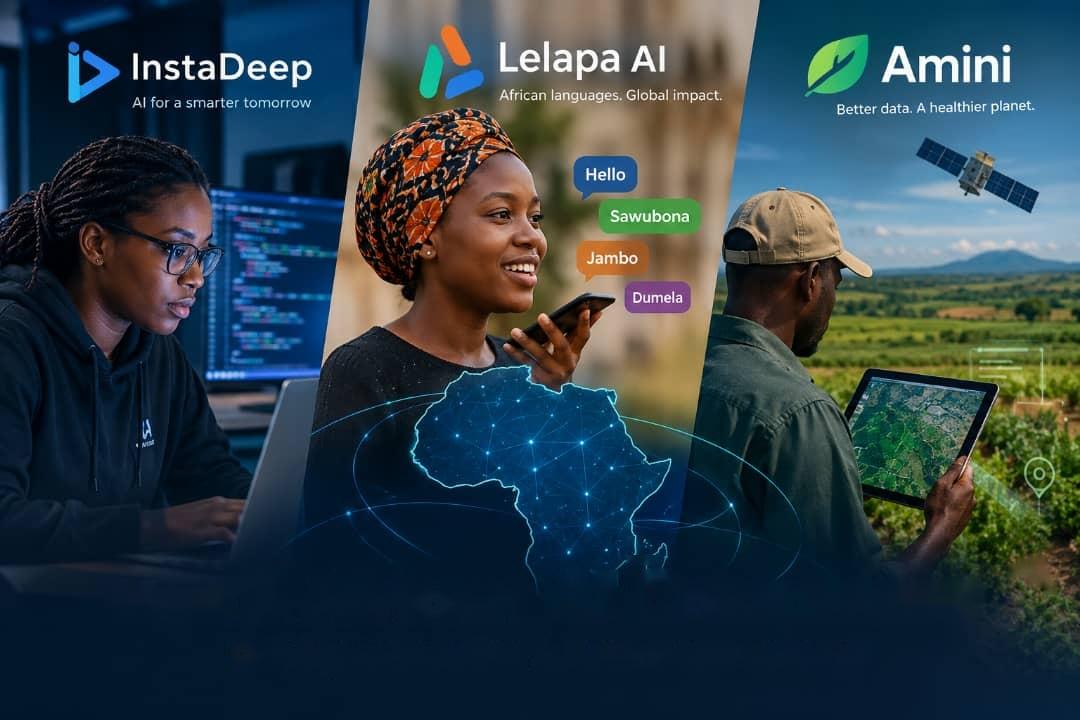
Artificial intelligence is reshaping how the world works, thinks, and solves problems, and Africa is no longer watching from the sidelines. Across the continent, a new generation of startups is building AI systems that speak to distinctly African challenges: local languages, environmental data, logistics, and more. Some of these companies are attracting global attention. All of them are proving that Africa has something real to contribute to the global AI conversation, not just as a consumer of the technology, but as one of its architects.
Three companies capture just how varied that contribution can be: InstaDeep, Lelapa AI, and Amini.
InstaDeep: From Tunis to the World Stage
Few founders set out to build a company that a global biotech giant will one day want to acquire. That is roughly what happened with InstaDeep.
Karim Beguir and Zohra Slim founded the company in Tunisia in 2014 with a simple but ambitious goal: build AI systems capable of solving genuinely hard problems. Over time, InstaDeep's work grew to span logistics, supply chain optimization, decision making systems, and scientific research, the kind of deep technical territory that draws serious international partners.
One of those partners was BioNTech, the German biotechnology company best known for its role in developing an early COVID 19 vaccine. The relationship deepened until, in 2023, BioNTech completed a full acquisition of InstaDeep.
For Africa's tech ecosystem, that moment mattered far beyond the deal terms. It was proof that an African founded AI company could produce technology sophisticated enough to become core infrastructure for a major global player. InstaDeep never set out to be a regional success story, and it isn't one. It stands as a reminder that some of the continent's most ambitious builders are thinking globally from day one.
Lelapa AI: Teaching Machines to Understand Africa's Languages
AI has gotten remarkably good at understanding human language, but not all languages equally. Many African languages remain underrepresented in the digital and AI systems that increasingly mediate how people learn, communicate, and access services. That gap is not a minor technical oversight. It determines who actually benefits from the AI boom and who gets left out of it.
Lelapa AI, founded in South Africa in 2022, was built around a pointed question: what would AI look like if African languages and communities were part of the design from the very beginning, rather than added as an afterthought?
It is a question with real stakes. Language shapes how people access education, healthcare, business, and basic digital services. If AI can genuinely understand African languages, not just translate them roughly, it opens doors that have historically stayed shut. Lelapa AI's work is less about building another AI startup and more about making sure the next era of artificial intelligence does not just include Africa, but reflects it.
Amini: Reading the Land Through Data
What if AI could help us understand the ground we stand on? That is the challenge Amini, a Kenyan company, has taken on, combining AI, satellite imagery, and environmental data to close what might be called Africa's environmental information gap.
The stakes here are practical. Farmers need to know what is happening with soil, weather, and water. Businesses need dependable data to plan around. Governments need accurate environmental information to shape policy on agriculture and climate. Yet across much of Africa, that kind of reliable data has historically been scarce or hard to access. Amini is working to change that by collecting, processing, and interpreting environmental data so that better decisions become possible at every level, from a smallholder farmer to a national government.
It is a useful reminder that AI is not only chatbots and image generators. Sometimes its most important work is helping us understand the physical world we depend on.
Three Companies, Three Very Different Bets
What is striking about InstaDeep, Lelapa AI, and Amini is not that they are all chasing the same opportunity. It is that they are not. InstaDeep is proving that an African founded company can compete and win on the global stage. Lelapa AI is making the case that AI should speak Africa's languages, not just the world's dominant ones. Amini is turning environmental blind spots into usable intelligence.
Different problems. Different approaches. One bigger story: Africa is stepping into the AI era not just as a user of the technology, but as a builder of it.
That said, the path forward is not without friction. Limited access to computing infrastructure, funding, high quality data, and specialized talent remain real obstacles for African AI companies. But constraints have a way of forcing creativity, and the companies navigating these challenges successfully share one clear advantage: they understand, intimately, the problems they are building solutions for. That local understanding may prove to be one of the continent's sharpest edges in the years ahead.
A Story Still Being Written
AI is moving fast enough that today's leaders will not necessarily be tomorrow's. For Africa, that volatility cuts both ways, but it also means the door is wide open. InstaDeep, Lelapa AI, and Amini each point toward a different version of what an African AI future could look like: one built on global caliber engineering, one built on linguistic and cultural inclusion, one built on environmental intelligence.
The real story here is probably not that Africa is racing to catch up. It is that Africa is starting to chart its own course through the AI revolution, and the most compelling chapters of that story likely have not been written yet.
Read our editorial standards and corrections policy.