
Beyond Hollywood: How China's Entertainment Industry Is Reaching Global Audiences
From historical television dramas and mythology-inspired animation to pop music and online celebrity culture, China's entertainment industry is offering viewers around the world new stories, stars and cultural experiences.
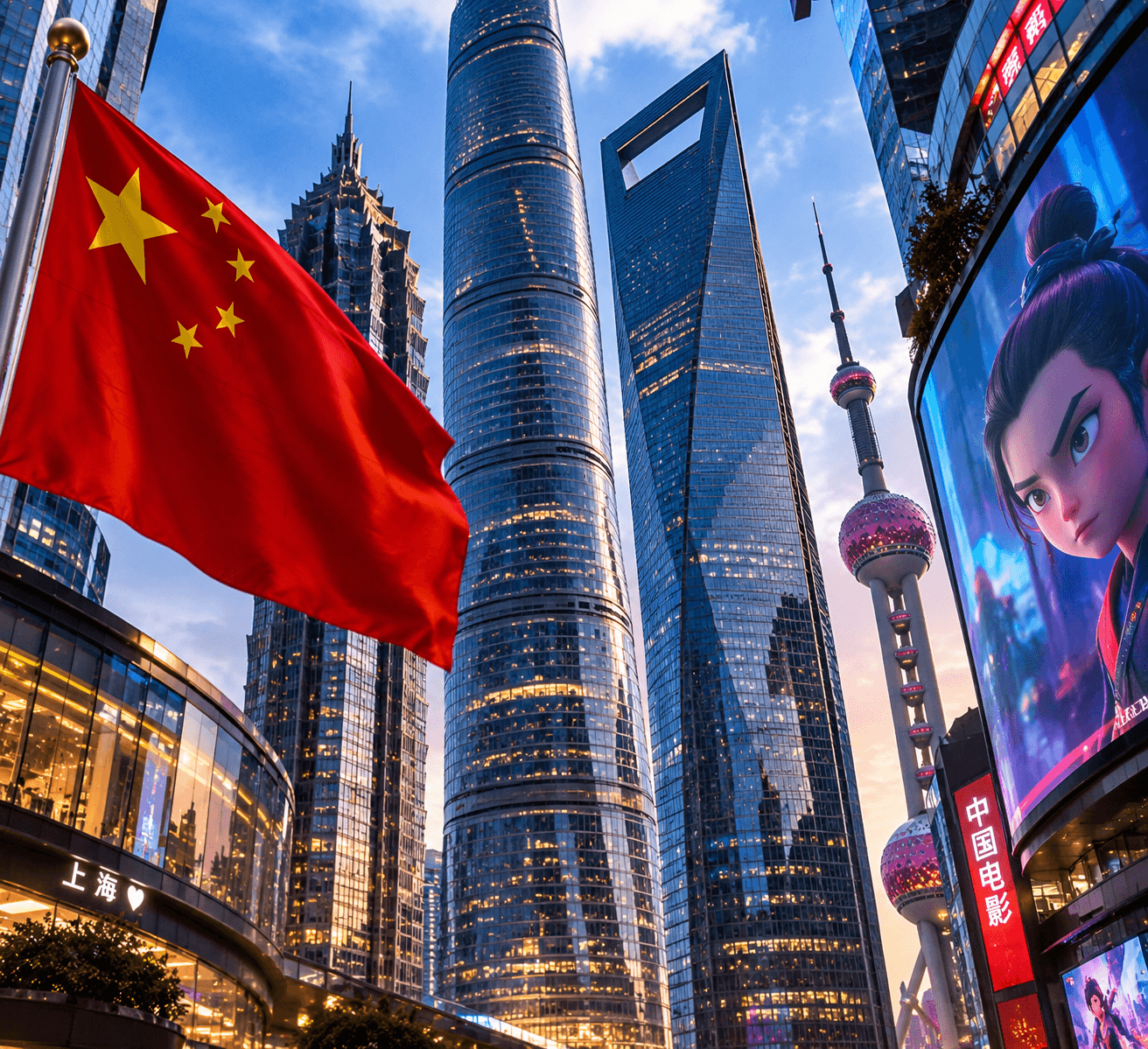
When people talk about global entertainment, Hollywood is often the first name that comes to mind. American films, television series and celebrities have enjoyed decades of international recognition, shaping popular culture across continents.
But the global entertainment scene is broader than Hollywood. China's film industry, television dramas, music and animation are introducing international audiences to different storytelling traditions, drawing viewers curious about the characters, cultures and ideas behind them.
From elaborate historical dramas to animated films inspired by ancient mythology, Chinese entertainment offers a mix of traditional influences and modern production. Streaming platforms and social media are also making it easier for audiences outside China to discover these productions, even when they do not speak the language.
The growing appeal of Chinese dramas
Chinese television dramas, widely known internationally as C-dramas, have become an entry point for many viewers exploring the country's entertainment industry.
Their appeal lies partly in their variety. Historical romances, fantasy adventures, mysteries, family dramas and contemporary love stories offer different experiences for different audiences.
Historical and fantasy productions are particularly distinctive. Elaborate costumes, detailed sets, imperial courts and imaginative worlds inspired by Chinese history, literature and mythology give these dramas a visual identity that sets them apart from many familiar Western productions.
Their stories often revolve around ambition, loyalty, family obligations, political rivalries and complicated relationships. While the settings may be unfamiliar to international viewers, the emotions and conflicts at the centre of these stories are often recognisable.
Contemporary dramas offer another perspective, exploring friendship, career ambitions, family expectations and the challenges of modern life in China. Although fictionalised for dramatic effect, they can give viewers a glimpse of social experiences and cultural expectations different from their own.
The growing availability of subtitled dramas online has lowered the barrier to entry. Viewers can discover a series through a streaming service, encounter clips on social media and join fan communities discussing characters and storylines.
For some, that interest extends beyond the screen, encouraging curiosity about Chinese language, history, fashion and culture.
Chinese cinema tells stories beyond borders
China's film industry covers a wide range of genres, from action films and historical epics to comedies, contemporary dramas and animated features.
Martial arts cinema has long helped introduce Chinese filmmaking traditions to international audiences. Its combination of choreography, physical performance and visual storytelling has influenced action filmmaking beyond China, demonstrating how a distinctive national tradition can find an audience across cultural boundaries.
Contemporary Chinese films also explore family relationships, personal ambition, social change and national history. These subjects give filmmakers opportunities to tell locally grounded stories while engaging with experiences that audiences elsewhere can understand.
Animation offers another example of this cultural exchange. Ne Zha, inspired by Chinese mythology, demonstrated the commercial potential of adapting traditional stories through modern animation and large-scale filmmaking.
Its significance extends beyond its mythological source material. It illustrates how a story rooted in a particular culture can appeal to wider audiences when its characters, conflicts and visual presentation are compelling.
The lesson is not that every culturally specific story will become an international success. Rather, a story does not have to abandon its cultural identity to connect with people who come from different backgrounds.
The stars and fan communities behind the screen
Actors, singers and other entertainers are an important part of China's popular culture. Their influence extends beyond the films, dramas and performances in which they appear.
A successful television series can introduce viewers to its cast, prompting them to follow actors' subsequent projects, interviews, public appearances and social media activity. Musicians can build similar followings through televised performances, streaming platforms and online fan communities.
Digital platforms have changed how these relationships develop. Fans can share clips, discuss new releases, translate interviews and introduce performers to audiences who might otherwise never encounter them.
Yet celebrity visibility is not determined by talent alone. Public relations, promotional campaigns, audience engagement and the commercial performance of particular productions can all influence which entertainers receive attention.
As in other entertainment industries, a carefully managed public image is not necessarily a complete reflection of a celebrity's private life.
Still, the ability of Chinese entertainers to attract interest across linguistic and geographical boundaries shows how digital communities can help popular culture travel beyond its original market.
Music and the power of digital platforms
China's music industry is equally diverse. Mandopop, a broad term for Mandarin-language popular music, sits alongside regional-language traditions and genres such as rock, hip-hop, folk-inspired music and electronic music.
Televised competitions, live performances, streaming services and online platforms provide opportunities for musicians to reach listeners and build audiences. Short videos and fan-created content can also bring individual songs or performances to the attention of people far beyond their original audience.
This digital environment has changed the relationship between artists and listeners. A performance can circulate through online communities, introduce an unfamiliar musician to new fans and generate interest in other work.
However, online visibility does not automatically translate into lasting international success. A viral clip may create a sudden burst of attention, but sustaining a career requires more than a moment of popularity.
For Chinese musicians seeking listeners abroad, language, distribution and familiarity with local music markets remain important considerations. The challenge is to turn initial curiosity into a lasting connection with audiences.
Ancient mythology meets modern animation
Some of China's most recognisable entertainment characters come from stories that have existed for centuries.
One example is Sun Wukong, the Monkey King, from Journey to the West, a classic Chinese novel. The character's appearances across television, film, animation and video games demonstrate how traditional literature can continue to inspire new forms of entertainment.
Modern adaptations can introduce younger audiences to familiar legends while reinterpreting their characters and themes through contemporary visual styles and storytelling techniques.
Animation and video games are particularly suited to this process. They can build imaginative worlds, create visually striking characters and make unfamiliar cultural references easier to explore.
For international audiences, these productions can serve as an introduction to Chinese folklore and mythology. They also demonstrate that cultural traditions are not confined to museums or historical texts. They can remain active sources of creative inspiration.
The challenge of reaching international audiences
Streaming platforms, subtitles and social media have made foreign-language entertainment more accessible, but international expansion is not simply a matter of making a production available online.
Cultural references that domestic audiences understand immediately may require additional context elsewhere. Humour, wordplay and emotional nuances can also lose some of their meaning in translation.
Chinese entertainment companies must compete for attention in crowded markets where viewers have access to productions from many countries. Regulatory requirements, distribution arrangements and differences between domestic and international audiences can add further complications.
Nor should growing international interest be mistaken for universal recognition. Individual productions achieve different levels of success, and the popularity of Chinese entertainment varies across markets and genres.
Long-term international appeal depends on more than production budgets, elaborate costumes or famous performers. Compelling stories, creative originality, effective distribution and an understanding of what audiences want all matter.
A bigger world of entertainment
Hollywood remains a major force in global entertainment, but it is part of a much wider cultural landscape.
China's television dramas, films, music, animation and celebrity culture offer audiences different settings, characters and storytelling traditions. Digital distribution is helping more people discover these productions, while online communities are making it easier for interest to spread across borders.
The industry's international growth also reflects a broader possibility: audiences can enjoy stories without sharing the language, history or cultural background from which they emerged.
For Chinese entertainment, the opportunity lies in turning that curiosity into lasting engagement. For viewers, it means having more choices and more opportunities to encounter unfamiliar perspectives.
The future of global entertainment need not be defined by one country's dominance. It can also be shaped by the growing number of stories audiences are willing to discover, wherever they come from.
Read our editorial standards and corrections policy.