Why Your Loan Won't Get Cheaper Yet: Inside the CBN's Rate Pause
Nigeria's inflation is easing, but borrowing remains expensive. With the Central Bank of Nigeria holding its benchmark interest rate at 23 per cent, households and businesses hoping for cheaper credit may have to wait longer for relief.
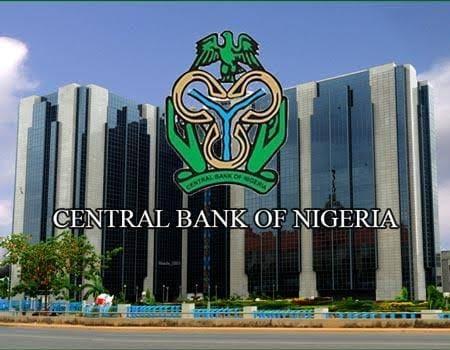
Imagine running a small business in Lagos. You have loyal customers and a genuine opportunity to expand. All you need is additional capital to buy more stock, employ another worker or open a second location.
You apply for a loan, only to discover that the interest rate makes the repayments more expensive than you anticipated. Suddenly, a business plan that looked promising becomes difficult to finance.
Many Nigerians face similar challenges, from traders preparing for the festive season to salary earners managing rent and school fees and entrepreneurs looking for capital to grow.
That is why the Central Bank of Nigeria's latest interest rate decision matters.
At its 308th Monetary Policy Committee (MPC) meeting on November 23 and 24, 2026, the CBN retained the Monetary Policy Rate (MPR) at 23 per cent, maintaining the benchmark despite five consecutive months of declining annual inflation.
For borrowers, the decision means there is no immediate signal that the cost of credit will fall significantly.
Why the CBN Held Its Rate
The CBN's primary monetary policy objective is to maintain price stability. When inflation rises rapidly, households lose purchasing power, businesses face higher operating costs and economic planning becomes more difficult.
Interest rates are one of the tools the central bank uses to manage these pressures. Higher rates generally make borrowing more expensive, discouraging excessive spending and helping to moderate demand. Lower rates can encourage borrowing, investment and economic activity.
The challenge is knowing when it is safe to reduce rates without allowing inflation to accelerate again.
Nigeria's headline inflation declined to 14.06 per cent in October 2026 from 14.63 per cent in September. However, month-on-month inflation increased to 0.43 per cent from 0.06 per cent, indicating that prices were still rising faster than they had in the previous month.
In other words, inflation is slowing on an annual basis, but that does not mean prices are falling across the economy.
If a bag of rice increases from ₦80,000 to ₦100,000, slower inflation does not automatically return it to ₦80,000. It means the rate at which prices increase has moderated.
Three considerations help explain the CBN's caution.
Persistent price pressures: Although annual inflation is declining, food inflation remained high at 19.13 per cent in October. Households are still dealing with elevated food and living costs, while the increase in monthly inflation suggests that price pressures have not disappeared.
Exchange rate stability: Nigeria relies on imported machinery, raw materials and other goods. A weaker naira can increase import costs, which businesses may eventually pass on to consumers. The CBN has linked recent inflation moderation partly to foreign exchange stability. Gross external reserves stood at $54.02 billion on November 17, equivalent to 10.26 months of import cover. Maintaining that stability remains important to the inflation outlook.
Festive and election-related spending: Increased spending during the festive season and ahead of the 2027 general elections could add pressure to demand. While higher spending can support businesses, it can also push prices upwards if the supply of goods and services does not keep pace.
The CBN therefore appears more interested in sustaining the progress made against inflation than rushing into further rate reductions.
Why Your Bank's Interest Rate May Remain High
Many borrowers assume that when the CBN reduces its benchmark rate, commercial banks will immediately lower their lending rates. In practice, the relationship is not that straightforward.
The MPR is a monetary policy benchmark, not the interest rate every Nigerian borrower pays. Banks determine their lending rates based on several factors, including:
Cost of funds: How much banks pay to obtain money, including interest paid on customer deposits.
Credit risk: Borrowers considered more likely to default may face higher interest rates.
Operating costs: Staff salaries, technology, administration and other expenses contribute to the cost of providing loans.
Reserve requirements: The CBN has retained the Cash Reserve Requirement for deposit money banks at 45 per cent. This requires banks to keep a substantial proportion of eligible deposits with the central bank rather than use those funds for lending.
Inflation expectations: Banks may charge higher rates when they expect inflation to remain elevated because the value of money can decline over the loan period.
The difference between the benchmark rate and actual lending rates can be substantial.
The CBN's second-quarter 2026 economic report put the average prime lending rate at 19.01 per cent, while the average maximum lending rate stood at 34.37 per cent. The rate offered to an individual or business depends on the lender, loan type, repayment period and borrower's risk profile.
This explains why even a future reduction in the MPR would not automatically translate into cheaper loans for everyone.
What the Decision Means for You
If you are borrowing personally, focus on the total amount you will repay rather than the amount you receive. A loan that appears convenient at first can become a financial burden once interest and additional charges are included.
Before accepting an offer, check whether the interest rate is fixed or variable, ask about processing and insurance fees, understand the penalties for missed repayments and ensure that the monthly instalments fit your income.
If you run a business, expensive credit can force you to delay expansion, reduce investment or increase prices to cover financing costs.
The CBN's second-quarter 2026 Credit Conditions Survey reported increased credit availability for secured, unsecured and corporate lending. However, access to credit does not necessarily mean that borrowing is affordable. Small businesses may still struggle with the cost of financing even when lenders are willing to provide loans.
Before taking on debt, business owners should assess whether the expected returns from the investment can comfortably cover the interest and other borrowing costs.
What to Expect in 2027
The outlook will depend on whether the improvements in inflation, foreign exchange stability and economic activity can be sustained.
The CBN expects the domestic economy to remain positive into 2027, supported by improved crude oil production and continued expansion in agriculture, services and industrial activity. It also expects inflation to continue moderating, helped by the restrictive monetary policy stance, foreign exchange stability and improved food supply.
However, risks remain. Disruptions to global energy supplies, adverse weather conditions and domestic spending pressures could affect the inflation outlook.
The next MPC meeting is scheduled for February 22 and 23, 2027. Until then, borrowers should avoid making financial plans that depend on an immediate reduction in interest rates.
Individuals should keep their debt manageable and compare loan offers before committing. Businesses should protect their cash flow, explore alternative sources of financing where appropriate and borrow only when the expected returns justify the cost.
The Bottom Line
Cheaper loans require more than a reduction in the CBN's benchmark interest rate. They depend on a broader economic environment in which inflation is stable, the naira is less vulnerable to external pressures and banks can provide credit at more affordable rates.
For Nigerians waiting for relief from expensive borrowing, the frustration is understandable. However, cutting rates too quickly could undermine the progress made in controlling inflation.
The CBN has chosen to maintain its current position while monitoring economic conditions. For now, the cost of borrowing remains a challenge, and households and businesses may need to plan around that reality for longer.
Read our editorial standards and corrections policy.