Dangote's Refinery Is Going Public, But What Does That Really Mean for Nigeria?
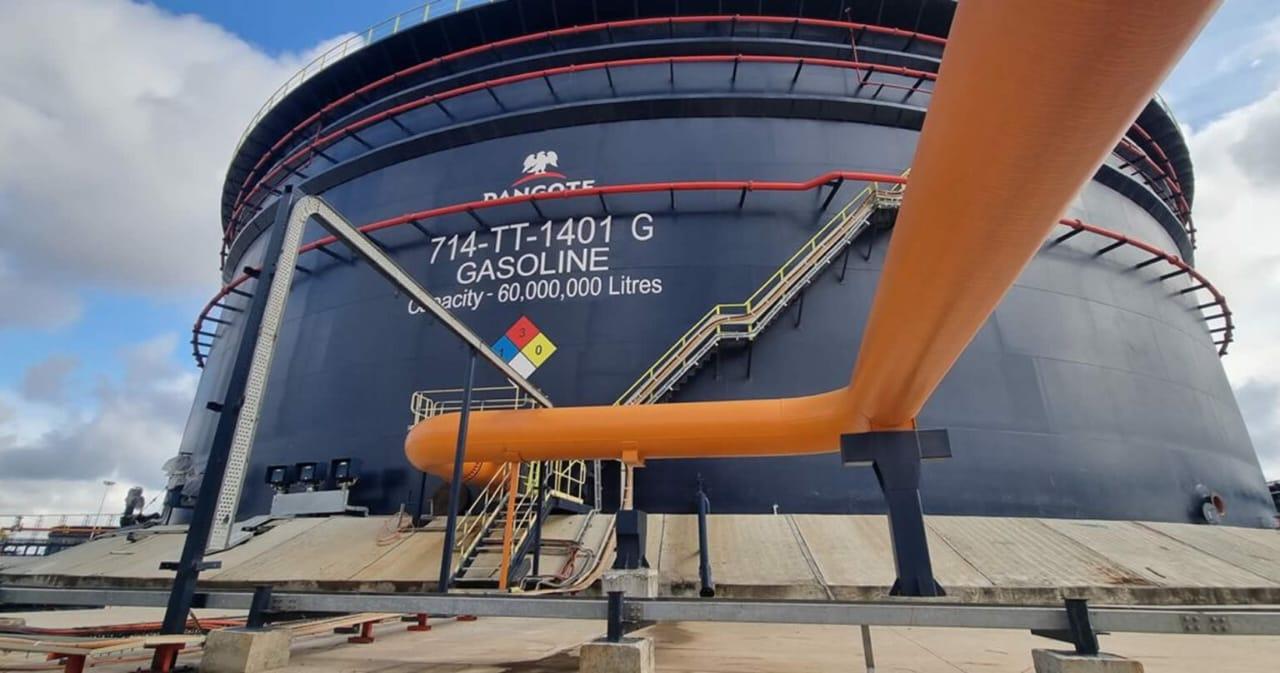
The Dangote Petroleum Refinery & Petrochemicals initial public offering (IPO) is set to open on September 14, 2026, aiming to raise $1.6 billion (2.15 trillion naira) on the Nigerian Exchange Limited (NGX).
Dangote’s Refinery Is Going Public, But What Does That Really Mean for Nigeria?
For years, we watched Dangote Refinery rise from what looked like an impossible idea into one of the biggest industrial projects in Africa.
Now, something even more interesting is happening! Dangote is taking the refinery to the Nigerian Stock Exchange.
The plan is to raise about $1.6 billion (roughly ₦2.15 trillion) through an IPO, with the refinery valued at about $49 billion.
And no, this isn't just another business story about Dangote, If this goes as planned, it could affect Nigeria, the stock market, the oil industry and even the way young Nigerians think about wealth and ownership.
So, let's break it down.
1. What does Nigeria stand to gain?
Let's start with the obvious question:
How can a country that produces crude oil still spend billions importing refined petroleum products? That has been one of Nigeria's biggest contradictions. The Dangote Refinery gives us a chance to change that story.
Instead of exporting crude and then bringing back petrol, diesel and other refined products, Nigeria can increasingly refine at home and sell finished products locally and abroad. That means more economic activity stays here!
There is also the foreign exchange angle. The more refined products we produce locally, the less we potentially need to spend scarce dollars importing them. And if the refinery exports at scale, those exports can bring dollars into the country.
2. What comes to the Nigerian Stock Market?
This is where things get really interesting.
Imagine being able to say:
"I own shares in Dangote Refinery."
Not because you're Dangote. Not because you're a billionaire. But because you bought a few shares on the Nigerian market.
That's essentially what the IPO could make possible. The planned ₦2.15 trillion raise could become the biggest IPO Africa has seen. However, beyond the money being raised, the listing could give the Nigerian capital market a much-needed boost.
Think about it;
A company of this size choosing to list in Nigeria sends a message to other large businesses, you can raise serious money here.
And if the listing performs well, we could see more privately owned Nigerian companies becoming interested in the stock market. That means more companies, more investors, more capital, more ownership opportunities and hopefully, a more vibrant Nigerian Stock Exchange!
3. What happens to Dangote's wealth?
Now, let's get to the part everyone will probably be curious about...
Does this IPO make Aliko Dangote richer? Potentially, yes!
But here's the interesting part, he doesn't have to receive $49 billion for his wealth to increase.
Why?
Because the refinery is an asset.
If the market says that the refinery is worth $49 billion, the value of the portion Dangote still owns can become much higher.
For context, his current estimated net worth is somewhere around $31–35 billion, depending on the source and the day.
And here's where we can play with a hypothetical scenario.
If the refinery's new market valuation significantly increases the value of his stake, Dangote's net worth could potentially move into the $50–60 billion+ range. But let's be very clear, that's an assumption, not a forecast.
His actual wealth after the IPO will depend on how much of the company he retains, the final IPO structure and, importantly, where the refinery's share price trades after listing. If investors love the stock and the price rises? his paper wealth rises.
4. What does this mean for the Oil & Gas Industry?
This could be a big deal because Nigeria has always been an oil-producing country. However, for a long time, our biggest story has been:
"We produce crude."
The next chapter could be:
"We process it, add value to it and export finished products." Now, that's a major shift!
The refinery's huge capacity could position Nigeria as a major refining hub, particularly if its planned expansion materializes.
5. What lessons can young Nigerians draw out from this?
This is the part I find most interesting because you don't have to be a Dangote to learn something from the Dangote story.
Think long-term.
The refinery wasn't built overnight. There were years when it probably looked like a crazy idea but today, we're discussing a potential $49 billion valuation. Sometimes, the things people don't understand today are the things that become valuable tomorrow.
Look for problems worth solving.
Nigeria had crude oil, Nigeria also had a refining problem.
Dangote didn't just ask, "How can I make money from oil?"
He essentially asked: "what problem exists here that I can build something around?" That's a powerful way for young people to think about business and perhaps most importantly, learn about ownership.
A salary pays you for your work.
Ownership can pay you for the value of what you own.
That's why the IPO is bigger than just Dangote! For the first time, potentially, millions of Nigerians can look at a massive Nigerian industrial asset and say, "I own a piece of this."
And that is a lesson worth paying attention to.
In Conclusion,
The real story isn't just Dangote. The bigger story is about Nigeria building, Nigeria investing and Nigeria owning.
Read our editorial standards and corrections policy.