
Dual-Class Share Structure: Balancing Founder Control and Investor Rights
When founders build businesses and investors provide the capital to expand them, who should have the final say in how those businesses are run? Dual-class share structures attempt to answer this question by separating voting power from economic ownership
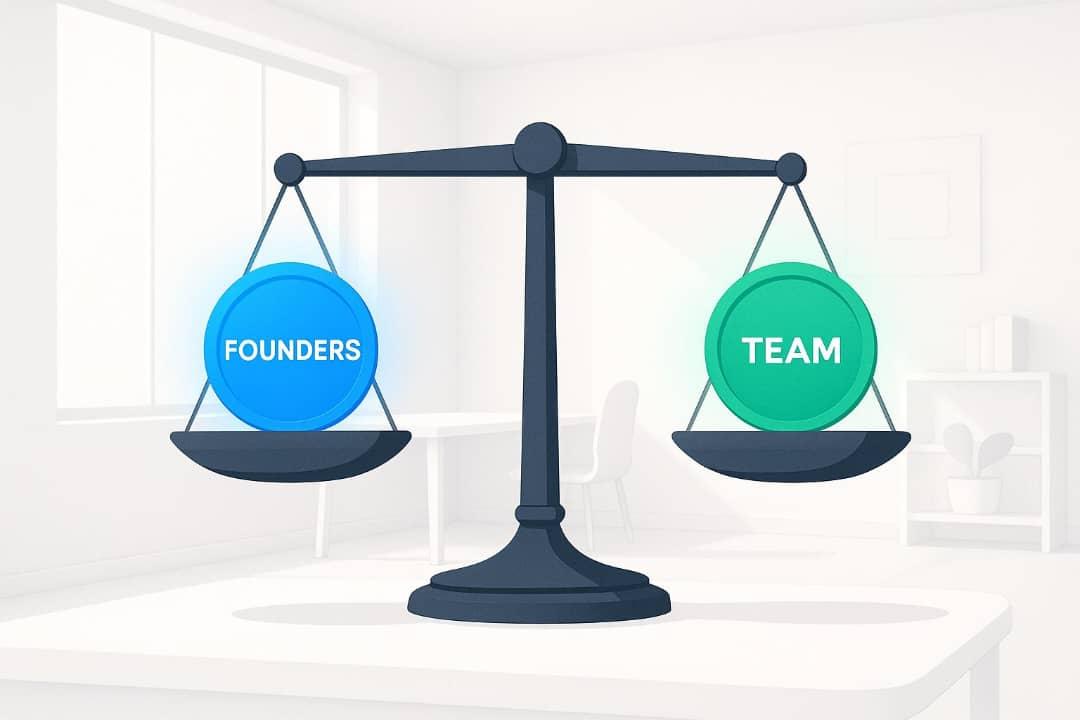
Picture a founder who started with one idea, a handful of customers and no safety net. Through lean years and hard calls, the business survived and grew into a recognized brand. Then investors arrived with the capital to scale it, and with them came opinions. As their stakes grew, so did their influence, until one day the founder sits across a boardroom table and hears a sentence no builder ever expects: perhaps it is time for someone else to lead the company they created.
That tension raises an uncomfortable question: should financial investment give shareholders the power to override a founder's vision, or should the founder keep control no matter how much ownership has been sold? The dual class share structure is one of the most debated attempts to answer it.
Understanding the dual-class structure
Most companies follow the one-share-one-vote principle, so the bigger your holding, the greater your influence. A dual-class structure breaks that link by issuing different categories of shares with unequal voting rights. A founder might hold shares carrying 10 votes each while outside investors hold shares carrying one vote each. The founder can then sell a large part of the company's economic ownership to raise capital and still keep significant voting control.
The model is well known. Alphabet, Meta and Ford have all used versions of it, and the results have been mixed. In some companies, founder control allowed long-term bets that impatient investors might have blocked. In others, concentrated power let governance problems go unchallenged. The structure itself is neither good nor bad. How it is designed, disclosed and monitored decides whether it protects a company or endangers it.
Five things people need to know
Small ownership can still mean majority control. Suppose a founder owns 10 of 100 shares at 10 votes each, while investors own the other 90 at one vote each. The founder casts 100 of 190 votes, about 53%, with only 10% of the company.
Some companies go further and issue shares with no votes. Snap did this at its 2017 listing, offering public investors shares that carried no say at all in how the company is run.
Control without accountability can backfire. WeWork's founder held shares with 20 votes each before its failed 2019 listing, and the governance concerns that followed helped push him out as chief executive.
More markets now allow it. Hong Kong and Singapore both opened their exchanges to dual-class listings in 2018, in a bid to attract fast-growing companies that might otherwise list elsewhere.
The fine print matters more than the label. Two companies can both be "dual-class" and offer very different protection. The voting multiple, the sunset terms, the board makeup and the matters that need a vote of every shareholder all differ from one company to the next. Anyone dealing with a Nigerian company should also check the Companies and Allied Matters Act 2020 and the applicable securities rules, and take legal advice.
Key terms in plain language
Economic rights: the claim to a share of profits, dividends and sale proceeds, in proportion to the shares held.
Voting rights: the power to elect directors and approve major decisions. In a dual class company, these can be very different from economic rights.
Minority shareholders: investors whose combined votes are too small to decide outcomes, and who depend on legal and contractual protections.
Related-party transaction: a deal between the company and someone connected to it, such as a founder, a director or their relatives and businesses. These need extra scrutiny because the company may not get fair terms.
Independent director: a board member with no financial or personal ties to management or the controlling shareholder, whose job is to challenge decisions objectively.
Sunset clause: a provision that ends or converts enhanced voting rights when set conditions are met. For example, the extra votes might convert to ordinary shares on the earliest of seven years after listing, the founder leaving their executive role, or their holding dropping below a set percentage.
The case for founders: capital should not automatically mean control
Founders have a genuine argument for holding on to control, especially in businesses built around a distinct vision, specialized knowledge or long-term innovation.
The founder carries the original vision. The person who spotted the market gap and built the business model often understands the problem better than anyone, and frequent changes in direction, driven by short-term financial expectations, can weaken it.
Growth also needs patience. In technology, financial services and research, major investments can take years to pay off. Investors seeking quick returns may push management to cut spending, shelve ambitious projects or chase immediate earnings at the expense of long-term competitiveness.
Founders carry risks beyond money as well, including years of effort, reputation, relationships and intellectual capital. None of this earns permanent control, but it supports protecting their ability to deliver the vision that attracted investors in the first place.
The case for investors: financial commitment must come with meaningful rights
Investors are not just financial supporters. They commit capital in exchange for ownership and an expectation of value, and their concerns are just as legitimate.
They bear real financial risk. If the business performs poorly, they can lose their investment, so it is reasonable to expect influence over fundamental decisions and the ability to hold leadership to account.
Founder control also should not become protection against poor performance. Building a great company does not guarantee that the founder will always be the best person to lead it, because markets change and leadership skills must change with them.
There is a risk of misuse, too. A founder with outsized voting power could approve transactions that serve personal interests, resist necessary restructuring or stay in control despite persistent governance failures. Without safeguards, minority investors may be unable to challenge any of it, and a company with weak shareholder rights becomes less attractive to future investors.
Where both interests meet
The real question is not whether founders deserve control or investors deserve influence. Both have legitimate interests, and neither should have unlimited authority. A founder should not be removed simply because investors disagree with a difficult but sound decision. Equally, investors should not have to tolerate misconduct, mismanagement or decisions that put the company's survival at risk.
A workable arrangement draws clear lines between strategic independence and corporate accountability, and rests on five safeguards:
Enhanced founder votes, with limits. Extraordinary decisions, such as major related-party transactions or changes to shareholder rights, should need wider shareholder approval.
Real investor representation. Investors should be able to nominate directors, and an independent board should challenge management where necessary.
Sunset clauses. Enhanced voting rights should not last forever. They can expire after a set period, when the founder leaves active leadership, or when their ownership falls below an agreed level.
Transparency and fair treatment. Every shareholder, whatever their voting class, should receive timely financial reports and material disclosures.
Clear accountability. A founder should be protected from arbitrary removal but not from legitimate scrutiny. The board should set performance expectations, succession plans and procedures for dealing with misconduct or conflicts of interest.
These ideas match the direction of global governance discussions. In its July 2026 policy brief, the OECD highlighted disclosure requirements, minority shareholder protections, voting safeguards and sunset clauses as ways to balance flexible share structures with investor protection.
So, what is the right arrangement?
The most sustainable approach is to distribute authority according to responsibility, risk and the type of decision. Day-to-day operations, product direction and the execution of an agreed strategy should largely stay with management, under board oversight. Fundamental decisions, such as major acquisitions and mergers, changes to share-class rights, significant related-party transactions and the sale of substantially all assets, should face stronger checks and shareholder approval.
Crucially, the arrangement must be agreed and clearly disclosed before investors commit capital. No investor should discover after investing that their money carries far less influence than they reasonably understood.
Common pitfalls to avoid
Most disputes over control do not come from the structure itself. They come from how it was set up, or not set up. Six mistakes show up again and again:
Vague disclosure. If investors cannot see exactly what rights each class carries before they invest, trust is damaged from day one.
No expiry date. Control that made sense for a start-up may not suit a mature company. Without a sunset clause, the only way to change course is a confrontation.
A board of loyalists. An independent board only protects anyone if its members are willing to challenge the founder. Directors chosen purely for friendship or familiarity add little oversight.
One person holding every key role. When the same person is chief executive, board chair and controlling shareholder, there is almost no internal check on their decisions.
Leaving succession to chance. Companies that never plan for the founder's exit, whether through retirement, illness or removal, put the business at risk when it happens.
Trusting the founder instead of the terms. A strong track record is a reason to study a company more closely, not a reason to skip the fine print. Before accepting weaker voting rights, investors should ask what they are giving up and whether a lower price fairly compensates them.
What founders and shareholders should do
Founders: be upfront about the control you are asking for, accept limits on your own power and agree sunset terms early, while relationships are strong.
Investors: read the articles of association and shareholder agreement before investing, and check approval rights by share class, board nomination rights and information rights.
Both: take independent legal advice, check the rules in your jurisdiction and put everything in writing.
The bottom line
A company is not simply an extension of its founder, nor merely an investment vehicle for shareholders. It employs people, serves customers and contributes to the wider economy, so its survival should matter more than the interests of any one individual or group.
The balance is simple in principle, even if it takes discipline to achieve: founders should have the freedom to build, investors should have the power to protect their interests, and neither should have the authority to place personal interests above the survival and growth of the company.
Read our editorial standards and corrections policy.