
Books are Being Adapted into FILMS, But What Gets Lost in Translation
Books are being turned into films, but are filmmakers doing justice to the stories? From missing details to changes that leave readers questioning the entire plot, not every adaptation gets it right. So, what exactly gets lost when a story moves from page to screen?
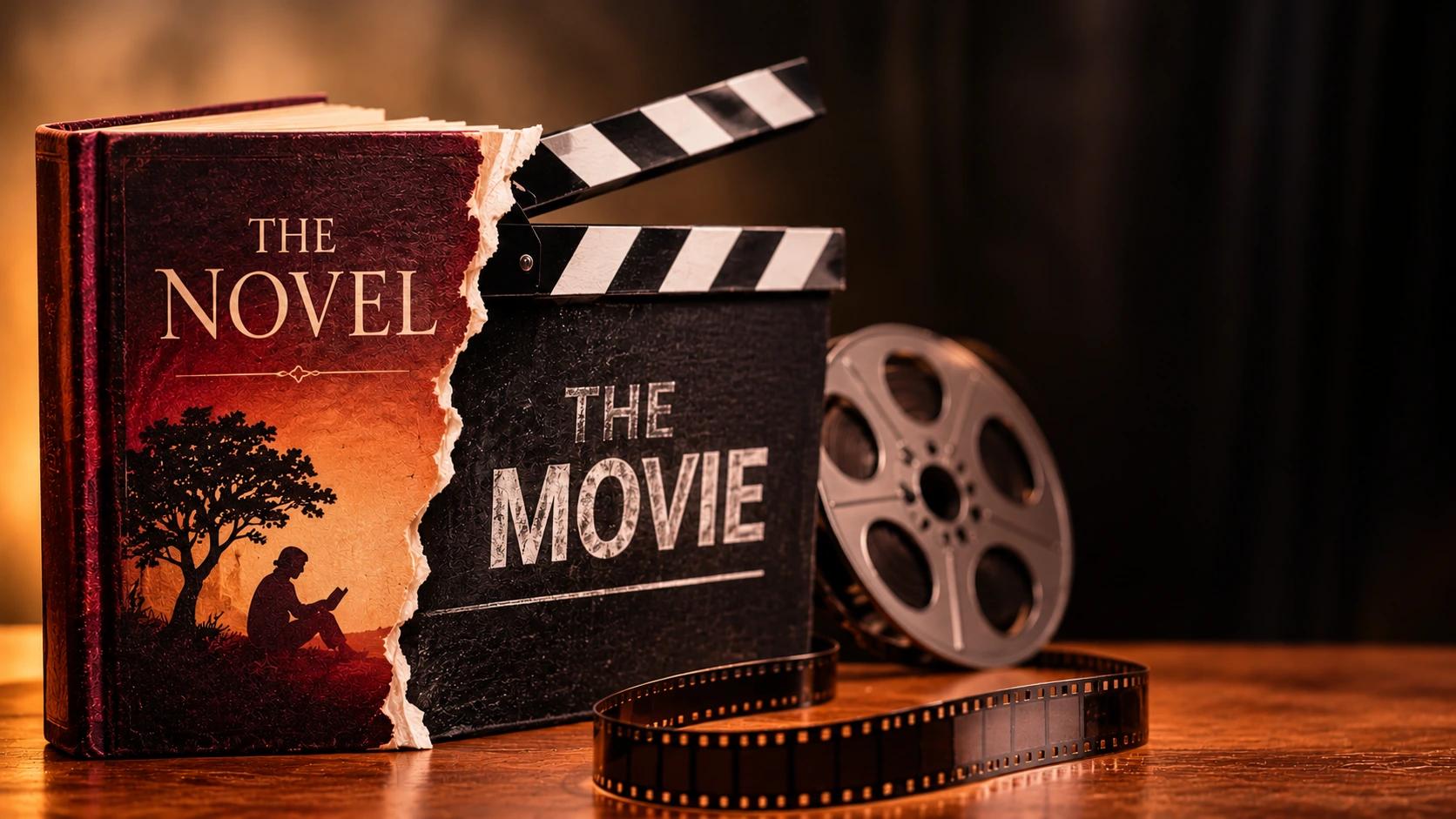
From Page to Screen: What Survives the Adaptation?
Adapting novels into films has become a growing trend across film industries, from Hollywood to Nollywood to Bollywood. Adaptations give filmmakers a chance to bring literary worlds to life, but they also raise a difficult question: how much of the original story survives the move from page to screen?
The Difference Between Reading a Novel and Watching It
A novel gives readers room to imagine. They can build a character’s face, voice and mannerisms from the author’s words, and they can stay inside a character’s head for hundreds of pages, following their motivations, doubts and emotional struggles. That intimacy is hard to reproduce on screen, where a filmmaker must decide what a character looks like and how their inner life will be shown. A reader’s private version of a character rarely matches the one in a director’s mind.
Film is not simply a loss, though. It has tools the page lacks: an actor’s performance, a musical score, the framing of a single shot. A glance held a second too long can convey what a novel needs a paragraph to say. The connection changes form, but it does not disappear.
Why Filmmakers Change Original Stories
Some changes are practical. A novel can sustain dozens of characters and subplots, while a film must tell its story in two or three hours. Scenes are cut, characters merged and sequences rearranged. Peter Jackson’s The Lord of the Rings trilogy dropped Tom Bombadil entirely, yet kept the story’s central themes of friendship, sacrifice and the corrupting pull of power. The cuts changed the book’s shape without changing its heart.
Other changes come from creative vision. Directors interpret stories through their own artistic sensibilities, and the results can be divisive. Stephen King has long been critical of Stanley Kubrick’s The Shining for how it handles Jack Torrance, whom King wrote as a decent man slowly undone by his demons. Many viewers, however, consider Kubrick’s film a masterpiece in its own right. The example shows that a change can succeed as cinema while still frustrating the author.
Finding a Balance Between the Book and the Screen
Every adaptation involves compromise, so the useful question is not whether a film changed the book but what it changed and why. Condensing is different from betraying. Adaptations of Chimamanda Ngozi Adichie’s Half of a Yellow Sun showed how hard this balance is: compressing a sprawling, multi-perspective novel about the Nigerian civil war into one film meant that some depth inevitably had to go, and audiences judged how well the film’s core emotional truth held up.
Filmmakers have every right to bring their own ideas to a project. But the strongest adaptations do not follow the book page by page; they stay faithful to its central themes and spirit. When a film keeps what the story is really about, the changes read as translation. When it abandons that, the audience is left with a different story that only borrows the original’s name.
Read our editorial standards and corrections policy.