
Netflix in South Africa at 10: Impact, Jobs and Open Questions
Ten years after launching in South Africa, Netflix says it has supported 8,000 jobs and made 300+ local titles available. But questions remain over who owns the stories, how local spending is measured, and what comes next for the industry.
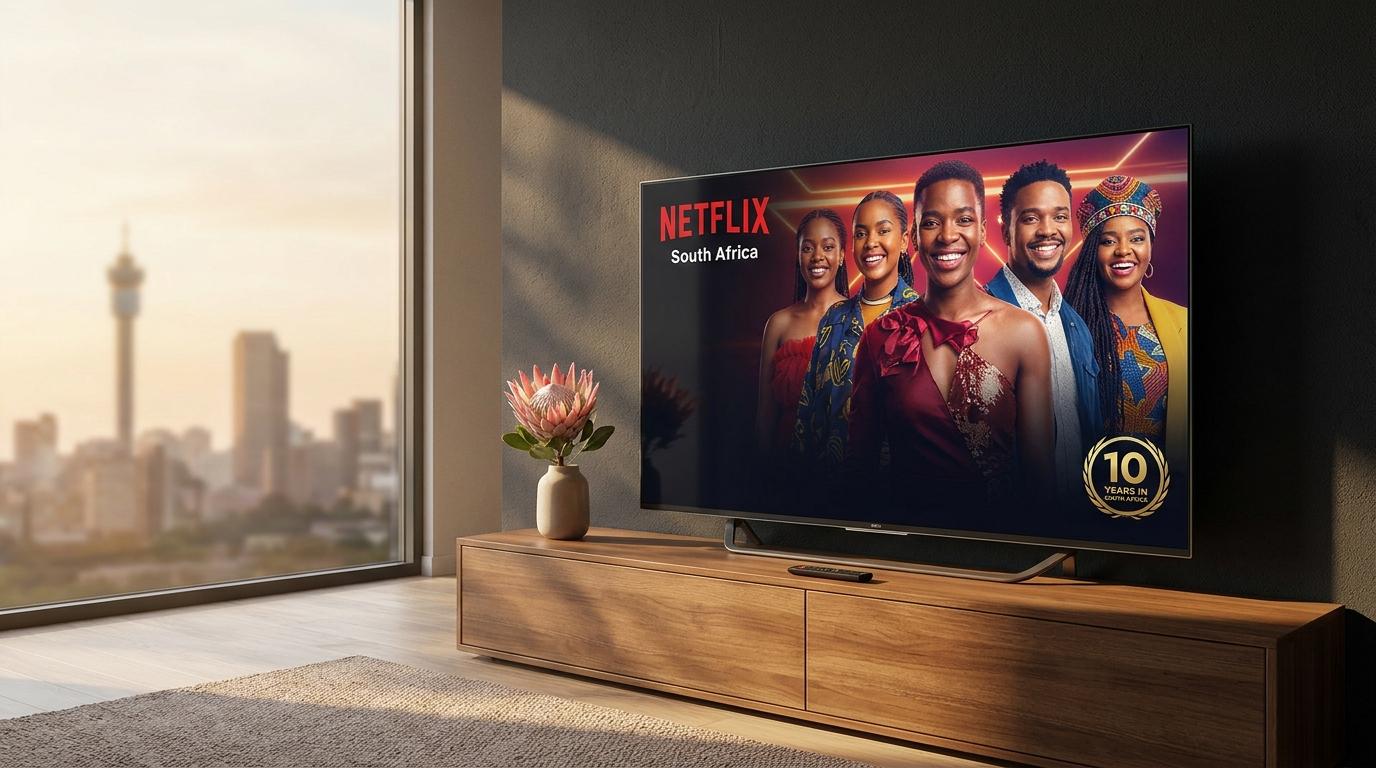
South African screen stories are known for capturing the nation’s culture and lifestyle, and many also serve as socio-political commentary. Since Netflix launched in the country in 2016, that storytelling has had a route to local and international audiences. Last month, in September 2026, Netflix marked ten years in South Africa with a new slate of local titles. The milestones are real, but so are the questions that remain.
Netflix says more than 300 South African titles have become available on its service over the decade, filmed across 20 cities in eight provinces. Productions include Blood & Water, How to Ruin Christmas and Blood Legacy. The most recent breakout is The Polygamist, a series based on Zimbabwean author Sue Nyathi’s 2012 novel. Netflix says it drew more than 24 million views in its first weeks, reached the Top 10 in 62 countries and ranked number one in more than 20. Nyathi’s book sales tripled after the series debuted. These are Netflix’s own figures, not independently audited audience data.
Netflix also says its work in the country has supported more than 8,000 jobs through partnerships with over 30 local production companies. It told Parliament it put more than R4 billion into local production between 2021 and 2024. Both figures need context. The jobs count covers direct and indirect work, and the 300-title figure includes licensed programmes, which usually mean less local spending than commissioned originals.
HOW THE COUNTRY’S FILMMAKERS ARE CHANGING
Netflix says its first few years went on learning what South African audiences watch, with significant investment starting around 2018. It now plans 15 to 20 local productions a year, up from 8 to 12. Kaye Ann Williams, who oversees scripted content in sub-Saharan Africa, says the company has learned that regional languages, dialects and casting matter to viewers.
Producers describe the shift in practical terms. Bradley Joshua, CEO of Gambit Films, the company behind Blood & Water, called Netflix’s emphasis on local content “surprising, but refreshing.” The new slate points to a widening field: sequels from established names such as director Rethabile Ramaphakela, a How to Ruin spin-off from producer Jayan Moodley, and deals with newer companies including Tshedza Pictures and The Bomb Shelter.
OPPORTUNITIES
Each production employs writers, directors, actors, cinematographers, editors, sound designers and production managers. Netflix also points to the caterers, drivers and equipment suppliers that sets rely on. For emerging creatives, some schemes are more targeted. In 2021, Netflix and the National Film and Video Foundation each committed R14 million to fund six South African feature films.
Not everyone sees the arrangement as a simple gain. The Mail & Guardian has reported that when Netflix commissions an original, the company owns all the intellectual property and creators earn no residuals. The market remains volatile following the closure of Showmax earlier this year in April, while the communications regulator, ICASA,, withdrew its proposed inquiry into streaming services late last month and plans to republish it.
WHAT THE FUTURE LOOKS LIKE
After a decade, the question is whether these opportunities turn into lasting growth. Netflix’s bigger slate is a good sign, but the industry’s long-term health also depends on skills, fair rights and clear rules. The next generation of filmmakers needs training and access to funding, not just commissions. The goal should be an industry that can sustain its creative talent and tell stories that reflect the country’s diverse experiences without the confinement of international expectations.
Read our editorial standards and corrections policy.