
Who Could Become the World's Next Trillionaire? How AI Is Changing the Race
Mark Zuckerberg, Jensen Huang, Michael Dell and other technology billionaires are positioned to benefit from the AI boom, but reaching the trillion-dollar mark will depend on more than industry growth.
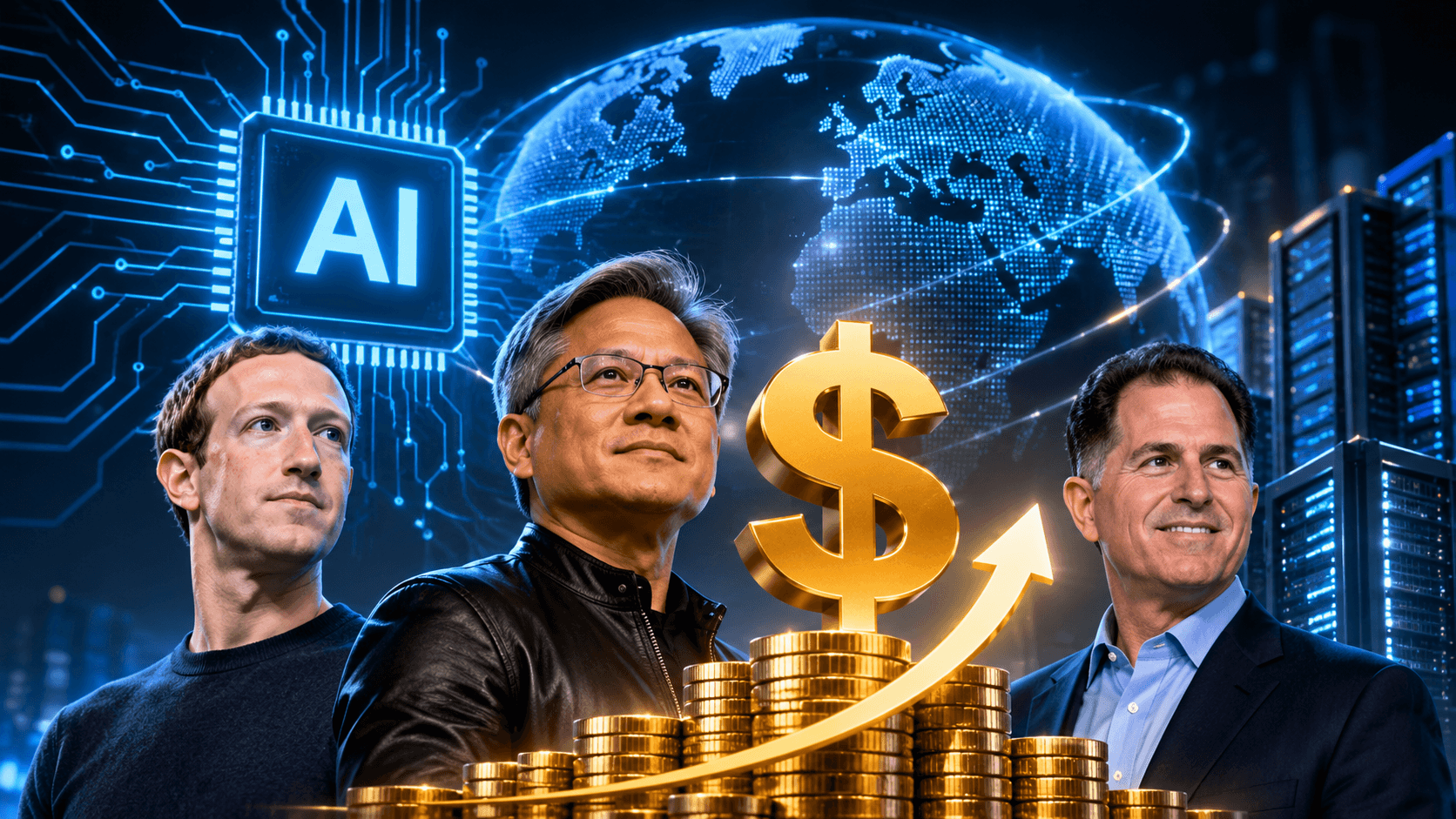
Becoming a billionaire is already a huge achievement, but reaching a trillion dollars is on another level entirely. As technology companies continue to grow, the possibility of another person joining the trillionaire club is becoming an interesting topic.
Much of the attention is now on some of the biggest names in technology, including Mark Zuckerberg, Jensen Huang and Michael Dell. Their businesses are all connected to the growing artificial intelligence industry, although in different ways.
The interesting part is that this race is not just about who has the most money today. It is also about who is in the best position to benefit from the growing demand for AI technology.
How AI Is Changing the Race
Artificial intelligence has quickly become a major part of the technology industry. Companies are spending billions of dollars on computer chips, data centres and software to keep up with growing demand.
This spending is creating opportunities for people who own businesses in these areas. Companies developing AI models need powerful chips to run them, while businesses also need large data centres to store and process information.
Some technology leaders are making money by providing these tools, while others are adding AI to products that people already use. Either way, AI is becoming an important part of how these companies compete and grow.
Mark Zuckerberg: Turning AI into a Business Advantage
Mark Zuckerberg, the founder of Meta, is making major investments in artificial intelligence.
Meta owns popular platforms such as Facebook, Instagram and WhatsApp, which give it access to billions of users. The company is using AI to improve how these platforms work, from recommending content to helping businesses reach the right audiences through advertising.
This gives Zuckerberg an advantage. Rather than relying on AI as a completely new business, Meta can use it to improve services that already generate billions of dollars.
However, the company is also spending heavily to build the infrastructure needed for its AI ambitions. This includes data centres, advanced computer systems and other equipment. The big question is whether these investments will continue to generate enough revenue to justify their costs.
Jensen Huang: The Man Supplying the AI Industry
While Zuckerberg is using AI to improve Meta's platforms, Jensen Huang is helping provide the technology that makes much of the AI industry possible.
Huang is the founder and CEO of NVIDIA, a company known for producing powerful computer chips used to develop and run AI systems.
As more businesses begin using artificial intelligence, the need for these chips has increased. This has made NVIDIA one of the most important companies in the industry.
The company's second-quarter fiscal 2027 results showed just how much demand there is. NVIDIA reported revenue of $96.2 billion, with its data centre business bringing in $89 billion.
Huang stands to benefit from this growth because so many companies depend on NVIDIA's technology. But whether that will make him the next trillionaire depends on how the company performs and how much of it he continues to own.
Michael Dell: Another Big Winner from AI
Michael Dell is also worth watching. His company, Dell Technologies, is benefiting from something many people may overlook when talking about artificial intelligence: the equipment needed to run it.
AI does not work on software alone. It requires powerful servers, storage systems and data centres to handle large amounts of information. Dell supplies many of these products to businesses.
The company has already seen strong growth from this demand. In its second-quarter fiscal 2027 results, Dell reported revenue of $47 billion, a 58 per cent increase from the same period the previous year.
This puts Dell in an interesting position. While NVIDIA supplies many of the chips used in AI systems, Dell provides some of the equipment businesses need to put those systems to work.
Other Billionaires to Watch
The race is not limited to Zuckerberg, Huang and Dell. Other wealthy technology figures also have businesses that could benefit from AI.
Jeff Bezos, the founder of Amazon, has a major advantage through Amazon Web Services (AWS). The company provides cloud computing services that businesses use to run applications, store information and develop AI systems.
Google's co-founders, Larry Page and Sergey Brin, are also in the picture. Through Alphabet, they have access to major investments in AI research, cloud services and computer chips.
These examples show that there is more than one way to benefit from artificial intelligence. A person does not necessarily have to build an AI model to make money from the industry. Providing the services and equipment behind it can be just as important.
Why AI Could Change the Wealth Rankings
The growing demand for AI could have a major effect on the fortunes of technology billionaires. As companies invest more money in artificial intelligence, businesses that provide the technology behind it could become even more valuable.
But having an AI business does not automatically mean someone will become a trillionaire. Companies still have to deal with competition, rising costs and the pressure to turn their investments into actual profits.
Personal wealth also depends on company ownership. A billionaire may lead a successful company, but the amount of the business they own plays a major role in determining their fortune.
This is why the race is not simply about who is spending the most money on AI. It is about who can build a successful business around it.
Who Has the Best Chance?
Looking at the current figures, Jeff Bezos is ahead of the other names discussed. Forbes' November 2, 2026 estimates placed his fortune at $361.3 billion. Michael Dell followed at $228.5 billion, Mark Zuckerberg at $211.4 billion and Jensen Huang at $177.5 billion.
These figures can change as company share prices rise and fall, but they give an idea of where each person currently stands.
Zuckerberg has the advantage of turning AI into better products and advertising services. Huang benefits from the demand for the chips powering the industry, while Dell is gaining from the growing need for AI servers and data centre equipment. Bezos also has a strong position through Amazon's cloud business.
At this point, it is difficult to say exactly who will reach the trillion-dollar mark next. However, one thing is clear: the growth of artificial intelligence could play a major role in deciding who gets there.
The next trillionaire may not necessarily be the person who creates the most popular AI tool. It could be the person who owns the business, technology or infrastructure that the rest of the industry depends on.
Read our editorial standards and corrections policy.