NIGERIAN WOMEN ARE THE FUTURE OF THE ENTERTAINMENT INDUSTRY.
From an NFL halftime stage in London to a Guinness record in Lagos, Nigerian women led entertainment’s biggest moments in 2026. Here’s what those wins mean, and why the industry’s next move matters more than the milestones themselves.
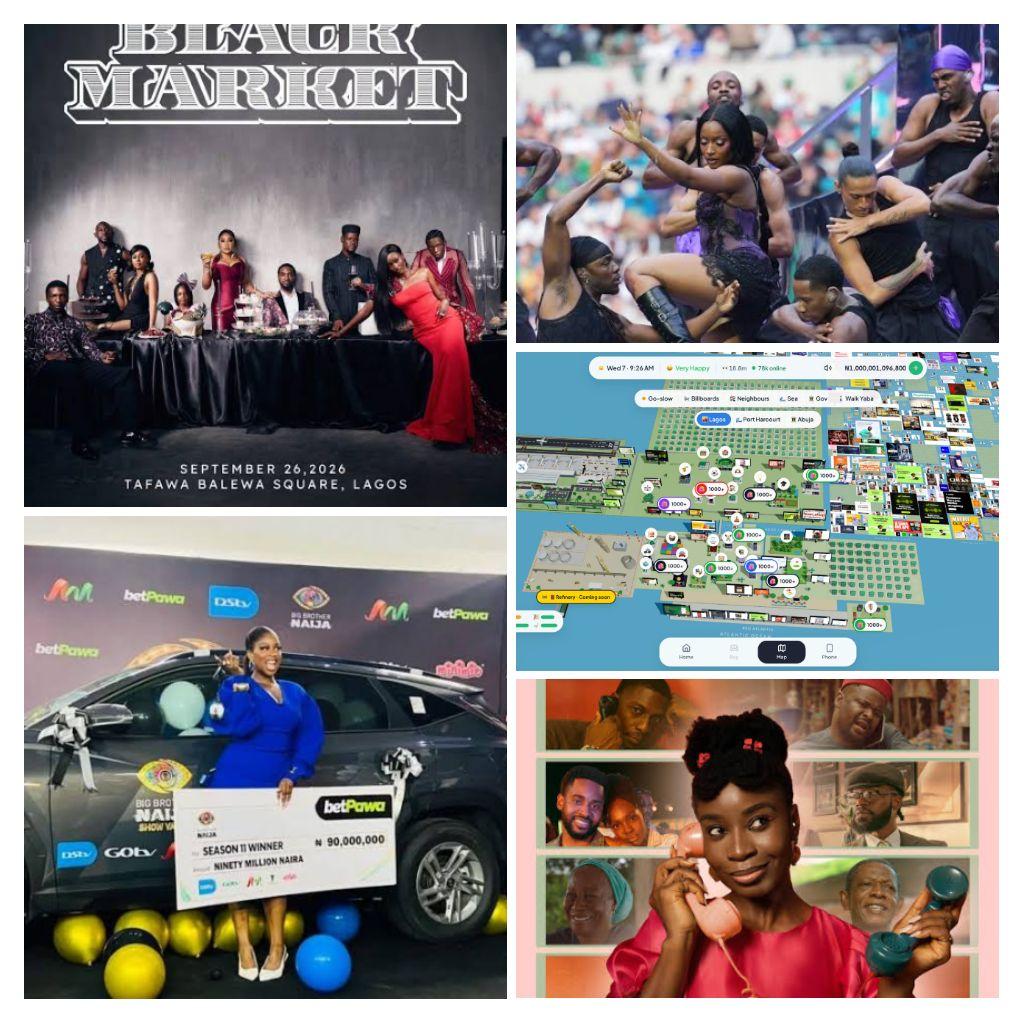
What does it mean when Nigerian women are no longer just participants in the entertainment industry but active definers of its future? In 2026, it means they are setting records on the biggest stages. They are proving at the box office that their stories sell, building products investors will fund, and winning the audience votes that decide a season. In the 16 days from 26 September to 11 October alone, a film screening, a game launch, a reality-TV finale and an NFL halftime show each produced a first or a record. Yet research on Nollywood shows that the barriers behind these wins remain, which is why the question facing the industry has changed.
Ayra Starr and the Global Stage
On 11 October 2026, Ayra Starr became the first African artist to headline an NFL International Games halftime show. She performed at Tottenham Hotspur Stadium in London, during the Philadelphia Eagles' game against the Jacksonville Jaguars. The 24-year-old opened with "Heaven Baby", her collaboration with Zayn Malik, and moved through songs that introduced her music beyond Nigeria. The show was one of a record seven halftime shows the NFL staged this season across seven countries and four continents. The league called her a "generational talent", and she described the booking as a dream come true.
The booking matters beyond the night. The NFL cited more than seven billion streams of her music since her 2021 debut. That tells promoters, sponsors and broadcasters that a catalogue built by a young African woman can anchor a global sporting event. The day after the show, she announced a world tour for Starrgirl, her third studio album, released on 14 August.
Black Market and the Power of Ambition
On 26 September 2026, Nora Awolowo's Rixel Studios premiered Black Market at Tafawa Balewa Square, Lagos. Guinness World Records recognised 51,000 qualifying viewers, a new record for the largest attendance at a film screening. The previous record was 43,624, set in 2015 by a Filipino film. Guinness counted only people who stayed from the opening scene to the end, and Black Market is reported to be the first Nollywood production to set such a record.
The record owes as much to logistics as to the film. Damilola Osikoya's Switch Visuals, working with Rixel and FilmOne Studios, turned a public square into a cinema for tens of thousands of people. The film, directed by Fatimah Binta Gimsay, follows five market women who run a fuel-smuggling operation. Osikoya has said the project shows what is possible "when bold ideas meet determination and collaboration". President Bola Tinubu publicly congratulated both producers. The screening shows that exhibition at this scale can be built locally.
Call of My Life and the Commercial Case
Call of My Life is a romantic comedy produced by Blessing Uzzi for Bluhouse Studios. It went to cinemas on 15 May 2026 and became the highest-grossing Nigerian film of the year, with ₦901.3 million at the box office. Uzoamaka Power wrote it and stars in it, Dammy Twitch directed it, and FilmOne distributed it. It was the first Nollywood title released outside the December holiday season to pass ₦600 million, and it held the number-one spot for at least six consecutive weekends.
The figures answer an old investor question: do female-led stories sell? They do, and this film did it as only Bluhouse's second theatrical release. Uzzi has said funding challenges threatened the project, so the success came against the odds.
Lagos Life and the Digital Frontier
Entertainment is no longer only film and music. Shalom Rayhamen, a 26-year-old software developer, built Lagos Life in a single overnight session. The free browser game, set in Lagos, was released on 1 October 2026, Nigeria's Independence Day. Players create a character, find work, earn virtual naira, pay rent and move through a shared virtual city. Within days it passed one million players, and by 8 October it had reported 4.3 million users.
By 11 October, figures from Rayhamen indicated 9.3 million followers. Her company, Vatar, confirmed $170,000 in earnings and contracted business. The game earns from advertising, music promotion, company partnerships, football streaming and optional in-game top-ups. Vatar has also been reported to have raised $500,000 from angel investors. Rayhamen's launch shows that Nigerian culture can be exported as software, and that a woman can own the technology as well as the content.
Temi-Nkem and the Audience Women Command
On 4 October 2026, Temitope Nkemdilem Chibue, known as Temi-Nkem, won the eleventh season of Big Brother Naija. The 21-year-old accounting and finance student and content creator spent 70 days in the house. She took 25.87% of the final public vote, narrowly ahead of Aikou on 23.68%. Her ₦160 million prize package included ₦90 million in cash, a new SUV and sponsored prizes.
A reality-TV win is a different kind of milestone from a world record or a box-office record. It reflects influence rather than ownership: viewers voted, and they chose a young woman. For brands and platforms, that attention is a currency. What Temi-Nkem does with it next will show whether a win becomes a career.
The Gaps That Remain
Five standout achievements do not mean women have taken over the industry. The commercial case is strong: one study found that eight of the ten highest-grossing Nigerian films of 2024 were produced or directed by women, or both. But a 2026 study in Gender, Work & Organization found that although more women now hold leadership positions in Nollywood, many still face sexual harassment, exploitation and gender stereotyping.
A 2024 University of Galway doctoral study interviewed 11 women film professionals. They described sex-for-roles demands, wage disparities and blacklisting in an industry that largely regulates itself. The author called for enforceable, industry-wide gender policies. Headline stories can also hide how few women get the chance to attempt projects at this scale.
What Comes Next
The conversation has moved. The question is no longer whether Nigerian women can succeed in entertainment, because 2026 has answered that. The question now is whether studios, investors, brands and platforms will build systems that let more women lead, innovate and take creative risks, and own what they make. If they do, this year will be remembered as the start of a shift. If they do not, it will be remembered as a set of extraordinary exceptions. The women of 2026 have done their part. The industry's turn is next.