
Why Nigerian Entertainers Are Collaborating Across Borders, and What It Costs
From Burna Boy and Shakira’s “Dai Dai” to Nollywood-Ghana films, Nigerian entertainers are increasingly working across borders. Here is why collaboration is growing in 2026, how it opens new audiences, and what it can cost when credit and pay go unclear.
Media scholar Peter Vorderer (2001), in "It's All Entertainment—Sure. But What Exactly Is Entertainment?", describes entertainment as a multidimensional experience that goes beyond enjoyment. It lets audiences explore other perspectives, meet new ideas and connect through shared interests. In 2026, one dimension of that experience is hard to miss: the people who make entertainment increasingly make it together.
Music shows the shift most clearly. According to Interspace Music's reading of Spotify's list of the Nigerian songs that drew the most streams from outside Nigeria in the first half of 2026, every entry near the top was a collaboration, which was not the case a year earlier. So what is driving this culture of collaboration, and what does it cost?
Collaboration as a Route to New Audiences
The clearest example is "Dai Dai", the official 2026 FIFA World Cup anthem by Burna Boy and Colombian star Shakira, released in May. Industry reports say it passed 200 million streams, charted on the Billboard Hot 100 and made Burna Boy the first African artist to top Spotify's Global Music Video Chart. Rema also features on the official World Cup album, on "Goals" with BLACKPINK's Lisa and Brazil's Anitta, and Davido and Ayra Starr appear on the same project.
Analysts at Interspace Music argue that these pairings work partly as distribution: teaming up with an artist who already has a Latin American or East Asian streaming base can win playlist and algorithm pickup faster than waiting for organic discovery. Industry figures say the same. Obi Asika, founder of the Storm 360 label, told BusinessDay that collaborating with Latin artists is becoming a strategy for expanding the listener base, and a senior Spotify executive for sub-Saharan Africa told Al Jazeera in 2023 that Afrobeats, as a blend of sounds, lends itself to fusions and collaborations.
A collaboration, then, is not simply two names on a song. It is a meeting point between two audiences, and a way into listening habits an artist could not easily reach alone.
Beyond Music: Collaboration on Screen
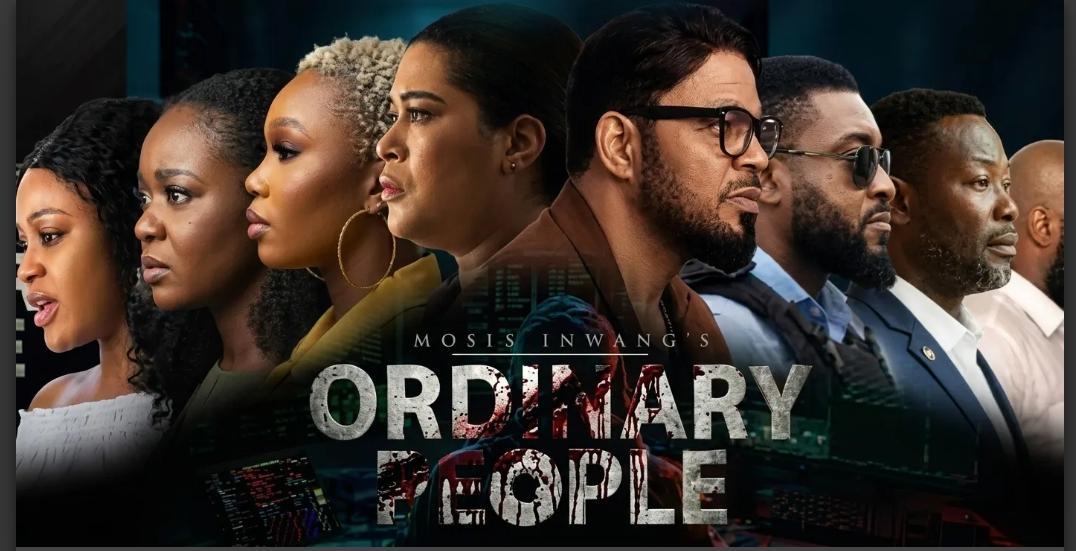
The same pattern is visible in film and television. Ordinary People, an eight-episode thriller directed by Moses Inwang, premiered on Netflix on 4 September 2026. Its ensemble includes Nigerian performers such as Ramsey Nouah, Chidi Mokeme and Adunni Ade, alongside Ghanaian actors Jackie Appiah and Adjetey Anang. It was filmed in Lagos, Bayelsa and Berlin, and Inwang has said the aim was to be "global big, not just Nollywood big".
A viewer who mainly follows Nigerian productions meets Ghanaian actors, and bringing in talent from other countries changes who gets to tell and carry the story. Ordinary People is not alone. Aníkúlápó: Season Two, which was released on 30 January 2026, was filmed across Nigeria and Ghana in a collaboration with the Ghana National Film Authority, and Ghanaian actress Fella Makafui learned Yoruba from scratch for her role. According to the producers' release, the partnership began with a conversation at the Cannes Film Festival between Ghanaian producer Juliet Yaa Asantewaa Asante and Nigerian filmmaker Kunle Afolayan. On Different Grounds, directed by Mildred Okwo, brings together actors from Nigeria, India, Ghana and the United States on a $350,000 budget and and was released in cinemas on 12 June, 2026.
The commercial side is still modest. FilmOne's 2025 Nigerian Box Office Yearbook shows that 23 Ghanaian titles screened in Nigerian cinemas, grossing about ₦88.8 million from 9,375 admissions. Cross-border casting is growing faster than cross-border box office.
What Collaborators Gain
Reach is not the only motive. Every entertainer brings different experiences, influences and skills to a project, and working with someone whose approach differs can challenge familiar methods and encourage experimentation. Makafui's Yoruba-language role is one example: a Ghanaian actress had to master a new language to carry a Nigerian story. A musician may try an unfamiliar genre in the same way. Audiences benefit too: they hear new sounds, see fresh interpretations and meet stories from cultures they may not know.
What It Costs
Collaboration is not automatically the better choice, and the sharpest costs are financial. In 2023, Mr Eazi accused Bad Bunny and his label, Rimas, of using a song by Joeboy, an artist on his emPawa Africa label, without credit, saying that Afrobeats artists often have to pursue legal routes to secure publishing and royalties. Rimas said emPawa had not proved its ownership claim. Closer to home, Nigerian singer Ink Boy said in 2024 that he had not been paid for his contribution to Ghanaian rapper Sarkodie's song "One Million Cedis" and told 3Music TV that no formal agreement had been signed. At the time of that report, Sarkodie's team had not responded publicly.
These are allegations, and the other side's account is not settled. But they point to a pattern: handshake deals and unclear credit become most dangerous when collaborators work across companies, countries and legal systems.
There are creative costs too. BusinessDay reports that as foreign labels push Afrobeats collaborations, two concerns stand out: keeping the music authentic while appealing to global audiences, and making sure revenue is shared fairly within the African industry. The Spotify list raises a further question. If the biggest exports are now almost all collaborations, solo records, especially those in Pidgin or local languages, may find it harder to be heard abroad without a co-sign. That is an open question rather than a finding. Working independently still has value. It lets an artist build a distinctive identity, keep creative control and communicate a personal vision without reconciling different approaches.
Conclusion
The goal is not for every entertainer to collaborate, but to recognise when working together can strengthen an idea or serve an audience better, and to put credit, payment and ownership in writing before the work travels. If entertainment is an experience audiences share, as Vorderer's work on entertainment experiences explores, collaboration widens whose perspectives are part of it. A song can introduce listeners to an unfamiliar sound. A series can put performers from two countries in one story. In both cases the work travels further than one person could carry it alone, provided the people who made it are protected along the way.