
The Past Is Trending Again. But Whose Past Is It?
Low-rise jeans, vinyl records and point-and-shoot cameras are back, and Gen Z is wearing them as discoveries, not memories. But as nostalgia becomes big business, who is really doing the reimagining?
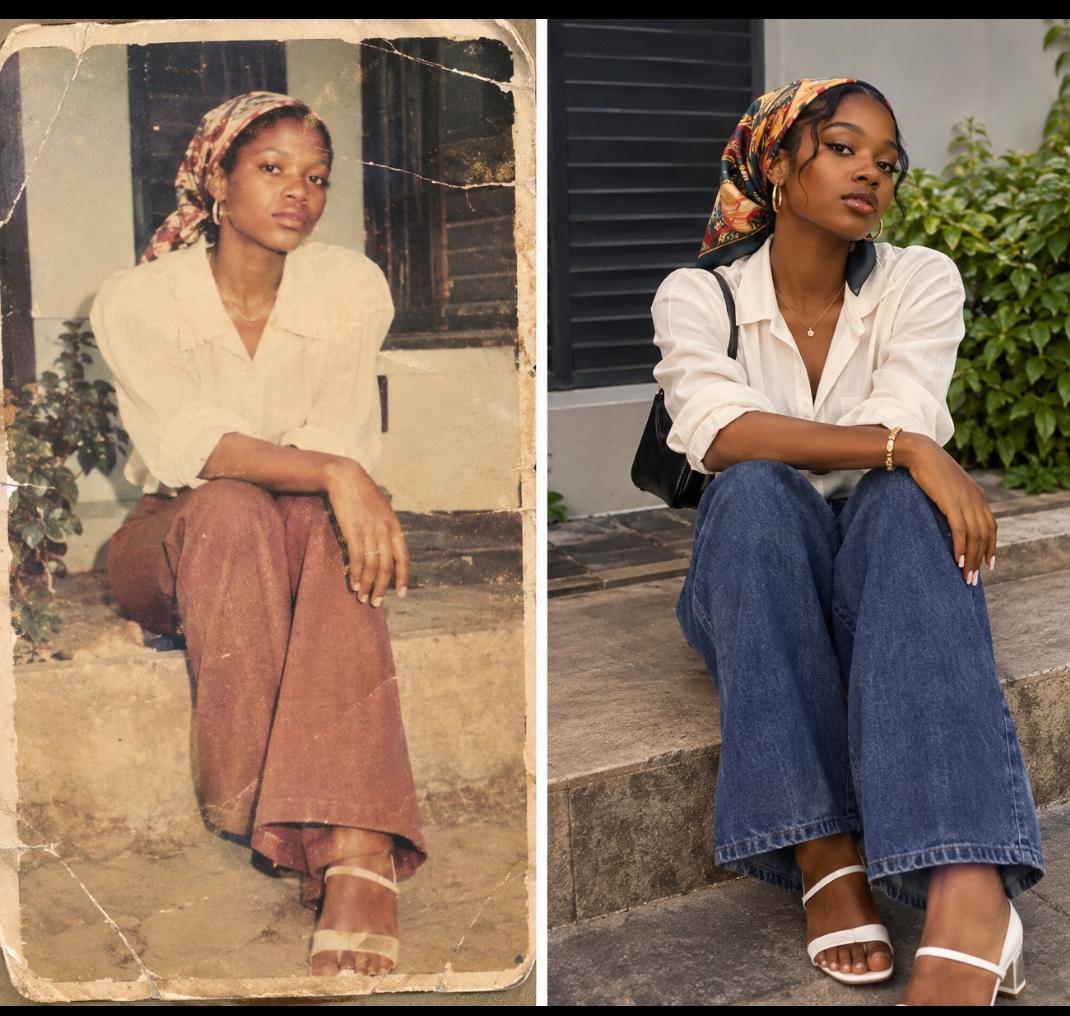
There was a time when certain clothes, hairstyles and ways of expressing yourself were considered finished. They belonged to older generations or to trends that had already had their moment, and moving forward meant embracing something new.
Today, many of those styles are back: low-rise jeans, butterfly clips, baggy skate silhouettes, vinyl records, digital point-and-shoot cameras. What makes this moment interesting is not that old trends are returning, but how they are being received.
Discovery, Not Repetition
For Gen Z, many of these looks are less a return than a first encounter. They peaked before today's young people were old enough to notice them, or they were childhood memories that quietly vanished from the mainstream.
So they rarely copy a look exactly. A 90s-style baggy jean gets paired with a fitted modern top. A 2000s butterfly clip shows up in a very different hairstyle. A thrifted jersey from a decade before they were born becomes a signature piece. The past supplies the raw material, and the present decides how it's used.
Old Does Not Mean Irrelevant
This challenges the idea that style loses its value once it stops being popular. Fashion and music don't expire. They wait for an audience that sees them differently. Making an old idea feel current takes real creativity: knowing what to keep, what to change, and what the result should say now.
What Social Media Changed
People have always revisited earlier styles. What platforms changed is the speed, visibility and reach. A look that once might have faded quietly can now be rediscovered, shared and reinterpreted in days by people far removed from the era that created it. Culture no longer moves in a straight line from new to old. It moves in cycles, and the cycles are shorter.
The Catch: Nostalgia Is Also a Business Model
Not every revival is organic. Brands know that nostalgia sells, and fast fashion can turn a rediscovered style into mass-produced stock within weeks. That raises an uncomfortable question: when a trend is reimagined, who is doing the imagining, the young people wearing it or the companies selling it to them?
Thrifting and resale offer one answer, since they let people find the original pieces rather than buy a copy. But resale has been commercialised too, with vintage prices rising as demand climbs. The creativity is real, but it operates inside a market that profits from it.
The Past, With a New Identity
Today's revivals are worn differently, understood differently and placed in lives that look nothing like the ones they first belonged to. That doesn't mean culture has run out of ideas. It suggests some familiar ideas still have more to give, as long as the people wearing them are the ones deciding what they mean.
Read our editorial standards and corrections policy.