
US-Iran Talks Postponed in Switzerland After Deadly Lebanon Strikes
Vice President JD Vance called off his trip hours before Iran delayed sending its own delegation, just two days after Washington and Tehran signed a new ceasefire agreement.
Planned talks between the United States, Iran, Qatar, and Pakistan in Switzerland have been postponed. The Swiss Foreign Ministry confirmed the delay on Friday, two days after the US and Iran signed a 14-point memorandum of understanding meant to lock in their ceasefire.
The meeting was set to take place at the Burgenstock Resort near Lucerne. No new date has been announced.
Vance's Trip Called Off
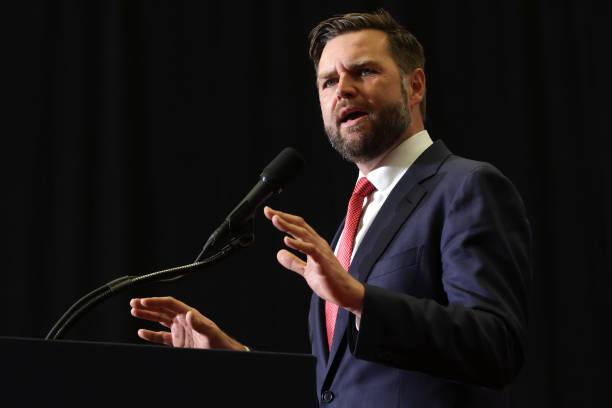
The setback started Thursday night, when the White House abruptly canceled Vice President JD Vance's overnight flight to Switzerland. Vance had been chosen by President Trump to lead the US side of the talks.
His staff and a group of journalists had already gathered at Joint Base Andrews outside Washington, ready to go. Dozens of other White House officials and advance staff were already in Switzerland preparing for his arrival.
A White House statement said Vance and his team were ready but couldn't finalize the plans in time. "The logistics of these negotiations have never been simple or predictable," the statement read, and added that the US still hopes to start technical talks soon.
Pakistan's Prime Minister Shehbaz Sharif also canceled his trip to Switzerland on Thursday.
Why the Talks Stalled
Iran reportedly held back its own delegation because of Israel's ongoing military campaign in Lebanon. Israeli strikes overnight into Friday killed at least 16 people in southern Lebanon, with Hezbollah reporting intense fighting on the ground.
Israeli Prime Minister Benjamin Netanyahu said Thursday that Israeli forces will stay in a "security zone" inside southern Lebanon for as long as Israel's security needs require it. Israel and Hezbollah are not part of the US-Iran agreement, but Iran has insisted that Israel withdraw from the Lebanese territory it still occupies.
The Swiss Foreign Ministry said it remains ready to host the talks once everyone is set, noting that preparatory work at the resort is continuing.
What's in the Deal
The agreement signed this week by President Trump and Iranian President Masoud Pezeshkian is meant to end the conflict between the US, Israel, and Iran, reopen the Strait of Hormuz, and start a 60-day negotiation window on bigger issues, including Iran's nuclear programme. It also calls for hostilities in Lebanon to stop.
Iran's new supreme leader, Ayatollah Mojtaba Khamenei, said Thursday he approved the deal despite having reservations about parts of it. He said he gave his permission because Iranian officials, including Pezeshkian, committed to protecting the rights of the Iranian people. Khamenei took over after his father was killed in an airstrike on the first day of the war.
Iran's chief negotiator, Mohammad Bagher Ghalibaf, warned that Tehran would respond decisively if the US breaks the agreement.
Other Signs the Deal Is Still Moving
Away from the postponed meeting, parts of the agreement are already taking effect. The US military lifted its naval blockade of Iranian ports on Thursday, though American warships are staying in the area.
Traffic through the Strait of Hormuz is still light, but three Saudi oil tankers and a French ship carrying liquefied natural gas passed through on Thursday. Under the deal, no fees will be charged for ships using the strait over the next 60 days.
For now, the bigger diplomatic meeting stays on hold. Both Switzerland and the US say they're ready to restart talks as soon as the security situation allows.