
Europe's Wildfires Are No Longer Just a Summer Problem. They're Becoming a National Emergency
More than 325,000 people have fled their homes as France and Spain race to contain massive wildfires before another heatwave arrives.
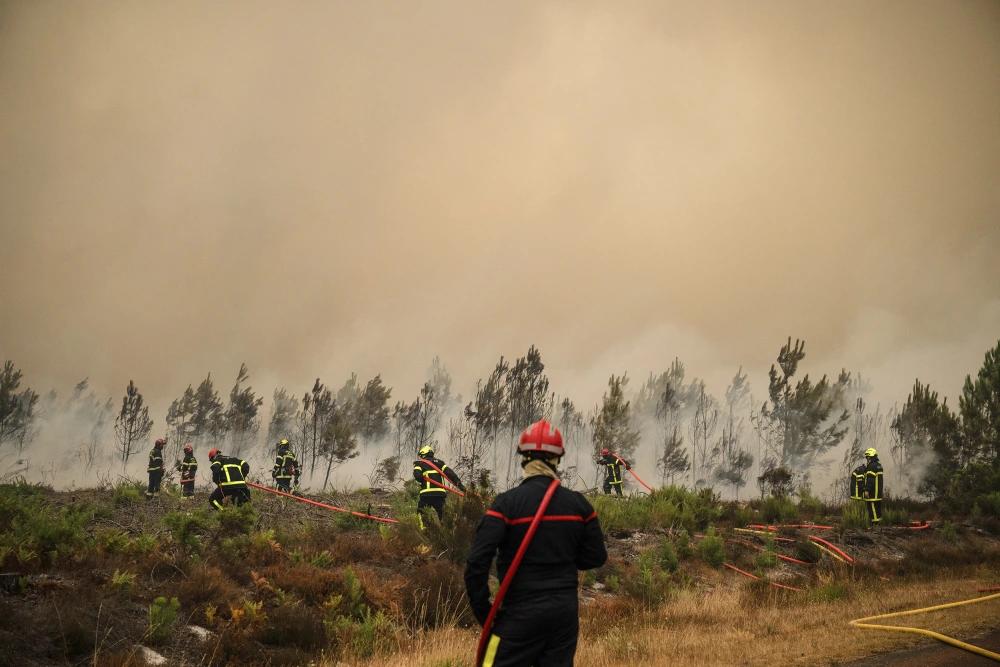
France and Spain are fighting to stop fast-moving wildfires before rising temperatures make the crisis worse. French President Emmanuel Macron held a crisis cabinet meeting on Monday after fires forced roughly 250,000 people from their homes in the southwest. Spain has evacuated more than 75,000 people and ordered 30,000 more to shelter in place as it battles separate blazes near Madrid and Valencia.
A disaster stretching beyond the fire line
The largest fire is burning in France's Gironde region, near Bordeaux. It has scorched an estimated 42,000 hectares, about 162 square miles. That makes it roughly four times the size of Paris.
French Interior Minister Laurent Nunez said the fire "became extremely virulent and unpredictable" over the weekend, generating its own winds as it advanced toward Bordeaux. Authorities said the situation stabilized somewhat overnight into Monday, but officials remain cautious. More than 2,500 firefighters, 1,500 soldiers and roughly 1,200 police are working the fire lines, backed by aircraft from Romania, Croatia, Germany, Portugal, Sweden and other European countries.
Nationally, French wildfires have burned close to 100,000 hectares this year. Nunez called it a "historic record." At least one person has died in the fires so far, in Manises, near Valencia.
The fires struck during peak holiday season. Authorities canceled children's summer camps and evacuated campsites and tourist accommodations across the affected regions. Many residents had little time to gather belongings before leaving.
Spain faces its own uphill battle
Spain has declared a state of emergency in the Madrid region, where fires have burned an estimated 45,000 hectares across Madrid, Ávila and Toledo. Prime Minister Pedro Sánchez visited the Ávila area on Sunday and told reporters, "We still have some difficult hours ahead," though he said overnight firefighting efforts had gone well.
A separate fire in Castellón province, near Valencia, has burned a 21-kilometer perimeter and forced 16,000 people to evacuate or shelter in place. Sánchez said his government will declare a formal civil protection emergency on Tuesday for the hardest-hit provinces, unlocking additional recovery funds. Italy, Greece and Portugal have sent firefighting aircraft and personnel to help.
Leaders promise long-term support
Macron said France will rebuild the areas damaged by the fires. "We will rebuild, we will repair, and we will be there for as long as is needed," he said. His Monday meeting focused on coordinating firefighting efforts, protecting threatened towns, and preparing for a fresh heatwave forecast to hit the southwest later this week, with highs expected to approach 40 degrees Celsius by the weekend.
More than a seasonal crisis
Southern Europe has faced wildfires every summer for decades. This year stands out for its scale. Entire towns have emptied. More than 325,000 people across both countries have been displaced. Governments have mobilized soldiers alongside firefighters to keep pace with fast-changing conditions. What began as a regional firefighting effort has become a national emergency requiring coordination across multiple government agencies and, increasingly, other European nations.
With a new heatwave approaching, officials in France and Spain say the coming days will determine whether the crisis begins to ease or grows into a larger humanitarian emergency.
Read our editorial standards and corrections policy.