
Ebola Outbreak in Abuja: Should Nigerians Be Worried ?
A confirmed case of Bundibugyo Ebola in Abuja has put a global health emergency on Nigeria’s doorstep. Panic won’t stop it. Knowing how the virus spreads, spotting the warning signs and acting fast will..
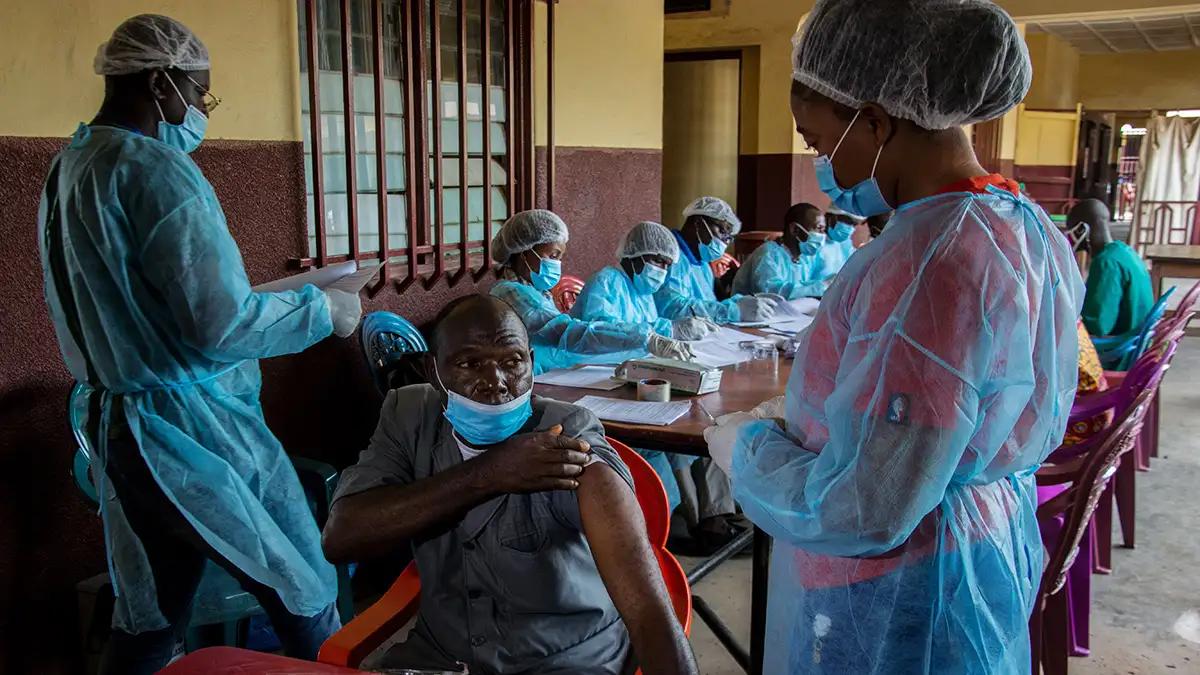
Nigeria confirmed an imported case of Ebola on 20 October 2026, becoming the fifth country to detect the Bundibugyo virus since the Democratic Republic of the Congo (DRC) declared an outbreak on 15 May, according to the World Health Organization (WHO).
The patient is a woman who flew in from Uganda. Her symptoms began on 7 October, four days after she arrived. She sought care at a private hospital in Abuja on 11 October, and laboratory tests confirmed Bundibugyo virus on 20 October. By the time of the announcement, health officials had identified 44 contacts: health workers, other patients, caregivers and fellow passengers.
Coordinating Minister of Health and Social Welfare Muhammad Ali Pate says the case is being treated as imported, not as community transmission. The announcement came 12 years to the day after WHO declared Nigeria free of Ebola at the end of the 2014 outbreak.
The numbers behind the headline
1 confirmed case in Nigeria, an imported infection. The patient is in isolation and reported stable.
44 contacts under monitoring, to be isolated for at least three weeks.
9 days between the patient first seeking care and laboratory confirmation.
9,552 confirmed cases and 4,602 deaths in the DRC, according to European Centre for Disease Prevention and Control (ECDC) data to 18 October.
48.2% crude case fatality ratio in the DRC as of 6 October, per WHO.
None: there is no licensed vaccine or approved treatment for Bundibugyo virus, the Nigeria Centre for Disease Control and Prevention (NCDC) says..
Nine days that decide an outbreak
The gap between her first hospital visit and the lab result is the part of this story that matters most. Authorities have not said when Ebola was first suspected, but the contact list includes health workers, other patients and caregivers, the people who spend the most time near a sick person before a diagnosis is made.
Kenya shows the same pattern. After its first case was confirmed on 6 October, a relative and three health workers who had been in contact with that patient later tested positive, ECDC reports. Early in the DRC outbreak, according to reports, initial samples came back negative because the tests screened only for Zaire ebolavirus, the better-known strain.
Bundibugyo is easy to miss. That is why a doctor's suspicion, a travel history taken at the bedside and a fast laboratory result count for more here than any single hospital protocol.
What the government is doing
Minister Pate set out the response in a ministry statement and a Tuesday-evening interview on NTA:
Isolation. The 44 contacts are being held at a designated facility in Abuja and will stay isolated for at least three weeks, which covers the 21-day incubation window.
Tracing. Authorities have obtained the passenger manifest and are working with the aviation sector to find fellow travellers. Pate urged passengers on the patient's flight to cooperate.
The hospital. The private hospital where she was first treated is getting support to strengthen infection prevention and control. Public and private facilities nationwide have been told to isolate suspected cases and report them.
Command. An emergency operations structure is coordinating the Federal Ministry of Health, the NCDC, the Federal Capital Territory health secretariat, Lagos State and international partners. The Presidential Task Force on Ebola and the NCDC will issue updates.
Detection. Pate said the NCDC and Port Health Services have run risk-based screening at entry points for five months, and that the NCDC laboratory can detect the virus.
WHO support. WHO is helping with case investigation, contact tracing and supplies, including protective equipment for health workers. It advises against travel or trade restrictions on affected countries.
Hotline. The NCDC's toll-free line, 6232, runs 24 hours a day for questions and suspected cases.
Where she caught it is still an open question. Pate said she had no confirmed travel to the DRC, so authorities presume she was infected in Uganda. Uganda's health ministry says it has no confirmed active cases, and the country's outbreak was declared over in August after cases that killed two people. The investigation into the source is continuing.
The outbreak behind the case
The DRC outbreak is now the second-largest Ebola outbreak on record, according to the US Centers for Disease Control and Prevention (CDC), which says it is spreading substantially faster than earlier ones. Only the 2014 to 2016 West African epidemic was bigger.
The pace is the story. Confirmed cases passed 5,200 when the outbreak reached its 100th day in late August. WHO counted 8,728 cases and 4,205 deaths on 6 October. By 18 October, ECDC reported 9,552 cases, 4,602 deaths and 2,550 recoveries. That is roughly 800 more confirmed cases in under two weeks. In the latest reporting period alone there were 97 new cases, including 41 deaths, in North Kivu (48), Ituri (42) and Haut-Uélé (7).
Ituri province remains the epicentre, with 6,480 cases and 2,989 deaths as of 6 October. Cases have been reported in 28 of its 36 health zones, and in six other provinces.
Two figures from WHO's latest report explain why the outbreak is hard to stop. Of 372 deaths reported since its previous update, 264 happened in communities and 108 in treatment centres, about 71% outside the care system, where relatives who nurse and bury the dead face the highest exposure. And only 76.9% of identified contacts in the affected provinces are being followed up, which leaves nearly one in four unmonitored.
Beyond the DRC, the virus has reached four countries. Uganda recorded 20 cases and two deaths and has no active cases, according to WHO's 1 July report. Kenya has eight to nine confirmed cases and one death: ECDC counts eight as of 20 October, WHO nine. France had one imported case, and the patient was released on 4 July. Nigeria has one.
Why Bundibugyo is a harder opponent
Bundibugyo virus was first identified in Uganda in 2007 and is distinct from the Zaire and Sudan viruses behind most earlier outbreaks. The NCDC says there is currently no licensed vaccine and no specific approved treatment for it. It also warns that vaccines and drugs developed for Zaire ebolavirus should not be assumed to protect against Bundibugyo.
The DRC's crude case fatality ratio stands at 48.2%: 4,205 deaths among 8,728 confirmed cases on 6 October. That figure is shaped by how quickly patients reach care and how many cases are caught, so it is not a fixed property of the virus. What it does show is the cost of delay.
Without a vaccine, four defenses remain: finding cases early, isolating patients, preventing infection in homes and hospitals, and giving good supportive care. All four depend on speed.
How Ebola spreads, and how it doesn't
Ebola does not spread like flu or measles. WHO and the NCDC say it is not transmitted through the air in the ordinary way. It spreads mainly through direct contact with the blood or other body fluids of a person who is sick with Ebola or has died from it. Contaminated needles, clothing and bedding can also carry it, as can contact with infected animals and their body fluids.
The highest-risk situations are caring for a patient without protective equipment, handling contaminated materials and preparing the body of someone who has died from the disease.
Sharing a bus, a market or an office with someone does not amount to exposure by itself. The concern is contact with infectious body fluids, especially from a person who already has symptoms.
The symptoms, and why they're easy to miss
Early Ebola looks like many common illnesses, malaria included. Symptoms can include:
Fever and severe fatigue
Headache and muscle or joint pain
Sore throat
Vomiting, diarrhea and abdominal pain
In some cases, rash, unexplained bleeding or bruising
Symptoms usually appear between two and 21 days after exposure. In the Abuja case, they began four days after arrival. A fever alone does not mean Ebola. Doctors look at the whole picture: symptoms, travel history and any contact with a suspected case or contaminated material. Do not try to diagnose yourself, and do not wait for bleeding before seeking help, because many patients never bleed.
Five myths worth killing before they spread
"Ebola is airborne." WHO and the NCDC say it does not spread through the air like flu or measles. It spreads through body fluids and contaminated objects.
"Anyone who was near her is infected." Sharing a space is not exposure by itself. The risk comes from contact with body fluids or contaminated materials, mostly from someone who is symptomatic.
"A fever means Ebola." Fever is the hallmark of malaria and many other infections. Doctors weigh symptoms, travel history and contact before suspecting Ebola.
"People under monitoring are infected." Monitoring is a precaution during the 21-day window. Being named a contact is not a diagnosis.
"A travel ban will keep it out." WHO advises against travel and trade restrictions on affected countries. What contains outbreaks is detection, tracing and isolation.
Seven things every Nigerian should do
1. Wash your hands with soap and running water. Do it after using the toilet, before preparing food, after caring for a sick person and after touching anything that may be contaminated. Alcohol-based sanitizer works when your hands are not visibly dirty and soap is unavailable. Handwashing does not guarantee protection, but it is basic infection control that costs almost nothing.
2. Stay away from the body fluids of a suspected patient. That means blood, vomit, diarrhea and anything else from a person suspected or confirmed to have Ebola. Do not clean up fluids or handle soiled clothing, bedding or equipment without training and protective gear. If someone is seriously ill, call for professional medical help. Do not try to manage a suspected case at home.
3. Report symptoms and exposure early. If you develop symptoms within 21 days of a possible exposure, contact a health provider or your local public-health authority at once, or call the NCDC's toll-free line, 6232. Tell them your symptoms, your travel history and any contact with a suspected or confirmed case. Call ahead so arrangements can be made before you arrive, and do not walk into a crowded waiting room unannounced. Do not hide your history out of embarrassment or fear of quarantine. Early reporting protects the people around you.
4. Leave the dead to trained burial teams. A person who has died from Ebola can still infect others, and washing, dressing or carrying the body without protection spreads the virus. Families should alert health authorities when Ebola is suspected. Many communities hold washing and touching the dead as sacred, and the answer is to work with trained teams who can carry out a safe and dignified burial.
5. Avoid sick or dead wild animals. Do not handle their blood or body fluids, and follow official food-safety advice, particularly on bushmeat in affected areas. Ordinary food hygiene still matters, but there is no reason to treat every meal or market product as a risk.
6. Cooperate if you are named as a contact. Contacts are monitored for up to 21 days after their last exposure. Being monitored does not mean you are infected. It means health workers are watching for symptoms so any illness is caught early. Do not dodge the follow-up, hide symptoms or share another person's medical information.
7. Check before you forward. A voice note claiming Ebola is airborne, a message naming a hospital that has not been confirmed, a post saying a whole city is infected: all of it travels faster than the facts and does real damage. Before you share an alarming claim, check it against the NCDC, the Federal Ministry of Health and Social Welfare or WHO. If a message has no verifiable source, do not send it on to your family group, your office chat or your followers.
If you think you've been exposed
Call for guidance. Phone the NCDC on 6232 or your local health authority. Describe your symptoms and the exposure, and call ahead if you are unwell.
Limit contact with others while you wait for instructions. Avoid close physical contact and do not share items that may be contaminated.
Do not self-medicate or isolate at home without guidance. Ebola needs professional assessment, and early supportive care improves outcomes in serious illness.
Help the contact tracers. Accurate details about the people and places involved allow health teams to work out who needs monitoring.
These steps do not replace medical advice. They are what you can do while trained professionals assess the situation.
Is Nigeria ready?
Nigeria has done this before. In 2014 an imported case in Lagos led to 20 confirmed cases and eight deaths, according to WHO, and the country was declared Ebola-free on 20 October that year. ECDC credited rapid contact tracing, surveillance and isolation of contacts for keeping it that small.
Some of the same machinery is visible now. Entry screening has run for five months. The NCDC says its laboratory can detect the virus. Authorities have the passenger manifest, and an incident management system has been activated. The NCDC has also run a national tabletop simulation to test response arrangements.
But the 2014 playbook did not have to deal with a virus that has no vaccine and no approved treatment. And this case first reached a private hospital, not a designated treatment centre. Whether private facilities across the country can spot a suspected case, isolate it and call it in quickly is the real test, and the minister's order to all hospitals to stay on alert is an acknowledgement of that.
Three things will show how this goes. Whether any of the 44 contacts develops symptoms during the three-week window, which runs into November. Whether the investigation finds where she was infected. And whether any new suspected case is caught early or late. Nigerians are entitled to demand answers on all three, and to wait for verified updates before drawing conclusions.
The other threat: stigma
When people hear the word Ebola, fear can quickly turn into suspicion. Travelers get shunned. People from affected countries get discriminated against. Families hide symptoms because they fear blame or isolation.
That makes outbreaks harder to stop. A person who expects humiliation will delay seeking care, and every day of delay widens the circle of exposure.
Nobody should be treated as infected because of their nationality, their address or the stamps in their passport. Risk comes from exposure and medical evidence. Likewise, someone placed under monitoring is taking a precaution, not carrying a diagnosis. Confidentiality, clear information and basic decency are what get people to come forward early.
The bottom line
One case is not an epidemic. Nigeria has 44 people under watch, a response already moving and a record of containing Ebola before. But the outbreak across the DRC is the second largest ever recorded, it has already reached four other countries, and it is spreading with no vaccine to slow it.
What decides the outcome here is how quickly people recognize the danger, how honestly they report it and whether institutions and communities work together. Anyone who may have been exposed should call 6232 now, without waiting for symptoms and without trying to handle it alone. Everyone else can do their part by washing their hands, keeping away from body fluids and refusing to pass on rumors.
Read our editorial standards and corrections policy.