
Zelensky: North Korea Preparing to Send Up to 50,000 Troops to Russia
Zelenskyy says up to 50,000 North Korean troops could be deployed in Russia, turning Pyongyang’s military support for Moscow into an increasingly important part of the war.
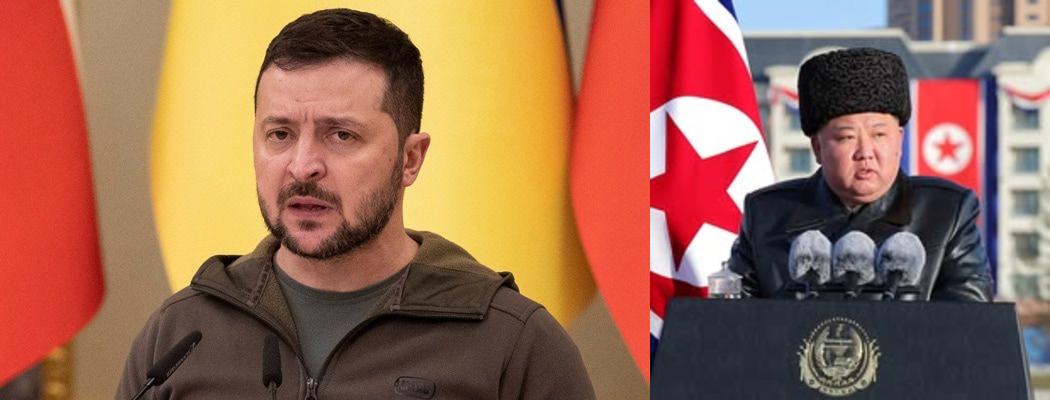
Ukraine says North Korea is preparing to send as many as 50,000 troops to Russia, a sharp increase from the 30,000 figure previously cited by President Volodymyr Zelenskyy.
Zelenskyy made the claim on Saturday, saying a decision had been made for between 30,000 and 50,000 North Koreans to be deployed on Russian territory. He did not publicly explain the intelligence behind the estimate.
The significance is not simply the number of soldiers. It is how deeply North Korea appears to be becoming involved in Russia’s war effort, while Ukraine is increasingly looking to South Korea for help in countering that partnership.
A partnership moving beyond weapons
North Korea has already supplied Russia with military equipment, including artillery ammunition and ballistic missiles. North Korean soldiers have also previously fought alongside Russian forces.
Reuters reported that roughly 14,000 to 15,000 North Korean troops were sent to Russia's Kursk region from 2024, with some still there.
Now, Ukraine says the scale could become much larger.
For Kyiv, that raises a different problem from simply tracking Russian forces. Moscow would potentially have access to a much larger pool of foreign troops without having to rely entirely on another large mobilisation of Russian soldiers.
Zelenskyy is looking toward Seoul
Zelenskyy has responded by appealing directly to South Korea.
He says Ukraine needs South Korean air-defence systems and wants closer cooperation with Seoul on drones and other defence areas.
That request carries an obvious irony.
North Korea is gaining battlefield experience and military cooperation through Russia, while Ukraine is asking South Korea, its rival on the Korean Peninsula, to use its own military capabilities to help counter the consequences.
The war in Ukraine is therefore creating a military link between the two Koreas that extends far beyond their own peninsula.
Missiles are part of the picture
The troop deployment is not the only development worrying Kyiv.
Ukraine says it has found North Korean missiles on its territory. Ukrainian military intelligence has also reported that a North Korean missile unit has been deployed to western Russia.
According to the Reuters report, the unit could have as many as 120 ballistic missiles and six launchers, although those figures come from Ukrainian intelligence and should be treated as such.
For Ukraine, this matters because ballistic missiles are among the hardest weapons to intercept, at a time when Kyiv says it is already facing shortages of high-end air-defence systems.
What North Korea gets in return
There is another side to the arrangement.
Zelenskyy argues that North Korea is using the war to gain experience in modern warfare and access to military technology from Russia.
That makes the relationship more than a straightforward exchange of soldiers for Russian support.
For Pyongyang, sending personnel into a real modern battlefield offers an opportunity to learn how troops, missiles and other military systems perform under combat conditions.
For Moscow, the partnership provides another source of manpower and military supplies.
That creates a relationship in which both governments have reasons to deepen cooperation.
The 2024 treaty is the foundation
The growing military relationship rests on a strategic partnership treaty signed by Russian President Vladimir Putin and North Korean leader Kim Jong Un in 2024.
The agreement includes mutual assistance provisions in the event of external aggression.
North Korea has presented its military involvement as assistance to a treaty partner.
For Ukraine and its allies, however, the latest developments suggest that the partnership is becoming increasingly consequential on the battlefield.
The number still needs scrutiny
The biggest headline is also the part that requires the most caution.
The figure of up to 50,000 troops comes from Zelenskyy, rather than from an independently confirmed deployment figure. His latest estimate is also higher than the 30,000 figure he cited previously.
That distinction matters.
It does not make the claim irrelevant, particularly given North Korea's previous military involvement in the conflict. But the exact number of troops that will actually arrive in Russia, and how many could eventually be sent toward combat operations, remains uncertain.
What is becoming harder to dismiss is the direction of travel.
North Korea's involvement in Russia's war is no longer just about ammunition or a limited troop deployment. Ukraine now says it could involve tens of thousands of additional soldiers.
And Kyiv is already preparing its response by turning to a country that knows North Korea better than almost anyone: South Korea.
Read our editorial standards and corrections policy.