
US Strikes Iran After Weeks of Calm, Tehran Retaliates Against American Bases in Jordan
The latest exchange has reopened a dangerous front around the Strait of Hormuz, one of the world's most important energy routes, as the six-month US-Israel war on Iran enters its seventh month.
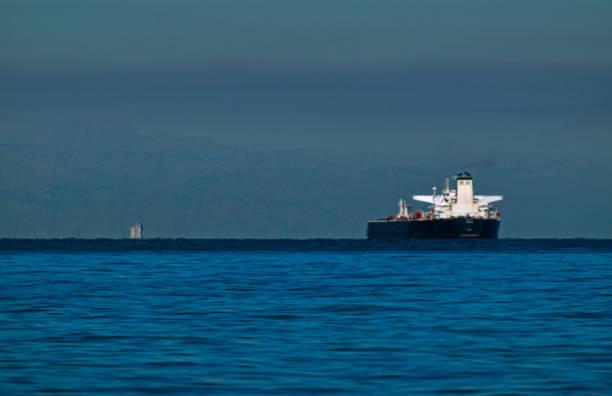
The United States has carried out its first confirmed strike on Iranian territory in weeks, hitting two Iranian rocket launchers on Larak Island in the Strait of Hormuz.
Iran responded by launching ballistic missiles toward US military positions in Jordan, marking a sharp new escalation after a period in which Washington had largely shifted away from direct military action and toward economic pressure on Tehran.
The US says the strike was necessary because Iranian Revolutionary Guard forces were preparing to launch rockets carrying sea mines into the Strait of Hormuz.
Iran, meanwhile, described the attack as an act of aggression and vowed to punish the United States.
What happened on Larak Island?
The US military struck two Iranian rocket launchers on Sunday on Larak Island, which sits in the Strait of Hormuz.
According to US Central Command, its forces had observed members of Iran's Islamic Revolutionary Guard Corps, or IRGC, preparing to launch rockets carrying sea mines into the waterway.
That detail is important because US forces had only recently completed clearing sea mines from international shipping routes through the strait.
The Pentagon described the operation as a limited and precise action against what it considered an imminent threat to shipping.
Iranian state and semi-official media, however, reported explosions near Larak Island and said several IRGC personnel and other Iranians were killed or wounded.
In very simple terms: why does the Strait of Hormuz matter?
The Strait of Hormuz is a narrow waterway connecting the Persian Gulf with the Gulf of Oman.
It is one of the world's most important routes for energy shipments.
Before the war, roughly one-fifth of the world's oil supply normally passed through the strait. The conflict has already sharply reduced commercial traffic through the waterway.
So, when mines or missiles threaten ships travelling through the strait, the consequences can extend well beyond the United States and Iran.
Oil tankers, gas carriers and other commercial vessels depend on the route.
Any prolonged disruption can put pressure on global energy markets.
That was already visible after Sunday's US strike. Reports state that US crude prices rose 1.8% to $84.94 per barrel, while Brent crude increased 1.9% to $89.79.
Iran strikes back
The Iranian response came shortly after the US attack.
Iranian state television showed what it said were ballistic missiles being launched toward US bases in Jordan.
Jordan's armed forces said eight missiles that entered the country's airspace were intercepted early Monday.
The attack was presented by Iran's Revolutionary Guard as retaliation for the Larak Island strikes.
The IRGC warned that the United States would face punishment for the attack, raising fears that the confrontation could spread beyond Iran and the Strait of Hormuz.
Why did the US strike now?
The timing is significant.
The last confirmed US military strike against Iran had taken place on July 29, when Washington said it had attacked dozens of IRGC targets, including missile and drone facilities, command centres and coastal defence positions.
On August 1, President Donald Trump said he would hold off on additional strikes following requests from regional allies including Qatar, Saudi Arabia and the United Arab Emirates.
The Trump administration had also recently indicated that it wanted to put greater emphasis on economic pressure rather than military action in its effort to force an end to the conflict.
That makes Sunday's attack a notable change in strategy.
Washington has now demonstrated that, despite the shift toward sanctions and economic pressure, it remains prepared to use military force when it believes Iranian actions threaten the waterway or US interests.
The Strait has become Iran's leverage
The waterway has become one of Tehran's most important sources of leverage during the conflict.
Iran has continued to possess missiles and drones capable of threatening vessels travelling through the strait.
As a result, relatively few commercial ships are currently willing to risk the route.
President Trump has repeatedly said that the Strait of Hormuz is open, pointing to vessels that have passed through it.
But reports state that only about 24 vessels passed through last week, compared with roughly 130 vessels per day before the war.
That gap shows why the dispute over the waterway matters.
A strait can technically remain open while commercial traffic is still operating at heavily reduced levels.
What does this mean for global oil markets?
For ordinary people around the world, the Strait of Hormuz may seem far removed from daily life.
But energy markets connect the conflict to households and businesses thousands of kilometres away.
If oil shipments remain restricted, higher crude prices can eventually affect the cost of fuel, transportation and goods.
The immediate price movement following the US strike suggests markets are already watching developments around the strait closely.
The longer the disruption lasts, the greater the potential economic pressure.
This is more than another exchange of strikes
The significance of the latest attacks is not simply that the US and Iran exchanged fire again.
It is that the confrontation had entered a period of relative military restraint within a war that has already lasted roughly six months.
Washington had been emphasising sanctions and economic pressure, while the Strait of Hormuz remained a major point of tension.
The Larak Island operation has now broken that lull.
Iran's decision to respond by targeting US positions in Jordan also demonstrates how quickly an attack on Iranian territory can produce consequences elsewhere in the region.
What happens next?
The immediate question is whether the latest exchange remains limited or becomes the beginning of another sustained round of US-Iran attacks.
For now, the United States says its operation was narrowly aimed at preventing an imminent threat to commercial shipping.
Iran has made clear that it considers the strike an attack that requires retaliation.
Meanwhile, commercial traffic through the Strait of Hormuz remains far below pre-war levels, leaving global energy markets exposed to further disruption.
The bigger picture
The latest escalation shows why the Strait of Hormuz has become so central to the conflict.
For the United States, keeping the waterway open is tied to protecting commercial shipping and global trade.
For Iran, control over the area provides leverage against an opponent with vastly greater conventional military power.
That makes Larak Island more than just another target in a war that has stretched on for six months.
It sits beside a waterway where a single military confrontation can quickly become an international economic problem.
Read our editorial standards and corrections policy.