Nigeria seeks Fresh $1.5bn World Bank Financing as Debt stands at N166.79tn
With public debt at ₦166.79 trillion, the Federal Government is seeking another $1.5 billion from the World Bank for climate resilience, child development and social protection. The bigger question is whether the borrowing will produce measurable gains for Nigerians.
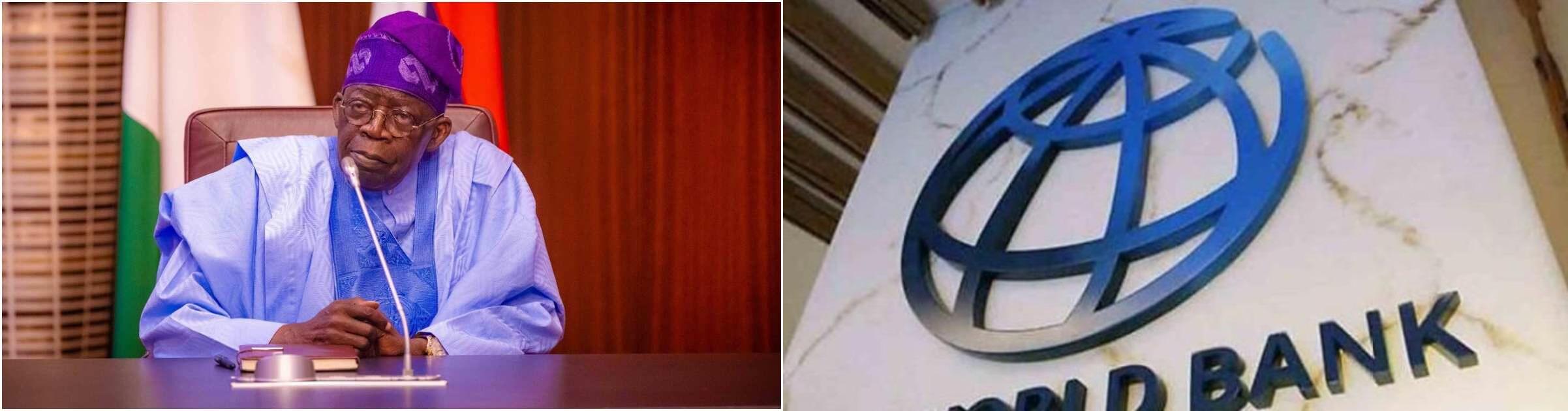
Nigeria's public debt stood at ₦166.79 trillion at the end of June 2026, according to the Debt Management Office. Now the Federal Government is seeking another $1.5 billion in World Bank financing for climate resilience, early childhood development and social protection. The size of the borrowing matters, but a bigger question sits behind it: will this money create enough value to justify the debt?
What Nigeria is asking for
The Federal Government has opened talks with the World Bank on three proposed facilities. Each is worth $500 million, and each targets a different need: climate resilience, early childhood development and social protection.
None of these is an approved or disbursed loan yet. The proposals are at different stages. The most advanced is a $500 million additional financing for the ACReSAL project, which is scheduled for World Bank board consideration on October 29, 2026.
Where the debt stands
The latest official figure is ₦166.79 trillion as of June 30, 2026. About ₦91.59 trillion of that is domestic debt, owed mostly inside Nigeria. The other ₦75.20 trillion is external debt, owed to lenders abroad.
For most Nigerians, ₦166.79 trillion is almost too large to picture. It helps to think about debt the way a business owner would.
Why the purpose of a loan matters
Imagine a business owner who borrows money to expand a factory. The loan alone is not the problem. What matters is what happens next. Does the factory produce more? Does revenue grow? Are more people employed? Will the new cash flow repay the loan and leave the business stronger?
The same logic applies to a country. Borrowing can build a nation when it pays for things that expand what the economy can produce. But when borrowed money delivers little that can be measured, the debt stays and the opportunity is lost.
A loan is a promise made by today to be paid by tomorrow. The question is whether tomorrow will be richer or poorer for having kept it.
What the three facilities could deliver
Climate resilience. This is an economic issue as much as an environmental one. Better water management, irrigation, flood control and land restoration can lift food production, protect farm incomes and keep supply chains steady. The proposed ACReSAL financing is expected to support landscape restoration, watershed rehabilitation, erosion and flood management, irrigation and water storage.
Early childhood development. The return here takes longer to arrive. A child who gets better nutrition, healthcare and early learning is more likely to grow into a productive student, worker and entrepreneur. The World Bank describes investment in health, education and social protection as a way of building human capital, so that people can realise their economic potential.
Social protection. For a family struggling to buy food, keep children in school or survive a sudden loss of income, targeted support can be a bridge. It also helps the wider economy, because keeping vulnerable households from sinking deeper into poverty protects spending and livelihoods.
The catch: borrowing creates an obligation
However good a programme sounds on paper, the government will eventually have to repay the money. That makes delivery more important than announcement.
A good plan badly carried out is still a bad loan. Money does not build anything by itself. Capable people, honest systems and steady follow through do the building.
How Nigerians can judge the results
The real test of the $1.5 billion is not how quickly it is secured. It is what can be measured after it is spent. Questions worth asking include:
How many farms became more productive?
How many communities became better protected from floods and other climate risks?
How many children gained access to better early education, nutrition or healthcare?
How many vulnerable households became more financially stable?
What new economic activity did the investments create?
These questions turn a borrowing headline into an investment case.
They also make it easier for the public to distinguish between money that was simply spent and money that produced lasting value.
Debt is not automatically bad
Nigeria’s growing debt does not, by itself, tell the whole story.
Businesses borrow to expand. Governments borrow to finance infrastructure and public programmes. Individuals also take loans to acquire assets or invest in their future.
The important question is whether the borrowing strengthens the borrower’s ability to meet future obligations.
For government, that means asking whether borrowed funds can improve productivity, protect livelihoods, expand human capital or otherwise strengthen the economy.
Borrowing more cannot solve a debt problem if each new loan creates obligations without producing enough value to support them.
The bottom line
Nigeria’s challenge is bigger than securing another World Bank facility.
With public debt at ₦166.79 trillion, every new borrowing decision adds to an existing fiscal obligation. That makes transparency, implementation and measurable results increasingly important.
If the proposed financing is approved and delivered effectively, its success should eventually be visible beyond government announcements: in more productive farms, better-protected communities, stronger human capital and households that are less vulnerable to economic shocks.
The real measure of the borrowing will therefore not be how much Nigeria secures.
It will be what becomes more valuable because Nigeria borrowed it.