
The Beauty of "Made in Nigeria"
“Made in Nigeria” is more than a label, it is proof of what is possible when Nigerian talent is given room to create, collaborate and thrive. Every “Made in Nigeria” label is a quiet reminder that the talent we admire elsewhere exists here too.
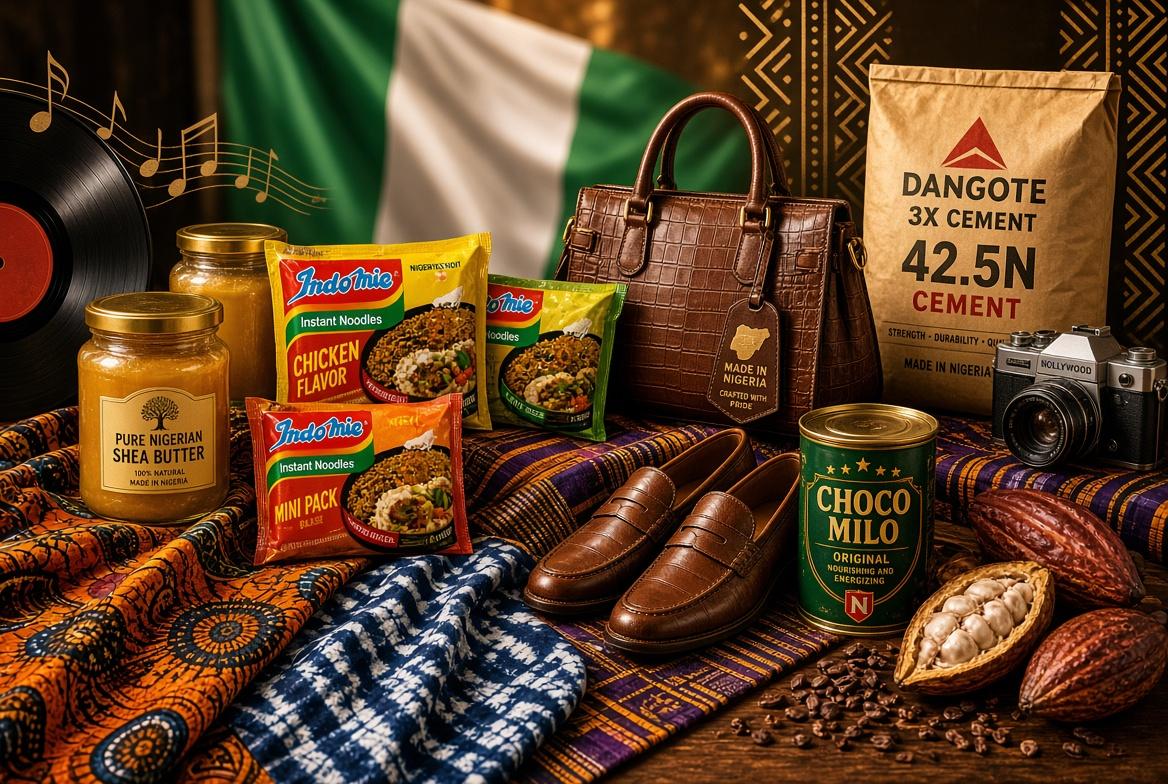
There was a time when "Made in Nigeria" needed a quiet disclaimer attached to it, even among Nigerians. Local products were the fallback, the thing you settled for when the imported version was out of reach. That perception is fading. Across food, cosmetics, fashion, construction, and culture, Nigerian-made goods are turning up on shelves, in wardrobes, and on dinner tables far beyond Nigeria's borders. This isn't a story about catching up. It's a story about a country learning to package what it already does well, and finding out the world was ready for it all along.
The Noodles That Became a Household Name Abroad
Few products capture this shift as clearly as Indomie. Produced by Dufil Prima Foods, it has transformed the instant noodle market and now ships to the United States, Canada, and the United Kingdom, becoming something close to shorthand for the global reach of Nigerian food. For a generation of Nigerians living abroad, and increasingly for people with no Nigerian roots at all, Indomie has become a small but effective ambassador for what Nigerian manufacturing can do at scale.
It isn't the only example. Nestlé's Choco Milo, built around locally sourced Nigerian cocoa, leans on that same authenticity as the backbone of its export strategy. Together, these products point to a broader lesson: the ingredients and flavors developed for the local market don't need to be diluted for foreign palates. They can travel exactly as they are, and often perform better for it.
Beauty Ingredients the World Didn't Know It Needed
If there's one Nigerian export quietly building serious global demand, it's shea butter. Nigeria produces roughly 60 percent of the world's supply, and brands like R&R Luxury and Banga Shea have turned that raw abundance into a sought-after beauty staple across Europe and North America. The West's growing appetite for natural skincare has worked in their favor, and the numbers show it: with the global shea butter market projected to reach $3.8 billion by 2027, and exports climbing 12 percent in a single recent year, Nigeria's share keeps growing alongside it.
What makes this especially notable is the shift in what's actually being exported. Rather than shipping out raw shea nuts at commodity prices, more of that value is now staying onshore, processed, branded, and sold as a finished product carrying a Nigerian name.
Leather and Fashion Finding a Home on Global Runways
Nigerian craftsmanship is also making its way into an industry famously difficult to break into: high fashion. Local leather processing for shoes and bags is gaining real traction in Milan and Paris, with Nigerian leather goods now accounting for roughly 5 percent of Africa's total leather exports, most of it bound for Europe and the Middle East.
Textiles tell a similar story. Ankara, Adire, and Aso-Oke have moved from being distinctly local wardrobe staples to fabrics with genuine international recognition. Nigerian fashion labels built around them now routinely ship finished, made-to-order garments abroad, often within days, a level of logistics sophistication that would have seemed unlikely for a local tailoring business just a decade ago.
Heavy Industry Crossing Borders
"Made in Nigeria" isn't limited to what you can hold in your hand. In construction materials, Dangote Cement now operates across ten African countries and exports roughly two million metric tons a year, proof that Nigerian industrial capacity, not just Nigerian ingenuity in food or fashion, has real demand across the continent.
Add the FMCG sector to that picture and the scale becomes hard to ignore. In a recent year alone, fast-moving consumer goods contributed $1.2 billion to Nigeria's export revenue, with roughly 50,000 tons of locally manufactured products leaving the country's shores. That's not a niche trend. That's the early shape of an export economy building real momentum well beyond oil.
Beyond Products: A Cultural Export That Sells Everything Else
No account of "Made in Nigeria" is complete without its most effective, and least measurable, export: culture. Afrobeats has grown from a regional sound into a genre filling arenas from London to Los Angeles, and Nollywood now reaches audiences on streaming platforms worldwide. Neither is a product in the traditional sense, but both do something arguably more valuable for Nigerian business: they make "Nigerian" feel aspirational rather than something to explain away.
That shift in perception isn't incidental. It's a business advantage. When a consumer in London already has a favorable association with Nigerian music, film, or fashion before ever trying a Nigerian product, the actual selling gets easier. Culture has quietly become one of the country's most effective trade tools, and one of its least acknowledged.
What This Growth Actually Represents
None of this means Nigeria has solved its export challenges. Infrastructure gaps, inconsistent power supply, and demanding international compliance standards remain real obstacles for businesses trying to scale beyond the local market. But the direction of travel is unmistakable. Nigerian companies are increasingly choosing to compete on brand and quality rather than price alone, turning what used to be pure commodity exports, cocoa, sesame, raw shea, into finished goods that carry a Nigerian name people actually recognize.
That's the real beauty of "Made in Nigeria" today. It isn't just that these goods are reaching new markets. It's that they're doing so on their own terms, sought out rather than simply accepted. For a country long defined by what it exports as raw material, that shift toward branded, value-added goods may end up being the more consequential story, bigger than any single product's success.