
Hakeem Jeffries Wins Democratic Nomination, Set to Become First Black US House Speaker
Jeffries secured 251 votes against 11 in the party's internal election, but progressive lawmakers are pressing for stronger commitments on healthcare, campaign finance and foreign policy.
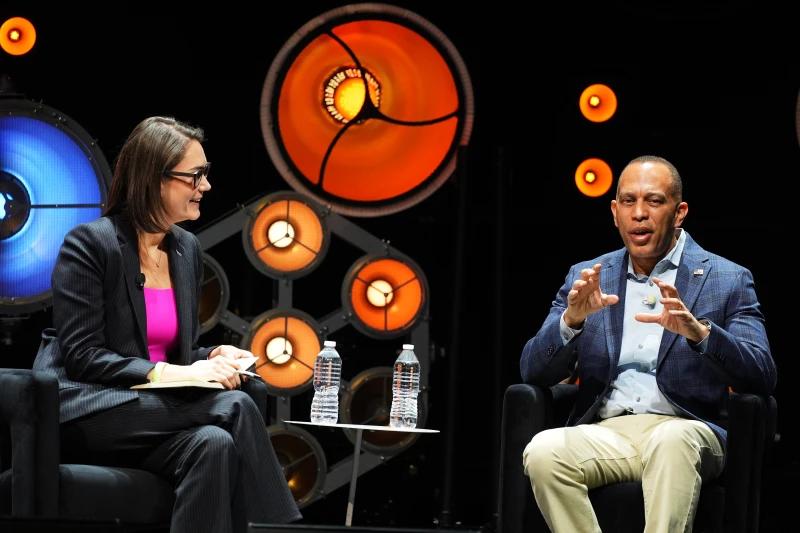
Hakeem Jeffries has secured the Democratic Party's nomination for Speaker of the US House of Representatives, moving closer to becoming the first African American to hold the position when the new Congress convenes in January 2027.
The House Minority Leader won 251 votes against 11 in an internal Democratic caucus election on Wednesday, November 18. His nomination follows the party's victories in the November 3 midterm elections, which returned Democrats to the majority in the House after two years of Republican control.
If elected by the full House, the 56-year-old New York representative will succeed Republican Mike Johnson and make history as the first Black American to occupy the Speaker's office.
Democrats Select New House Leadership
The leadership elections also produced a new Democratic leadership team. Representative Katherine Clark of Massachusetts was elected majority leader, becoming the first woman to hold the position.
Pete Aguilar of California was selected as majority whip, while Ted Lieu of California will serve as Democratic Caucus chairman and Joe Neguse of Colorado as assistant speaker.
The selections mark important milestones in the party's representation while maintaining continuity within its leadership structure.
Progressive Opposition Raises Questions About Party Unity
Although Jeffries' decisive victory demonstrated substantial support within the party, the 11 opposing votes reflected disagreements over the direction of Democratic leadership.
Some progressive lawmakers have called for stronger commitments on issues including universal healthcare, campaign finance reform, immigration enforcement and US foreign policy, particularly American military support for Israel.
The disagreements had become increasingly visible in the weeks following the midterm elections. On November 13, Jeffries was heckled by progressive protesters during the party's What's Next conference in Denver, Colorado. Demonstrators questioned his leadership and demanded a more assertive approach to issues such as healthcare and economic inequality.
The incident highlighted tensions between moderate Democrats, who favour a more measured legislative approach, and progressives seeking a broader policy agenda.
Despite the opposition, no alternative candidate emerged to challenge Jeffries for the party's nomination. Following Wednesday's vote, he called on Democrats to concentrate on their political priorities rather than internal disagreements.
Jeffries also identified affordability, healthcare and government accountability as priorities for the incoming Democratic majority.
What Happens Next?
Jeffries' nomination marks an important moment for representation in American politics, but the leadership transition also comes with considerable expectations.
Democrats will have to balance competing policy demands within their caucus while preparing to challenge President Donald Trump's administration and advance their legislative priorities.
His formal election as Speaker will take place when the full House votes at the opening of the 120th Congress on January 3, 2027. Although his party's overwhelming support makes his elevation likely, the internal nomination does not automatically guarantee the position.
Read our editorial standards and corrections policy.