
Trump, Xi and Putin Set for Historic Nuclear Talks as Ukraine Fears a New Yalta
A planned meeting between Donald Trump, Xi Jinping and Vladimir Putin could shape discussions on nuclear weapons and global security. But with Ukraine potentially excluded and Russia pressing for changes to Europe's security arrangements, the gathering raises questions about who gets a say in decisions that affect the rest of the world.
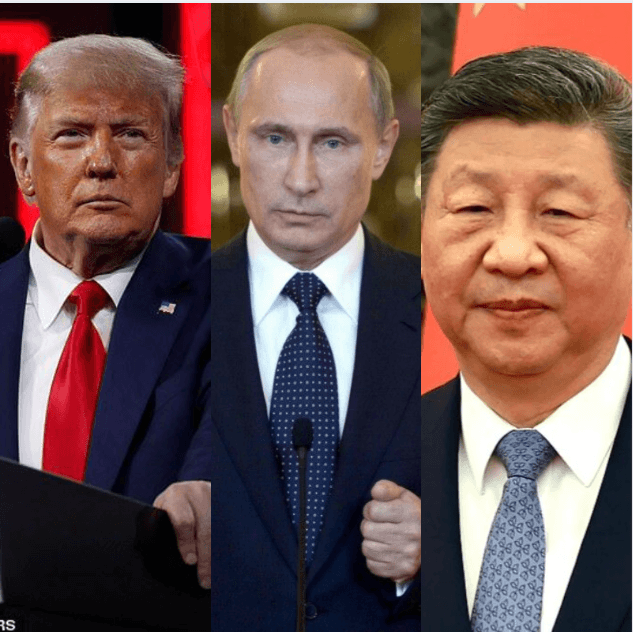
What happens when the leaders of three nuclear powers sit down to discuss the future of global security, while a country at the centre of Europe's biggest war in decades may have no place at the table? That question is drawing attention to the planned meeting between United States President Donald Trump, Chinese President Xi Jinping and Russian President Vladimir Putin.
Expected to take place in Shenzhen, southern China, on November 19, the meeting could cover nuclear arms control, international security and the ongoing conflict involving Iran. However, the possibility that Ukraine will be left out of the discussions has raised concerns about whether major powers could shape decisions affecting other countries without their participation.
Why Trump, Xi and Putin Are Meeting
The leaders are expected to meet on the sidelines of the Asia-Pacific Economic Cooperation (APEC) summit. It would be their first trilateral meeting, bringing together three countries with significant influence over global security and the world's nuclear balance.
China confirmed the planned meeting on November 16, describing it as an opportunity to discuss safeguarding world peace and promoting strategic stability among major powers. Chinese Foreign Ministry spokesperson Mao Ning said stronger communication and efforts to manage differences between the three countries would serve their interests and support wider international cooperation.
Although Beijing has not published a detailed agenda, nuclear disarmament is among the issues expected to receive attention. Trump has expressed interest in reaching a new agreement covering the nuclear arsenals of the United States, Russia and China, particularly following the expiration of the New START treaty between Washington and Moscow in February 2026.
The treaty had placed limits on the strategic nuclear weapons deployed by the two countries. Its expiration removed those restrictions for the first time in more than five decades, increasing concerns about the future of nuclear arms control.
The Nuclear Question: Can Three Powers Agree?
Bringing China into a three-way nuclear agreement could prove difficult. According to estimates cited by the Associated Press, the United States and Russia each possess more than 5,000 nuclear warheads, while China's stockpile is estimated at more than 600.
Beijing has previously argued that Washington and Moscow should reduce their significantly larger arsenals before China joins negotiations on nuclear restrictions. This difference in position presents an early challenge to any attempt to establish a common framework for limiting nuclear weapons.
The United Nations has also expressed support for meaningful discussions. Secretary-General António Guterres said a genuine commitment to denuclearisation by the three leaders would represent a major achievement for the international community.
Beyond nuclear weapons, Trump has indicated that the war involving Iran could also feature in the discussions. China has maintained economic ties with Tehran and sought to encourage a return to negotiations, while the United States has been directly involved in the conflict.
Why Ukraine Fears a New Yalta
Despite the international significance of the planned meeting, the war in Ukraine may not be included in the discussions. Reports from the Guardian and Associated Press indicate that Trump is not expected to raise the conflict, while China has shown reluctance to make Ukraine a central part of the trilateral agenda.
This has raised concerns in Kyiv that decisions affecting Ukraine's future could be discussed between Washington, Moscow and Beijing without Ukrainian participation.
President Volodymyr Zelensky has previously warned against a new version of the 1945 Yalta Conference, where the leaders of the United States, Britain and the Soviet Union negotiated aspects of the post-war European order. The meeting became associated with major powers determining the political and territorial arrangements of other countries.
Zelensky's reference to a new "Yalta" reflects his concern that powerful countries could negotiate arrangements affecting Ukraine's sovereignty and security without involving the country itself.
These concerns come amid separate negotiations between Russian and US representatives over ending the war in Ukraine. During discussions in Abu Dhabi, Russian officials reportedly circulated a document setting out Moscow's demands for a new European security arrangement.
According to a report by The New York Times, Russia called for NATO to return its military presence to its 1997 positions, before the alliance's subsequent expansion into Eastern Europe. Moscow also demanded an end to further NATO expansion, restrictions on military activities in parts of Eastern Europe and other regions, and an end to Western military assistance to Ukraine.
The demands would have significant implications for countries that joined NATO after 1997, including Poland and the Baltic states. They also revive proposals Moscow presented before its full-scale invasion of Ukraine in February 2022.
Although these demands emerged from separate negotiations, they underline the broader disagreements over Europe's security arrangements that continue to complicate efforts to end the war.
What the Meeting Could Mean for the Rest of the World
The implications of the meeting extend beyond Washington, Beijing and Moscow. Decisions or disagreements involving the three countries could influence international security, diplomatic relations and the wider global economy.
For countries in Europe, the outcome could affect the debate over NATO's role, military cooperation and the security of states close to Russia. For Ukraine, the concern is more immediate: any discussions about its future that exclude its government could raise questions about its sovereignty and ability to determine its own security arrangements.
There are also consequences for countries far removed from the conflict. Nuclear tensions and deteriorating relations between major powers can affect international trade, investment and energy markets by increasing uncertainty and disrupting economic relationships. Developing economies, which often have limited room to absorb external shocks, may be particularly exposed to the consequences of prolonged global instability.
For ordinary people, the issue is not simply whether three presidents reach an agreement. It is whether their discussions help reduce the risk of wider conflict or deepen divisions that could affect security and economic stability across the world.
For Russia, the meeting offers an opportunity to engage directly with two other major powers and reinforce Moscow's position in international diplomacy. For China, hosting the discussions provides an opportunity to demonstrate its influence as a global diplomatic actor. Trump, meanwhile, has presented nuclear arms control as an important objective of his foreign policy engagement with both countries.
Cooperation or Another Division of the World?
Expectations of a major breakthrough remain uncertain. The three governments have different priorities, and China has previously resisted joining nuclear arms negotiations with the United States and Russia.
The meeting may therefore be more significant for the diplomatic signal it sends than for any immediate agreement it produces. Whether the leaders can make progress on nuclear weapons or broader international security questions remains to be seen.
Ultimately, the gathering raises a question that goes beyond the relationship between three powerful countries: can global security be strengthened through cooperation among major powers without undermining the sovereignty and interests of countries that are not represented?
For Ukraine, that question is particularly urgent. For the rest of the world, the answer could help shape the direction of international relations and the stability of the years ahead.
Read our editorial standards and corrections policy.