
Iran Launches Strikes on U.S. Targets Across Middle East After American Attacks
Tehran says it targeted U.S. military sites in Bahrain, Jordan and Kuwait after Washington carried out what it called “self-defence strikes” against Iran.
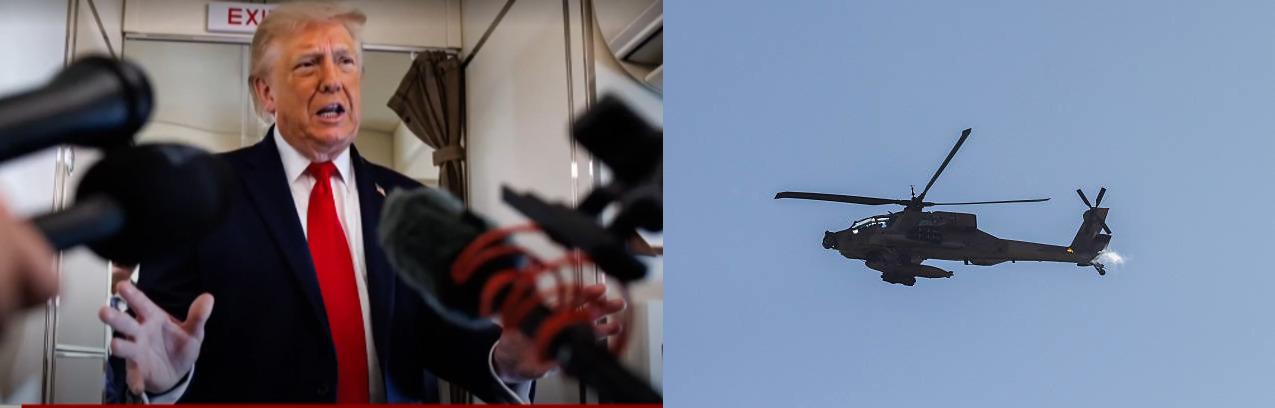
The conflict between Iran and the United States escalated sharply on Wednesday after Tehran launched retaliatory attacks on U.S. military targets across the Middle East.
Iran’s Islamic Revolutionary Guard Corps (IRGC) said it carried out strikes against the U.S. Fifth Fleet in Bahrain, a military base in Jordan, and targets in Kuwait. The attacks came hours after the U.S. military launched strikes on sites in southern Iran following the downing of a U.S. Army Apache helicopter near the Strait of Hormuz.
According to U.S. Central Command (CENTCOM), the American operation targeted Iranian air defence systems, surveillance radar sites and command facilities near the strategic waterway.
“CENTCOM forces struck Iranian air defense, ground control stations, and surveillance radar sites near the Strait of Hormuz,” the military said, describing the operation as a “proportional response” to recent attacks on U.S. forces.
Helicopter Incident Triggers New Round of Fighting
President Donald Trump said Iran was responsible for bringing down the Apache helicopter while it was patrolling regional waters near Oman on Monday.
The U.S. military said both crew members were rescued safely using an unmanned rescue vessel and are in stable condition.
Iran has not publicly accepted responsibility for the helicopter’s loss. However, Iranian officials accused Washington of using the incident as a justification for military action.
Iran’s Foreign Ministry said the U.S. had used the helicopter crash as a “pretext” for attacks and described the strikes as a violation of international law.
Regional Bases Targeted
Iran’s Revolutionary Guard said it launched drones and missiles against multiple American military assets in the region.
Iranian state media reported attacks on the U.S. Fifth Fleet headquarters in Bahrain, the Ali Al-Salem base in Kuwait and the Al Azraq military base in Jordan.
Authorities in Bahrain said their military intercepted and destroyed several aerial threats. No casualties were reported.
Kuwait’s military said its air defence systems engaged hostile targets, while Jordan reported intercepting incoming attacks.
The IRGC claimed it had conducted operations against 21 U.S. targets and warned that stronger retaliation would follow if American attacks continued.
Civilian Infrastructure Hit
Iranian officials said two water reservoirs in the southern Hormozgan province were damaged during the U.S. strikes.
State-affiliated media reported that the facilities supplied drinking water to local communities near Sirik County. Iranian authorities said emergency measures were being implemented to restore water access.
The reported damage has raised humanitarian concerns, with Iranian officials accusing the United States of targeting civilian infrastructure.
International Concern Grows
Governments across the region responded with alarm as the conflict widened.
Egypt condemned the attacks on Bahrain, Jordan and Kuwait, calling them a violation of sovereignty and warning of a dangerous escalation.
China said it was “deeply concerned” about the situation and urged all parties to exercise restraint and return to diplomacy.
Pakistan’s ambassador to the United Nations also warned of a growing “cycle of violence,” saying the latest developments risk further destabilising the Middle East.
Analysts have cautioned that repeated exchanges between Washington and Tehran could increase the risk of miscalculation and trigger a broader regional conflict.
Uncertain Path Ahead
Despite the latest fighting, both sides have continued to reference diplomacy.
Iranian Foreign Ministry spokesperson Esmail Baghaei said Tehran would need time to assess the situation before moving forward with any peace negotiations, arguing that diplomacy cannot function while military operations continue.
Before the latest escalation, President Trump had expressed optimism that negotiations could eventually lead to an agreement and help secure stability around the Strait of Hormuz.
For now, however, the focus has shifted back to the battlefield as both countries trade military strikes and the wider region braces for what may come next.