
Khamenei Buried in Mashhad, But His Son's Absence Still Haunts Iran
Iran has buried its late Supreme Leader Ayatollah Ali Khamenei, closing out a six-day funeral that stretched across Iran and Iraq. But the country's new Supreme Leader, his son Mojtaba Khamenei, was nowhere to be seen. He has not appeared in public once since his father was killed.
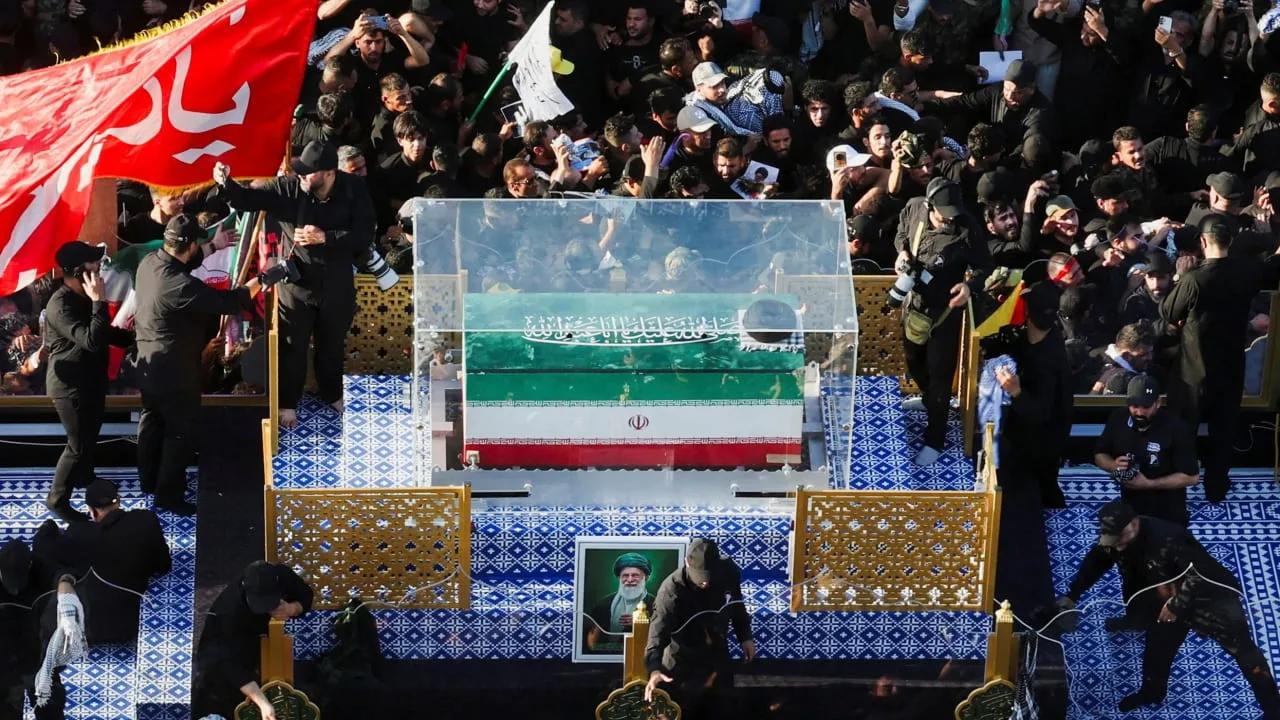
Khamenei was laid to rest at the Shrine of Imam Reza in Mashhad, one of Shia Islam's holiest sites. State media reported the burial early Friday, following processions that drew crowds Iranian officials put at more than 15 million people, possibly double that by some local estimates.
Khamenei died on February 28 in a joint US-Israeli strike on his compound in Tehran, the opening move in a war between Iran and the two countries. The strike also killed several of his family members, whose coffins were carried alongside his throughout the funeral processions.
A funeral built to project strength
The ceremonies moved through Tehran, Qom, Najaf, and Karbala before ending in Mashhad. Iranian state media used the processions to push messages of resistance against the United States and Israel. Mourners chanted revolutionary slogans and carried signs threatening US President Donald Trump, who Iran blames for orchestrating the strike that killed Khamenei.
Mashhad was chosen for the burial because it is Khamenei's birthplace and home to the Imam Reza shrine, one of the most significant religious sites in Shia Islam.
Iran already has a new Supreme Leader. He just hasn't shown his face.
The biggest story out of the funeral isn't who Iran's next leader will be. That question was settled months ago. Iran's Assembly of Experts, the clerical body responsible for selecting the Supreme Leader, elected Mojtaba Khamenei to the role in early March, roughly a week after his father's death.
What remains unresolved is Mojtaba himself. He was injured in the same strike that killed his father, and he has not appeared in public or released any video or audio statement since taking the position. He has issued only written statements. His prolonged absence has fueled speculation both inside and outside Iran about his condition and his grip on power, even as officials insist the leadership transition is stable.
The succession was also more contested than Iranian state media has acknowledged. Khamenei's own written will, presented to the Assembly of Experts after his death, reportedly asked for an in-person vote and said he did not want his son or other family members to succeed him. Several Assembly members boycotted the selection process, citing pressure from the Revolutionary Guard Corps in favor of Mojtaba's candidacy.
What comes next
The funeral marked one of the largest public events Iran has staged in years. But it settles little. Iran is still dealing with economic strain, internal political tension, and renewed friction with the United States. The government used the funeral to project unity and continuity. Whether that holds depends largely on a leader the public has yet to see or hear from directly.
Read our editorial standards and corrections policy.