
70 Days to Nigeria's 2027 Elections: Legal Battles, Campaign Moves and Presidential Ambitions
Nigeria's 2027 presidential race is gaining momentum as legal disputes, campaign rallies, security concerns and competing policy promises shape the contest 70 days before the election.
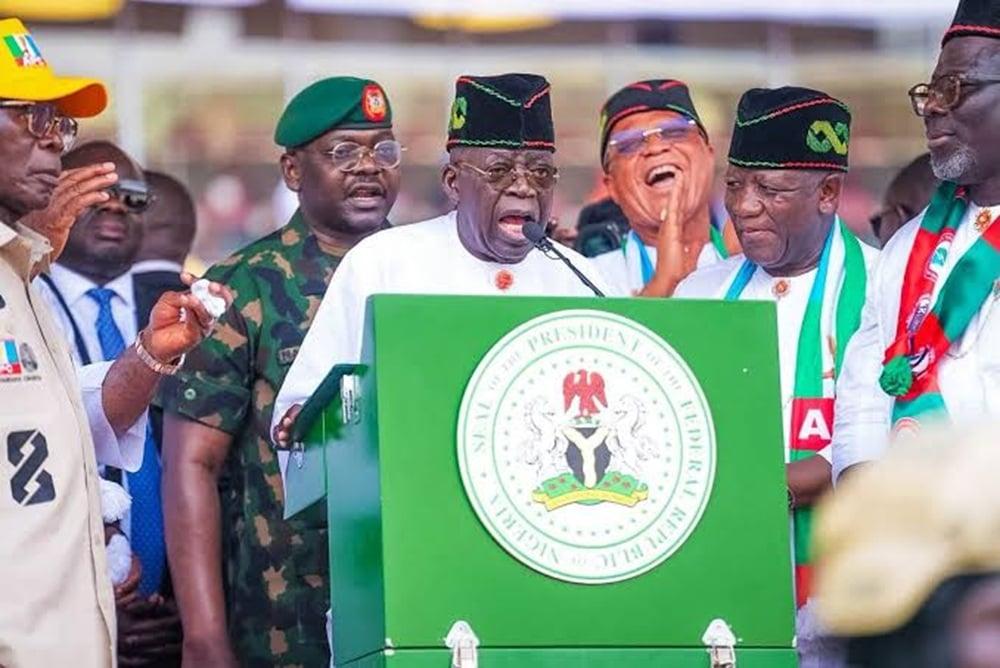
With 70 days to go before Nigeria's 2027 General Elections, the country's presidential contest is beginning to take shape across courtrooms, political rallies and policy discussions. In the space of a few days, a court ruling cast uncertainty over former Vice-President Atiku Abubakar's candidacy, President Bola Tinubu took his re-election campaign to Akwa Ibom, Peter Obi continued his political engagements amid an attack on his convoy, and Oyo State Governor Seyi Makinde unveiled his presidential manifesto.
The developments reveal a contest being fought on several fronts, with legal disputes, political alliances, security concerns and competing promises of better governance already influencing the race.
Atiku's presidential ambition faces a legal hurdle
One of the biggest developments came on November 5, when the Federal High Court in Abuja nullified the emergence of the David Mark-led leadership of the African Democratic Congress (ADC) and actions taken under it, including Atiku's nomination as the party's presidential candidate.
The case was brought by Nafiu Bala Gombe, a former ADC deputy national chairman, who challenged the process that produced the party's leadership.
The judgment is significant because the ADC had emerged as an important platform for opposition figures seeking to challenge the ruling All Progressives Congress (APC) in 2027. Atiku, who finished second in the 2023 presidential election, secured the ADC presidential ticket in May.
The ruling therefore raises questions about the party's leadership, its internal stability and its ability to present a united opposition challenge.
However, the legal battle is far from over. Atiku and the ADC have rejected the judgment, while the party has filed an appeal and applied for a stay of execution. As of November 7, the application had yet to be determined.
Consequently, the judgment should not be treated as a final determination of Atiku's eligibility to contest. Nevertheless, the dispute creates uncertainty for a party that needs time to organise, build alliances and mobilise supporters ahead of the election. Resources and attention that could be devoted to campaigning may instead be directed towards resolving the leadership dispute.
Tinubu takes his re-election campaign to Akwa Ibom
While the ADC deals with its legal troubles, President Tinubu is using his incumbency and development projects to strengthen the APC's political position.
On November 6, the President visited Akwa Ibom State, where he commissioned projects completed by Governor Umo Eno's administration before attending an APC rally in Uyo.
The projects included the new terminal building at Victor Attah International Airport, Ring Road 3 and the ARISE Palm Resort. Tinubu also reaffirmed the airport's international status and announced approval for the long-awaited Ibom Deep Seaport project.
The seaport announcement was arguably the political highlight of the visit. Governor Eno had appealed to the President to approve the project and pledged that Akwa Ibom would deliver two million votes for Tinubu's re-election if the Federal Government supported it.
Tinubu subsequently announced at the rally that the project had been approved.
The exchange illustrates how infrastructure development and electoral politics can intersect. Akwa Ibom wants a major maritime infrastructure project that could strengthen its economy, while the APC is seeking to consolidate its support in the South-South, a region where the party hopes to improve its electoral standing.
The proposed port has a long history, dating back to the Ibaka Deep Seaport initiative under former Governor Victor Attah. It is expected to attract investment, create employment and improve trade connections across the region.
However, the latest announcement raises questions about the project's actual progress. The seaport has featured in previous administrations' development plans, including those of former Presidents Goodluck Jonathan and Muhammadu Buhari. Its official status page already lists Federal Government approval among milestones achieved and identifies the project as being at the Full Business Case and procurement stage.
Tinubu's announcement has renewed attention on the project, but the public will need clarity on what additional approval has been granted, alongside details of funding, procurement and a construction timetable. Political approval is an important step, but it does not automatically translate into a functioning seaport.
Obi continues political outreach amid security concerns
Peter Obi's recent engagements have presented another dimension of the emerging campaign season.
On November 4, Obi visited Calabar for a town hall meeting and party engagements. Reports subsequently emerged that his convoy had been attacked by unidentified individuals who threw stones after noticing supporters of the National Democratic Congress (NDC). His security team reportedly changed its route following the incident.
Media reports indicated that the police intervened and arrested a suspect.
Despite the incident, Obi continued his political engagements. Discussions during his Calabar visit included the economy, security, tourism and the future of the Calabar Port.
He subsequently travelled to Rivers State, where he attended the dedication of the Five Fingers auditorium at Salvation Ministries in Port Harcourt alongside Dumo Lulu-Briggs, the NDC's governorship candidate in the state.
His political outreach also extended to Lagos, where the NDC engaged stakeholders and mobilised supporters.
The attack on his convoy adds a security dimension to an election season that is already witnessing increased political activity. It also highlights the importance of ensuring that candidates, supporters and other political participants can carry out their activities without intimidation or violence.
Makinde presents his vision for Nigeria
While Tinubu and Obi have focused on political mobilisation and Atiku faces a legal challenge, Governor Seyi Makinde has sought to distinguish his presidential ambition through a policy-driven approach.
On November 4, Makinde unveiled his presidential manifesto in Abuja under the Allied Peoples Movement (APM). Tagged Reset Nigeria, the agenda focuses on the economy, security, education and governance.
Its central promise is to make government work more effectively for ordinary Nigerians by reducing the cost of living and doing business, improving public services and strengthening institutions.
The manifesto gives voters another set of proposals to consider as the presidential race develops. However, its credibility will depend on the level of detail behind the promises.
Questions remain about how the proposed reforms would be funded, which could be implemented immediately, which would require legislative support or cooperation with state governments, and how their results would be measured.
Makinde is the first among the leading presidential contenders in the emerging race to present a manifesto to the Nigerian public, giving him an opportunity to establish a policy identity ahead of the election.
The road to 2027
Taken together, these developments show that Nigeria's 2027 presidential contest is already taking shape across different political and institutional fronts.
Tinubu is leveraging the advantages of incumbency, government projects and campaign mobilisation. Atiku faces a legal challenge that could affect the ADC's preparations, while Obi continues to expand his party's political reach amid concerns about campaign security. Makinde, meanwhile, is attempting to distinguish himself through a programme of proposed reforms.
For Nigerian voters, however, the real test will go beyond rallies, political alliances and campaign announcements. Infrastructure promises must translate into completed projects, manifestos must offer credible solutions, and political parties must demonstrate their ability to organise and compete within the law.
With 70 days remaining, the presidential race is gathering momentum. But the candidates' ability to convert their current strategies into public confidence and electoral support will ultimately determine who emerges strongest.
Read our editorial standards and corrections policy.